This claim, seen on X, has gathered 74 reposts, 54 comments, 435 likes, and 64,000 bookmarks (which is a way to privately save posts for later access), as of May 15, 2025.
Also, another X account with 1million followers posted the same claim, stating that Ibrahim Traoré wants to create the United States of Africa, where all African countries will come together as one. According to the post, there will be one government system, one currency, “Afro Money”, and one African passport.

This claim was also seen on Facebook, with some Facebook users resonating with it.
A user, Claudia Chuo commented that: “To me United States of Africa will not be differentiated from the United States of America. I wish we call it United Nations of Africa. U N A.”
Another user, Ehichioya Asine stated that “This is the true light of Africa and may this wind of change blow through all nations of Africa continually in the name of the lord Jesus. Amen”
Ibrahim Traoré is a Burkinabé military officer and politician who has served as the interim President of Burkina Faso since 2022.
Traoré took control of Burkina Faso in September 2022, ousting interim president Paul-Henri Sandaogo Damiba in a coup d’état.
Ibrahim Traoré has increasingly been admired by Africans and social media users, largely due to waves of viral social media content, some of which has been discovered to be false and AI-generated.
This wave of digital support, however, masks a more complex and concerning reality. While Traoré is celebrated online as a pan-African hero, his regime has been criticised for its authoritarian tendencies and human rights abuses
These contents, often inaccurate or misleading, portray him as a brave reformer who has stood up to Western influence and restored dignity to the Burkina Faso nation. These claims have spread widely on social media such as TikTok, Facebook, and X (formerly Twitter), presenting Traoré as a commendable leader.
Seeing the growing pan-African sentiments, ROUNDCHECK decided to investigate this claim because it could mislead the public on a highly sensitive geopolitical issue and fuel disinformation around pan-African unity.

ROUNDCHECK Findings
ROUNDCHECK searched through various verified media platforms and noticed there have been no statements from Ibrahim Traoré supporting the broad goal of creating a United States of Africa.
However, his government has expressed support for a potential federation with Mali and Guinea. In September 2023, these three countries formed the Alliance of Sahel States, a grouping primarily focused on addressing security concerns in the region.
While this alliance could be seen as a step towards greater regional integration, it doesn’t explicitly align with the concept of a continent-wide United States of Africa.
ROUNDCHECK discovered that the “Afro Money” mentioned in the claim didn’t come from President Ibrahim Traoré but rather came from a Senegalese artist, Mansour Ciss.
“Afro Money” is an artistic currency project by Mansour Ciss for 14 African nations that used to be French colonies.
Furthermore, the removal of restrictions on the free movement of Africans across the continent has been a key goal of the African Union (AU), which launched the African passport project in 2016.
Although a continent-wide African passport for all citizens doesn’t exist yet, the African Union (AU) has introduced a new passport for its officials and diplomats, but the goal is to eventually make this passport available to all African citizens, enabling visa-free travel across the continent. This, however, is not being pushed by Ibrahim Traoré.
ROUNDCHECK checked the Burkina Faso government website, and nothing related to this claim was found. This also applies to the official government social media handles. (X and Facebook)
Verdict
The claim that President Ibrahim Traore planned to unite African countries into the United States of Africa is FALSE. ROUNDCHECK findings revealed that there is no evidence of such a claim at the time of this report.
This report was done under the Roundcheck Volunteer Network Cohort 4
]]>With the proliferation of AI content (image, audio and video) on social media, the development can best be described as using AI technology to fight AI falsehoods.
To be known as the Global Fact‑Check Chatbot (GFC), the AI-driven platform aims to make verification faster and reliable to members of the public. The chatbot is also designed to amplify debunked claims in multiple languages.
Partnership between sixty verified signatories of the International Fact‑Checking Network (IFCN), the European Fact‑Checking Standards Network (EFCSN), and several regional alliances birthed the AI-chatbot.
During the launch in Rio de Janeiro, Brazil, on June 27, the fact-checking partners revealed that the project was built on “the legacy of the #CoronaVirusFacts Alliance, a project that led the fact-checking community to be nominated for the Nobel Prize in 2021”.
“The GFC aims to consolidate thousands of verified fact-checks produced in over 58 countries into a shared, tiered-access database”, they added.
How The Chatbot Works
Generative AI-chatbots on social media platforms such as Elon Musk’s Grok on X (formerly Twitter) can sometimes be misleading when used to fact-check.
ROUNDCHECK recently found that people maliciously use Grok in ways that molest women and violate privacy laws.
The accuracy of responses given by chatbots depends on the reliability of the database and other sources relied on. If the database is flawed or biased, the outputs from chatbots will also exhibit inaccuracies.
Besides, contexts matter in fact-checking, and many chatbots are usually not up-to-date.
According to the fact-checkers, the Global Fact-Check Chatbot will be different: “The chatbot will draw from a database of thousands of fact-checks and journalistic articles contributed by members and worldwide associated entities, utilizing both open-source and proprietary large language models (LLMs) to reformulate user queries with contextual, geographic, and temporal awareness, thereby enhancing the accuracy and relevance of responses.”
Why it Matters
The networks of fact-checkers and researchers at the frontline of tackling misinformation noted that the AI-chatbot matters in the efforts to make the information ecosystem a safe space for three main reasons:
- Scale at Launch: Initially supporting 10 languages, GFC is engineered for rapid expansion, enabling global reach during surges in disinformation.
- Fact‑Checker Governance: Unlike generalist AI tools, GFC is controlled solely by fact‑checking experts, ensuring editorial oversight and accountability.
- Real‑Time Readiness: With daily updates from 58 countries (all continents), GFC stands ready for deployment during elections, health emergencies, regional conflicts, wars, and other critical moments.
The claim was mostly circulated between May 21 to May 24, 2025.
The claims surfacing on several social media platforms, including X and TikTok, have several videos and images depicting violence in the country’s capital, Abidjan, and a possible military takeover in Ivory Coast.
Some of the comments under the X post expressed desires for this coup. @gerald_okocha commented that “It is not yet confirmed. I pray it’s true oooooo”. On TikTok, others who believed the claim prayed for a coup in other African countries, including Kenya and Nigeria.
@marwanabdulaziz62 commented “We pray for Nigeria to join insha Allah”
This is coming in the build-up to the general elections slated to hold on October 25 in Ivory Coast.
Ivory Coast has been marked with several political conflicts, from a 1999 military coup to civil war in 2011, to the recent court ruling barring opposition candidate Tidjane Thiam from contesting the forthcoming elections because of his current French nationality.
Concerns have been raised over the possible reelection of the current president for a fourth term after a constitutional amendment in 2016 that allowed him to run for a third five-year term in 2020.
This led to a protest resulting in the death of at least four people.
Although social media users have been seen to glorify military takeovers in West Africa recently, these posts depicting a military takeover in Ivory Coast are capable of stirring political violence in the forthcoming election, hence the need for ROUNDCHECK to investigate it.
ROUNDCHECK Findings
On May 21, 2025, an X user posted that there was an ongoing coup d’état in Ivory Coast, adding that Africa would be liberated through the barrel of a gun. Another X user shared this video depicting a coup in Ivory Coast, and as of Tuesday, 27th May 2025, it had garnered 500 retweets and 1000 likes.

ROUNDCHECK’s findings revealed that the video is misleading. A reverse image search of the video keyframe revealed that the video was from a violent fire that broke out on February 5, 2025, in the annex building of the Château Shopping Centre, located in the Adjamé district of Abidjan, the Ivory Coast capital.

Another X user posted a video claiming Ivory Coast military Coup was successful, and the president has allegedly fled the country. This claim video has been viewed 149,500 times and has been retweeted 2,500 times as of Tuesday, 27th May, 2025.

ROUNDCHECK, however, discovered that this video posted was from Burkina Faso, and not Ivory Coast as claimed
TikTok Is a Haven For This Misinformation
Some of the videos ROUNDCHECK saw on X originated from TikTok influencers. For example, this misleading video that appeared on X was initially shared by an Ibrahim Traoré supporter, Arouna Burkinbila (sawadogo1066), who has a large followership on TikTok.

Arouna has most of his content glorifying the Burkina Faso junta leader.

ROUNDCHECK noticed that the video which Arouna shared was edited to fit his narrative of a coup in Ivory Coast. The original video was obtained from another TikToker. This video, which is not related to Ivory Coast or Africa, was edited by Arouna.

Narrative Is Being Pushed On X
ROUNDCHECK observed that several X users posted this claim of a coup in Ivory Coast, with some more popular and having a large following, which gave the claim traction.
ROUNDCHECK identified some of these accounts.

Our investigation revealed that the claims that a Coup took place in Ivory Coast, and the images and videos attached, are all false, manipulated or unrelated.
A deeper finding also revealed that the handlers of these X accounts mostly post content around coups, military takeovers or foreign dominance in Africa. The simple aim is for engagements, click baits and propaganda.
Military Coup In Ivory Coast Is False
The information about the military takeover of Ivory Coast flooded several social media platforms on Wednesday, 21st of May, 2025. ROUNDCHECK findings revealed that these claims are false, as there was no coup in Ivory Coast.
The President, Alassane Ouattara, on the same day when the coup information was shared, presided over a council of ministers meeting at the presidential palace in Abidjan, the Ivorian capital.
According to the official X account of the presidency, discussions around affordable housing and solar power plants were raised during the meeting.
This debunked the claim that the Ivory Coast President had fled the country because of the coup.
On the 22nd of May 2025, President Ouattara offered a speech during the ceremony of the Award of the Félix HOUPHOUËT-BOIGNY – UNESCO Peace Prize in Abidjan.
Also, the African Development Bank (AfDB) Group’s 2025 Annual Meetings kicked off on Monday, 27th May, with Ivory Coast being the host country, and President Ouattara was present.
ROUNDCHECK checked reputable news platforms like CNN, BBC and Ivory Coast media platforms, Abidjan, and Fratmat, and there was no report of a coup in the country. Al Jazeera, however, debunked these social media claims.
Call For Military Takeover In West Africa
Since the coup that rocked several countries in the Sahel region, the call for military takeover in other parts of West Africa has been cutting through borders. Several actors who use disinformation techniques have had to glorify these junta leaders, causing further distrust in the democratic system.
DUBAWA has initially reported how thousands of users are spreading pro-authoritarian narratives using disinformation techniques and inciting young Ghanaians and Nigerians to take up arms and push back democracy.
This is the same for an X User, @MartynsObot, who commented on one of the misleading videos cited by ROUNDCHECK, expressing displeasure over the continued democratic rule in Nigeria.
“If there are still brave military men in Nigeria like we had before OBJ retired some most of them, by now d streets of Nigeria would be buzzling with echo of joy like this. But unfortunately, what we have now in camouflage are vegetables who care only for what gets into pockets,” [sic], the X user said.
As these trends continue to become more visible, the Africa Center for Strategic Studies warns that these disinformation campaigns have directly driven deadly violence, promoted and validated military coups, cowed civil society members into silence, and served as smokescreens for corruption and exploitation.
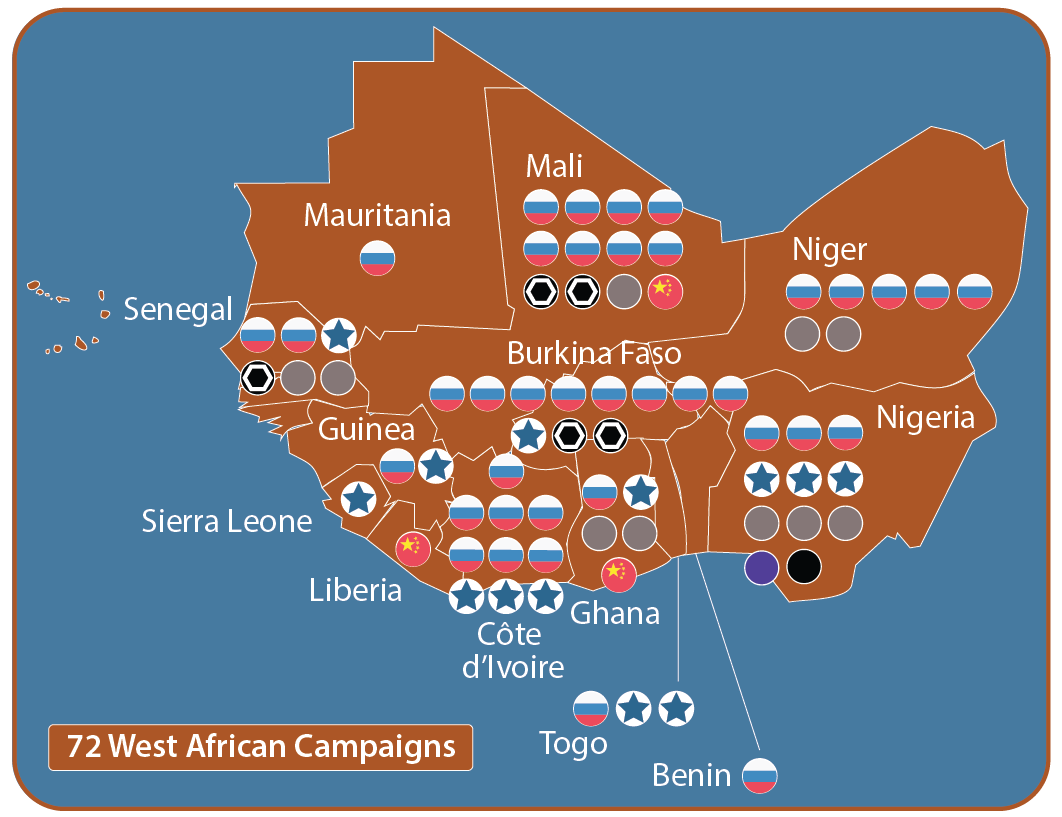
The Center revealed that Disinformation campaigns seeking to manipulate African information systems have surged nearly fourfold since 2022, triggering destabilising and antidemocratic consequences.
“West Africa is the region most targeted by disinformation—accounting for nearly 40 percent of documented disinformation campaigns in Africa. Roughly half of these attacks are connected to Russia,” part of the report reads.
Disinformation Threatens Democracy In West Africa
Disinformation poses a serious threat to democracy and undermines trust in public institutions, warns Malik Samuel, a Senior Researcher at Good Governance Africa.
He cited the recent circulation of false reports about a coup in Ivory Coast as a stark reminder of how disinformation can destabilise democratic governance in the region.
“Even when unfounded, such claims can cause significant harm by weakening public trust in state institutions, normalising unconstitutional actions, and fuelling political and ethnic tensions,” Malik explained.
He added that disinformation can disrupt electoral processes, destabilise regions, and spread fear and uncertainty among the public.
According to Malik, the growing calls for military coups in parts of Africa stem largely from deep-rooted public frustration over poor governance, insecurity, economic hardship, and the erosion of democratic values.
He noted that many people, especially the youth, feel politically and economically marginalised.
“This sense of exclusion is made worse by attempts from some political leaders to prolong their rule through constitutional manipulation, which further undermines the legitimacy of democratic institutions,” he said. “As a result, coup narratives are increasingly resonating with young people who, seeing their future prospects diminish, feel stifled by authoritarian governments that suppress dissent.”
Malik emphasised that these conditions create fertile ground for bad actors to exploit public discontent, often through the rapid spread of disinformation online. The rise of digital platforms and social media has made it easier than ever for individuals to spread false narratives without verifying their accuracy.
To address this threat, Malik called for a multifaceted response, including robust public education through mass media, consistent fact-checking, and a firm commitment to transparent and accountable governance, where citizens feel genuinely included, heard, and confident that their votes matter.
Ikemesit Effiong, Partner and Head of Research at SBM Intelligence, added that strengthening democracy also requires deeper citizen engagement and forward-thinking discussions around civic inclusion.
He noted that many people in West Africa feel that democracy has not delivered tangible benefits in their daily lives or led to real development in their communities.
“For many in the region, the question is: what’s the point of democracy? If it doesn’t result in better schools, higher-paying jobs, improved living standards, or a brighter future, why are we pursuing it?” he asked.
Effiong argued that for democracy to regain its legitimacy in the region, governments must deliver better outcomes for their citizens. Failing to do so could render their continued hold on power questionable.
He also called for more media literacy programs to educate citizens about the core tenets of democracy and equip them to recognise disinformation. He urged experts to adopt the same tactics used by disinformation purveyors to reach wider audiences, especially those in power.
“We need more explainer videos. We need more experts to become independent content creators,” he said. “Part of the legitimacy crisis stems from the perception that almost all institutions—including legacy media—have lost public trust. That’s why we need independent voices who understand information integrity to take to platforms like TikTok and YouTube.”
Effiong concluded by emphasising the need for more public educators and greater investment in programs that empower academics, researchers, and institutional actors to build independent platforms that deepen media literacy and democratic awareness.
]]>On February 16, 2025, an X user @Joe_Bassey claimed South Africa has officially suspended all American businesses within South Africa and stopped the exporting of minerals to the United States of America.
The post further added that this comes just a few days after Donald Trump cut off all funding from the US to South Africa, including USAID.
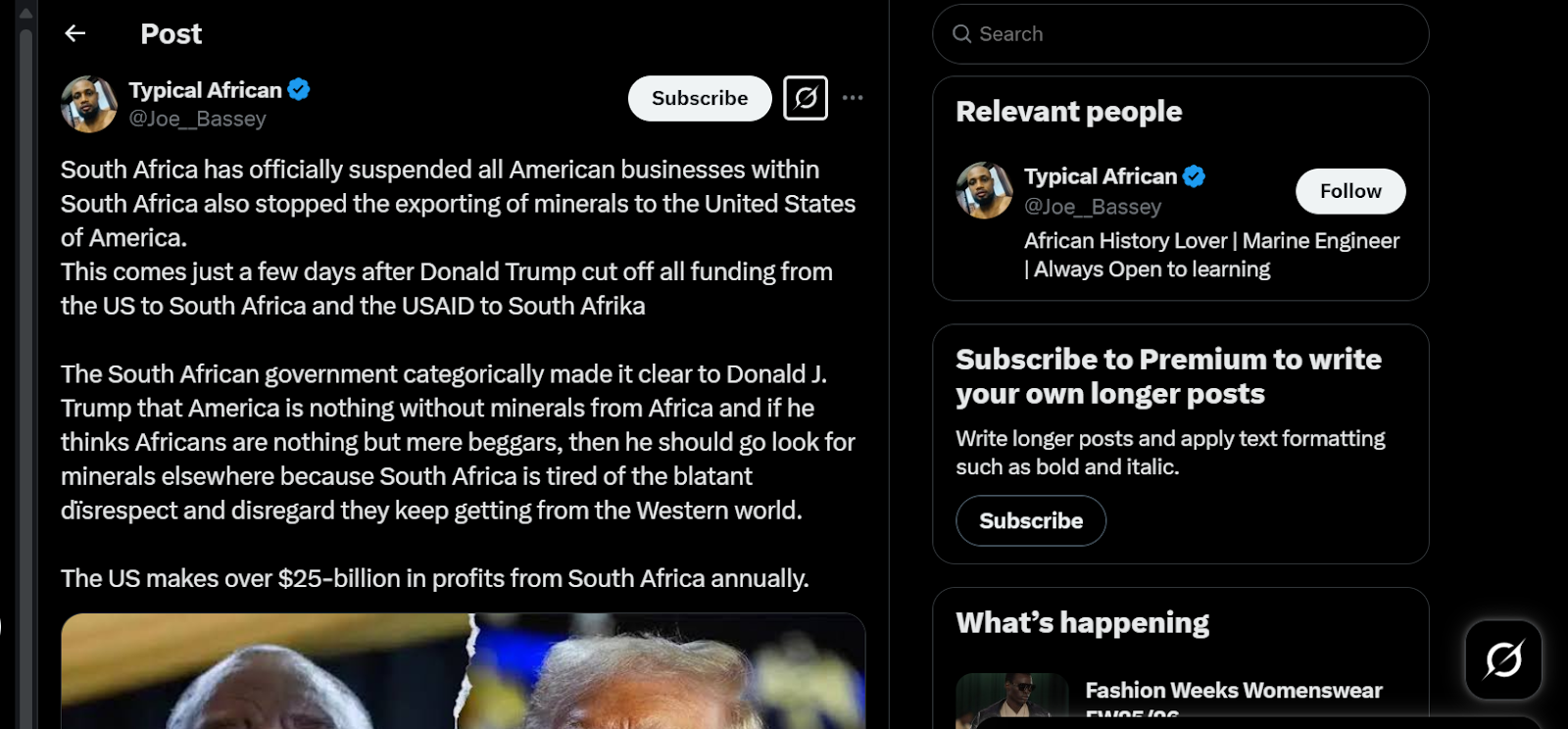
A screenshot of the claim
Meanwhile, as at the time of this report, the post has gained 3.4 million views, 5.1k comments, 12k retweets, 51k likes and 2.9k bookmarks.
Also, a Facebook page, Afrocania, with 2.8 million followers, made a similar post emphasising that the South African government categorically made it clear to Trump that America is nothing without minerals from Africa.
“Also, if Trump thinks Africans are nothing but mere beggars, then he should go look for minerals elsewhere because Africa is tired of the blatant disrespect and disregard they keep getting from the Western world,” the report reads further.
Meanwhile, other posts we sighted also claimed that the President of South Africa, Cyril Ramaphosa, had suspended the activities of about 600 US businesses operating in South Africa.
We decided to look into this claim if South Africa banned US businesses or halted the export of minerals to the US.
Where is South Africa?
South Africa, officially the Republic of South Africa(RSA), is located at the southern tip of Africa. It’s bordered by Namibia, Botswana, Zimbabwe, Eswatini, and Mozambique.
In South Africa, they have three branches of government and a capital city for each and they practice a parliamentary democracy.
The administrative capital is Pretoria, the legislative capital is Cape Town, and the judicial capital is Bloemfontein.
With a population of 64.49 million as of 2024 according to the worldometer, South Africa boasts one of the largest economies in Africa.
Cyril Ramaphosa is currently serving as the 5th and current President of South Africa since 2018.
ROUNDCHECK Findings
According to reports from SABC (South Africa Broadcasting Corporation), On February 3, 2025, South Africa’s mining minister Gwede Mantashe said during an annual summit that African countries should “withhold minerals” from the U.S. in response to any aid cut.
This remark by the South African minister came after Trump had announced he was cutting off all future funding to South Africa.
Meanwhile, ROUNDCHECK findings reveal that South Africa’s presidential spokesman Vincent Magwenya said the claim stating that South Africa has officially suspended all American businesses within South Africa and stopped the exporting of minerals to the United States of America was “not true at all” in a reply to the post on X on February 17, 2025.
Also, The Minerals Council South Africa, an industry support body, said they are unaware of government action affecting the sector’s trade with the US.
In a statement made by Spokesman Allan Seccombe and available to AFP Fact Check the council “has no notification of any mineral export bans to any country”.
South Africa And US Trade
ROUNDCHECK observed that South Africa is the largest exporter in Africa in Africa significantly contributing to US exports from the African continent, primarily with products like vehicles, jewelery, and metals under the African Growth and Opportunity Act (AGOA) — a trade agreement that allows thousands of products from sub-Saharan countries to enter the US market duty-free.
In 2024, total trade between the US and South Africa was worth $20.5 billion, with South African exports ($14.7 billion) accounting for the majority while mining represented a large chunk of South Africa’s exports.
According to mining minister Mantashe, South Africa owns 37 percent of the world’s manganese ore reserves but only two percent is processed domestically.
The country also holds more than 90 percent of the reserves of global platinum group metals and is behind 75 percent of their supply worldwide.
Diplomatic Relations Between SA And US
The land bill, known as the Expropriation Act, drew criticism from South Africa-born Elon Musk, a powerful Trump adviser after its passage by the South African parliament.
The legislation replaces a 1975 apartheid-era law and is intended to align with the country’s democratic constitution.
On February 3, 2025, South African officials clarified that no land had been expropriated under the new law, despite Trump’s claims of “confiscations”.
ROUNDCHECK observed that due to these issues, US Secretary of State Marco Rubio had to pull out of a G20 Foreign Ministers Meeting held in Johannesburg on February 22 and 23, 2025.
Verdict

The claim that South Africa bans American businesses and halts mineral exports to the US is MISLEADING. Our findings showed that the South African government did not suspend American businesses within South Africa or stop exporting minerals to the United States of America.
]]>
Is this true? We checked.
Who is Julius Debrah?
Julius Debrah is a Ghanaian politician and businessman who served as the Chief of Staff under former President John Dramani Mahama from 2015 to 2017.
This raises an important question: Did Julius Debrah still hold this position under the immediate past administration? Let’s examine the facts.
The Immediate past President of Ghana was Nana Addo Dankwa Akufo-Addo, who has been in office since January 7, 2017. His Chief of Staff was Akosua Frema Osei-Opare, who was appointed in 2017.
She was the first female Chief of Staff in Ghana’s history.
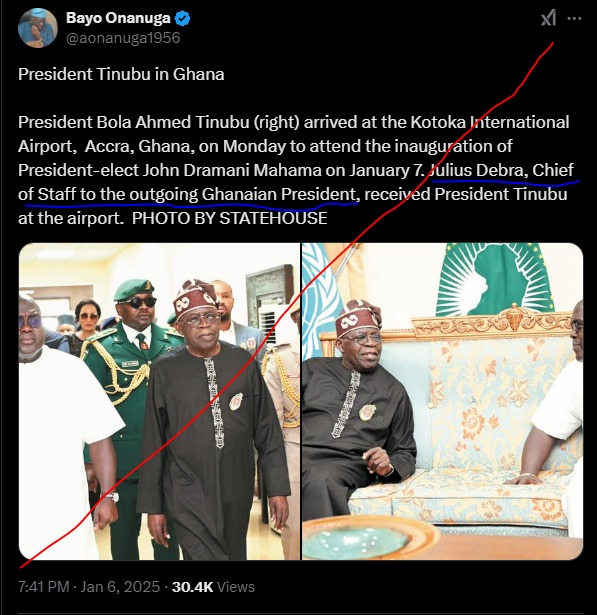
ROUNDCHECK Findings
At the time Onanuga was making the claim on January 6, Akufo-Addo was Ghana’s ‘outgoing president’ while Mahama was the incoming president.
Julius Debrah ceased to be Chief of Staff after John Mahama’s presidency ended in January 2017. However, he was appointed again as Chief of Staff to Mahama who was inaugurated as president on January 7, 2025.
Throughout the administration of Nana Addo Dankwa Akufo-Addo, Akosua Frema Osei-Opare held the position of Chief of Staff, and no official government document or statement indicates a change in this role for the duration of their term.
With a clear look, it was a male (Julius Debrah) who welcomed Nigeria president Tinubu at the airport, and not a female (Akosua Osei-Opare).
Verdict

The claim that Julius Debrah is the Chief of Staff to the immediate past Ghanaian President is INCORRECT. Rather, Debrah is Chief of Staff to the new president of Ghana, John Mahama.
]]>It is a busy morning, with the hum of motorbikes filling the air, but the rhythm of daily life suddenly changes by midday. Soldiers fill the streets, take over the national broadcaster, and announce that the democratic government has been dissolved. By nightfall, silence takes over—the coup that was once a rumour has become a reality.
This scene, while not identical, was repeated across Mali, Burkina Faso, and Niger between 2022 and 2023, shaking the Sahelian States and changing their sociopolitical status.
“These coups overturned fragile democracies, created instability, and increased geopolitical tensions,” says Silas Jonathan, an OSINT expert and the Digital Investigations Manager at the Centre for Journalism Innovation and Development (CJID).
He adds that in recent years, the Sahel has taken a different direction. External forces, through both covert and open means, perpetuated both online (social media) and offline, have pushed these countries to return to the very systems they once rejected, under the belief that “strong leadership” is the answer.
“This is now spilling to neighbouring countries like Nigeria through dogged online propaganda. Citizens are romanced by the idea of military regimes,” Jonathan warns.
A clear example was Nigeria’s #EndBadGovernance protests in August 2024, where people in different states waved Russian flags, called for military intervention, and supported the idea of a military government. Many, including minors, were persuaded by small payments or misleading online campaigns, believing they were supporting a good cause.
This pattern mirrors what happened in the Sahel, where foreign influence helped create the current situation. Now, similar ideas are reaching Nigeria through targeted disinformation and covert propaganda on social media, convincing some citizens that this could be their solution.
A swift pattern to dissuade and disinform
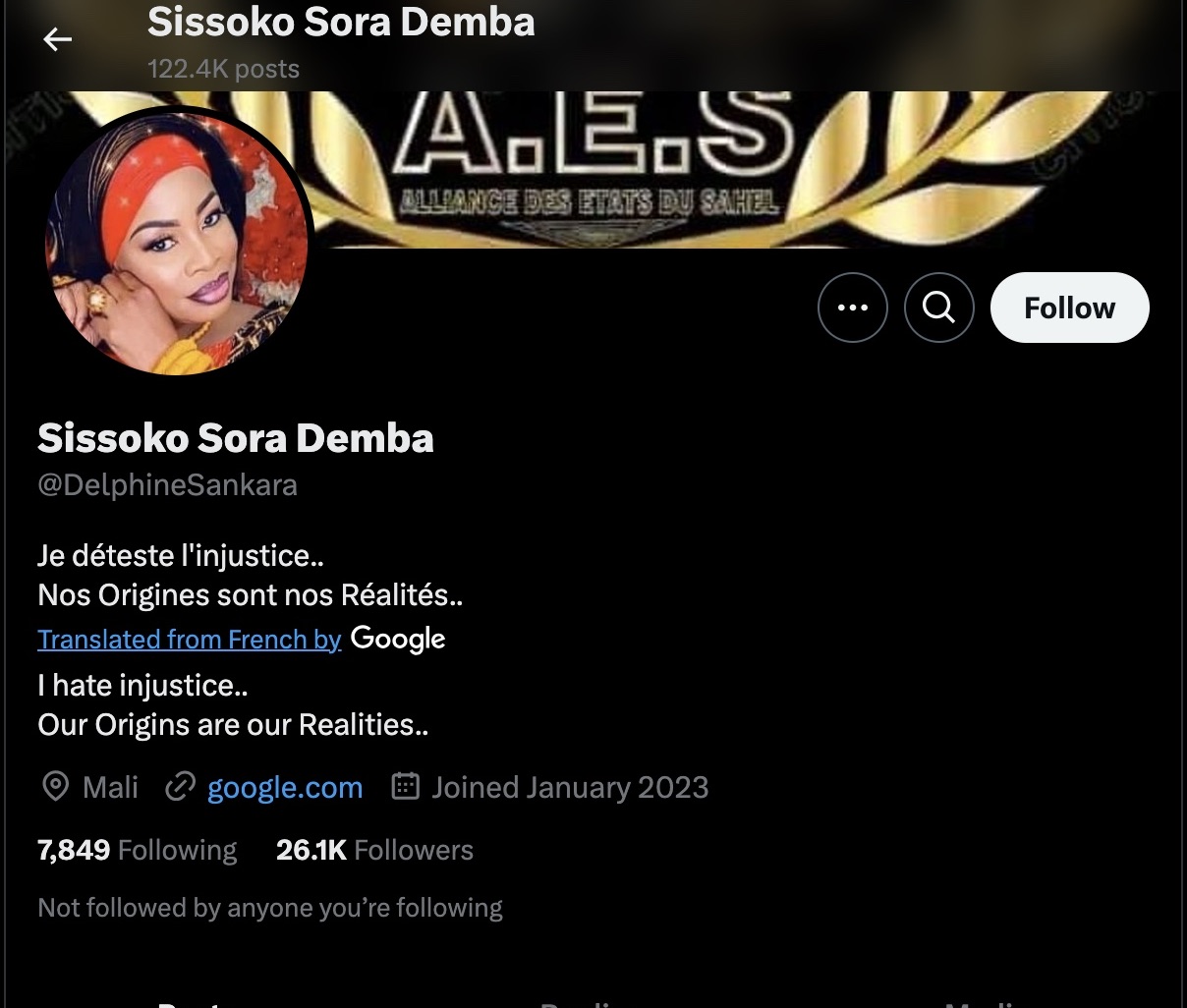
A typical instance of this narrative begins with an X (formerly Twitter) account based in Mali (as indicated in the account bio) named @Sissoko Sora Demba, which frequently shares perspectives on Nigeria, many of which are false or misleading. Despite originating from a French-speaking region, the account’s focus on Nigerian affairs raises suspicions, particularly due to its unusual characteristics. Created in January 2023, the account has gained 26,100 followers while following 7,849 accounts and posting an exceptionally high volume of content—over 100,000 posts to date.
The account contains no identifiable personal information about the user. A French-to-English translation expert finds that the contents of the account are dedicated political commentary, often emphasising topics related to the Sahel and Nigeria’s relationships with Western and Eastern powers.
This account’s activity would be less concerning if it merely discussed Nigeria without the consistent dissemination of false narratives and manipulated sentiments. One such example is a claim shared on June 3, 2024, featuring an image of armed individuals in military fatigues with vehicles in the background.
The post alleged that 20 military personnel and 71 civilians were killed, with 190 others kidnapped in a Boko Haram attack on an Aba checkpoint in Abia State. At the time, the post garnered significant engagement, including 13,900 views, 23 comments, 35 shares, 218 likes, and four bookmarks.
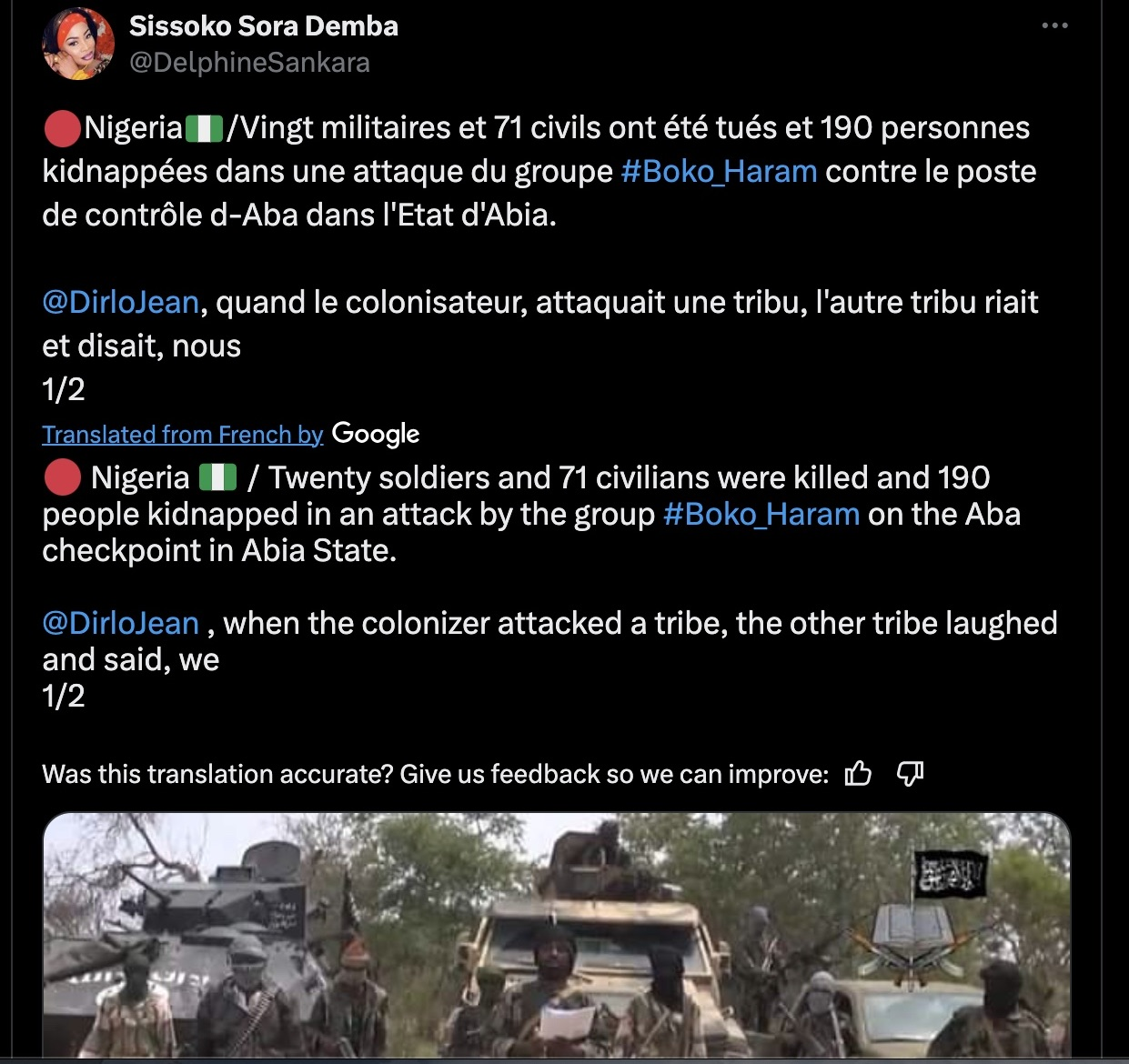
DUBAWA’s investigation of the claim revealed that it was false. The alleged incident did not occur in Abia State, and the accompanying image was misleading. The photo was traced back to a 2013 event involving Boko Haram’s former leader, Abubakar Shekau, who made a video pledging allegiance to ISIS.
Engagement with the post, primarily from French-speaking users, showed that many believed in the narrative. Comments reflected sentiments that Nigeria’s insecurity warranted external intervention, including a preference for military-led governance as a solution.
Another viral post involved a manipulated video of Nigerian billionaire Aliko Dangote speaking French. Analysis using Deepware.ai confirmed it was a deepfake, evident from the unnatural speech patterns. By Nov. 26, 2024, the video had gained significant traction, with over 80,000 views, 224 shares, 595 likes, and 137 bookmarks, contributing further to the spread of disinformation.
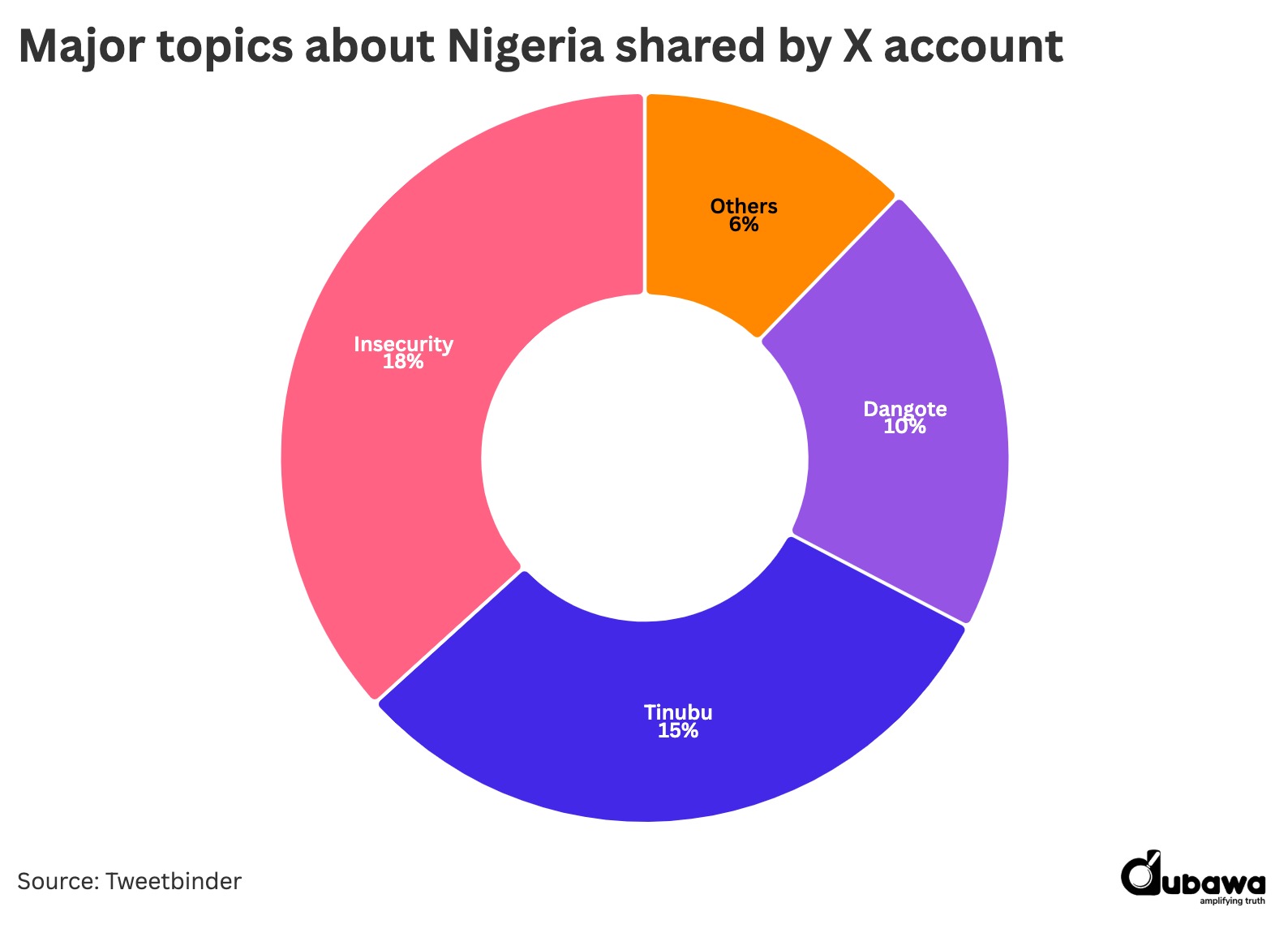
The account repeatedly criticises Bola Ahmed Tinubu’s leadership, describing him as ineffective and associating him with drug trafficking. It frequently advocates for military governance in Nigeria while promoting Russia as an ideal model of governance. Russia is often portrayed as a nation of non-interference and security, contrasted sharply with Western countries like the U.S., Britain, and France, which the account often disparages as meddlesome colonial powers.
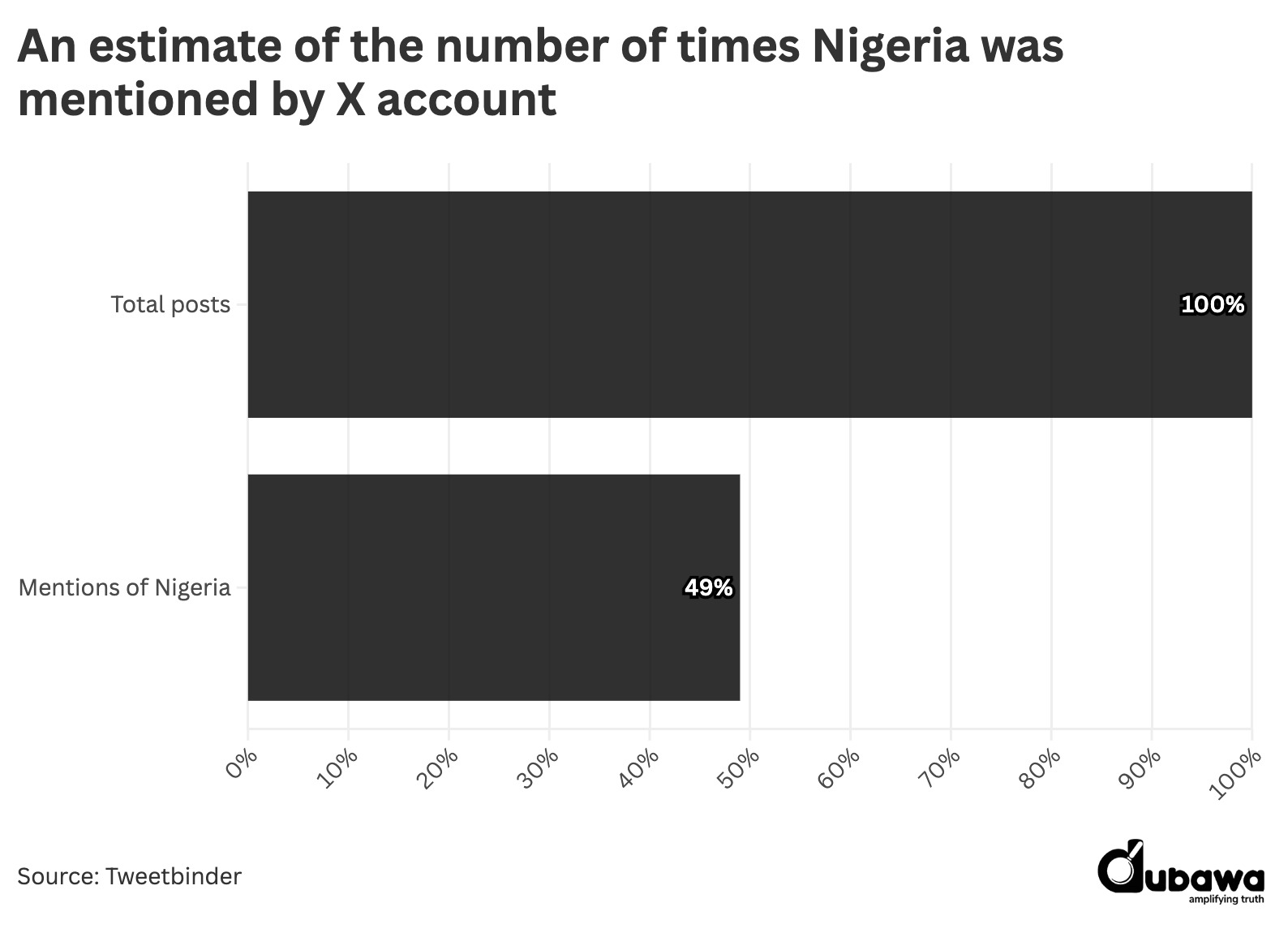
Infographics by Rejoice Taddy.
The X account frequently references events to reinforce its narrative of Western interference in Nigeria. For instance, it highlighted the arrest warrant issued for Andrew Wynne, a British national accused of attempting to destabilise Nigeria under the pretence of operating a bookshop. This incident was framed as evidence of ongoing Western meddling in Nigeria’s affairs. Similarly, the account linked President Bola Ahmed Tinubu’s visit to the French President to claims of foreign interference, suggesting these engagements served neo-colonial interests.
In contrast, the account consistently praised Russia as a governance model for Africa, presenting it as free from neo-colonial influence and committed to supporting African autonomy. This portrayal aligns with the account’s broader pro-Russian, anti-Western narrative strategy.
“Everyone has the right to share what they believe in online, whether their ideological leanings or support for a cause. However, when disinformation is utilised for this cause, then it’s an infringement on people’s right to quality information,” Mr Jonathan says.
When the #EndBadGovernance protest began, the account’s activity spiked as it doled out images and videos related to the protest with keen interest. It consistently displayed Nigerians being dissatisfied with the current government system and advocated for Russian intervention, hinting that Russia was a preferable model for African governance. Despite not taking a direct stance on the protest itself, the account focused heavily on content from the protest that featured people waving flags, furthering its narrative of discontent with Nigeria’s leadership system. In some instances, it shared unrelated pictures and videos linking them to the protest.
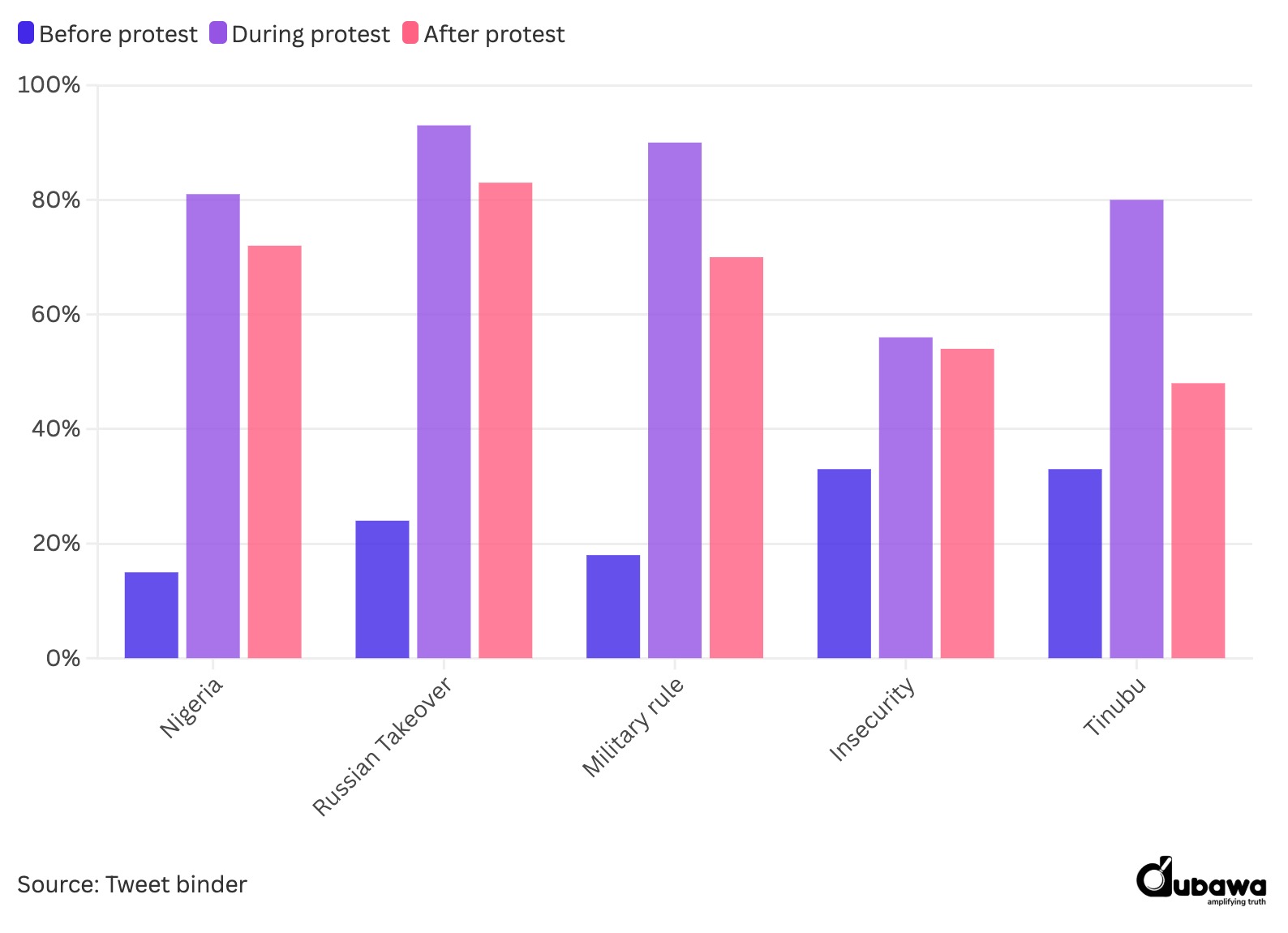
Analysis of contents and narratives shared before, during and after the #EndBadGovernance protest, in 2024.
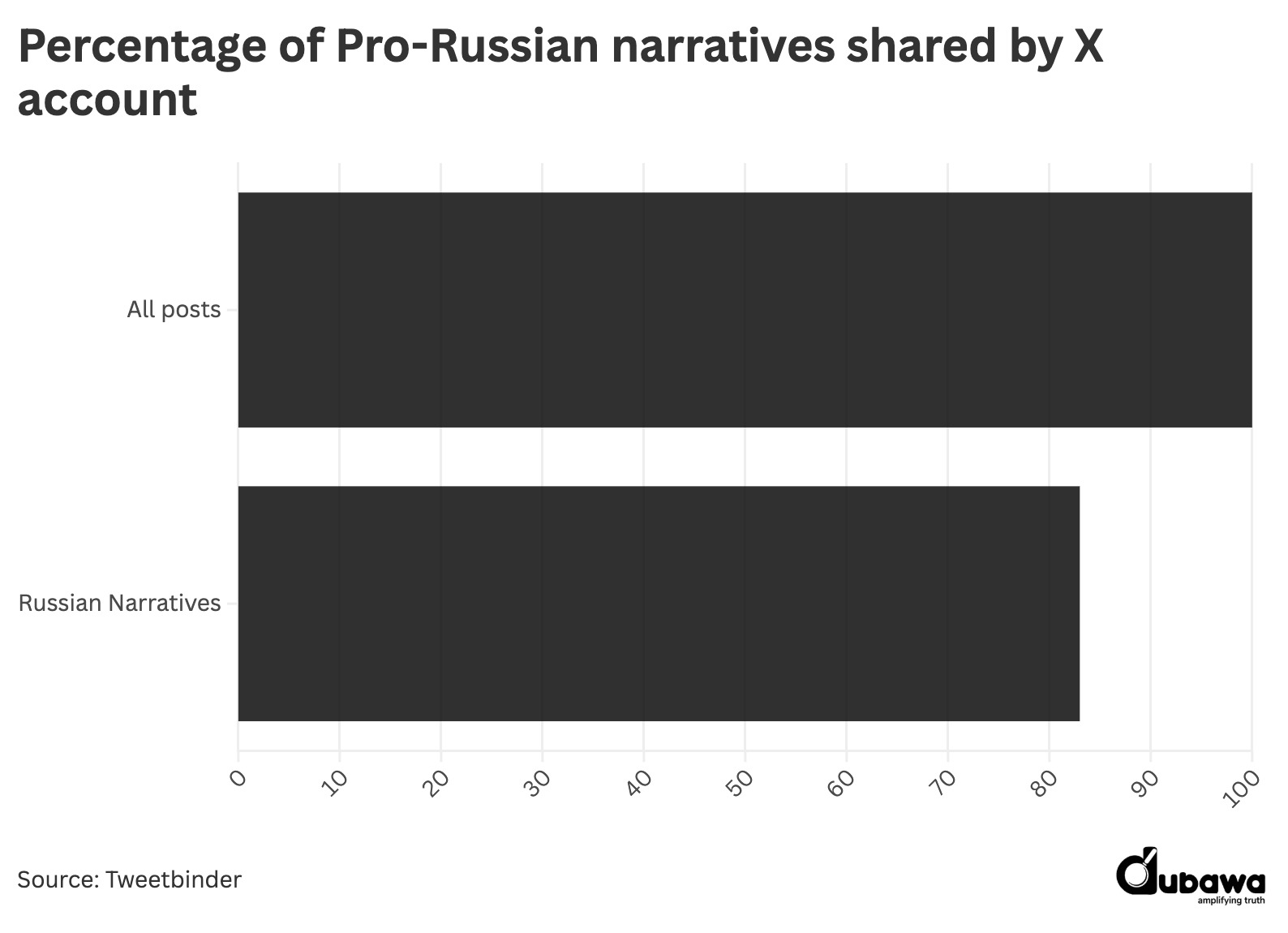
Another interesting data gathered from Tweetbinder was the percentage of Russian content this X account has been spreading. It summed up to 83% of most of its contents which was either a stand-alone or was combined with discussions of the affairs of other countries like Nigeria.
Linked accounts
While the main X account spreads disinformation, a network of accounts from the Sahel region interact with @Sissoko Sora Demba’s posts and share similar false narratives. These accounts also promote pro-Russian views. Among them, two accounts are closely linked to Nigeria, contributing to the spread of these narratives and supporting the pro-military regime in Africa.
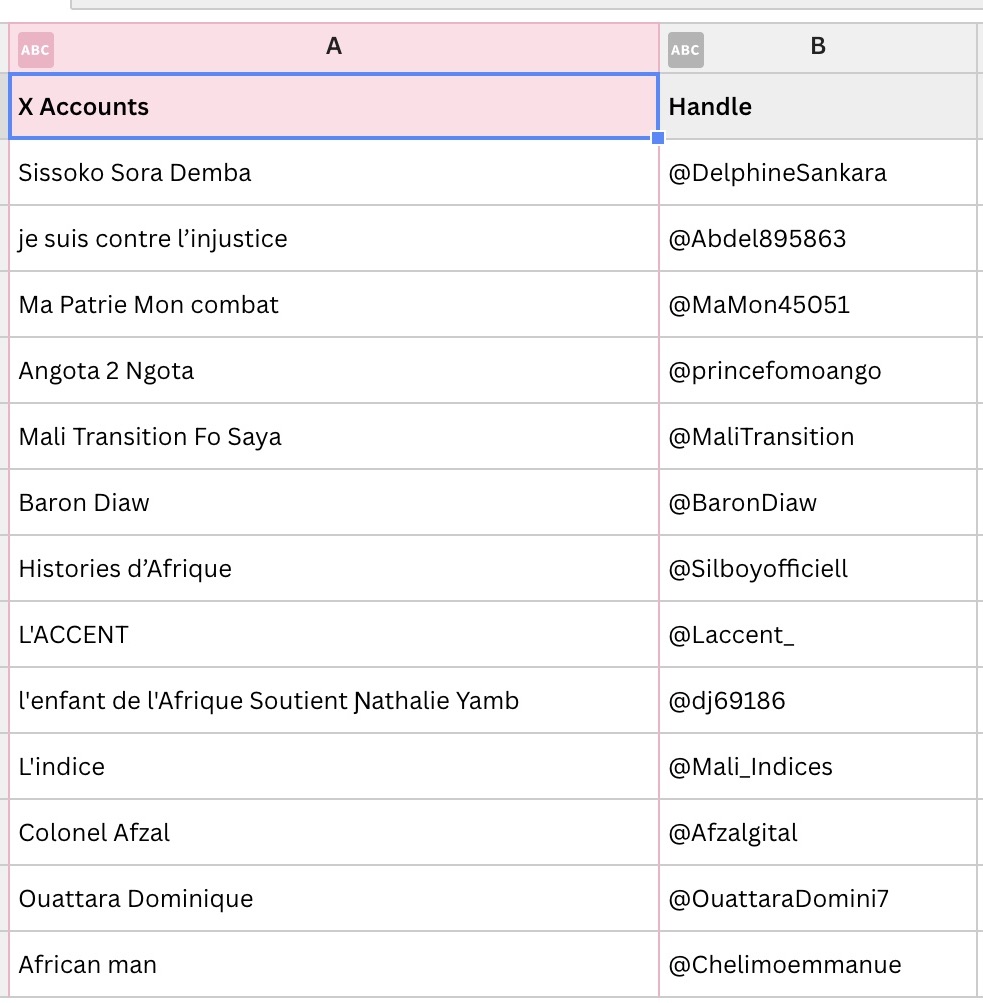
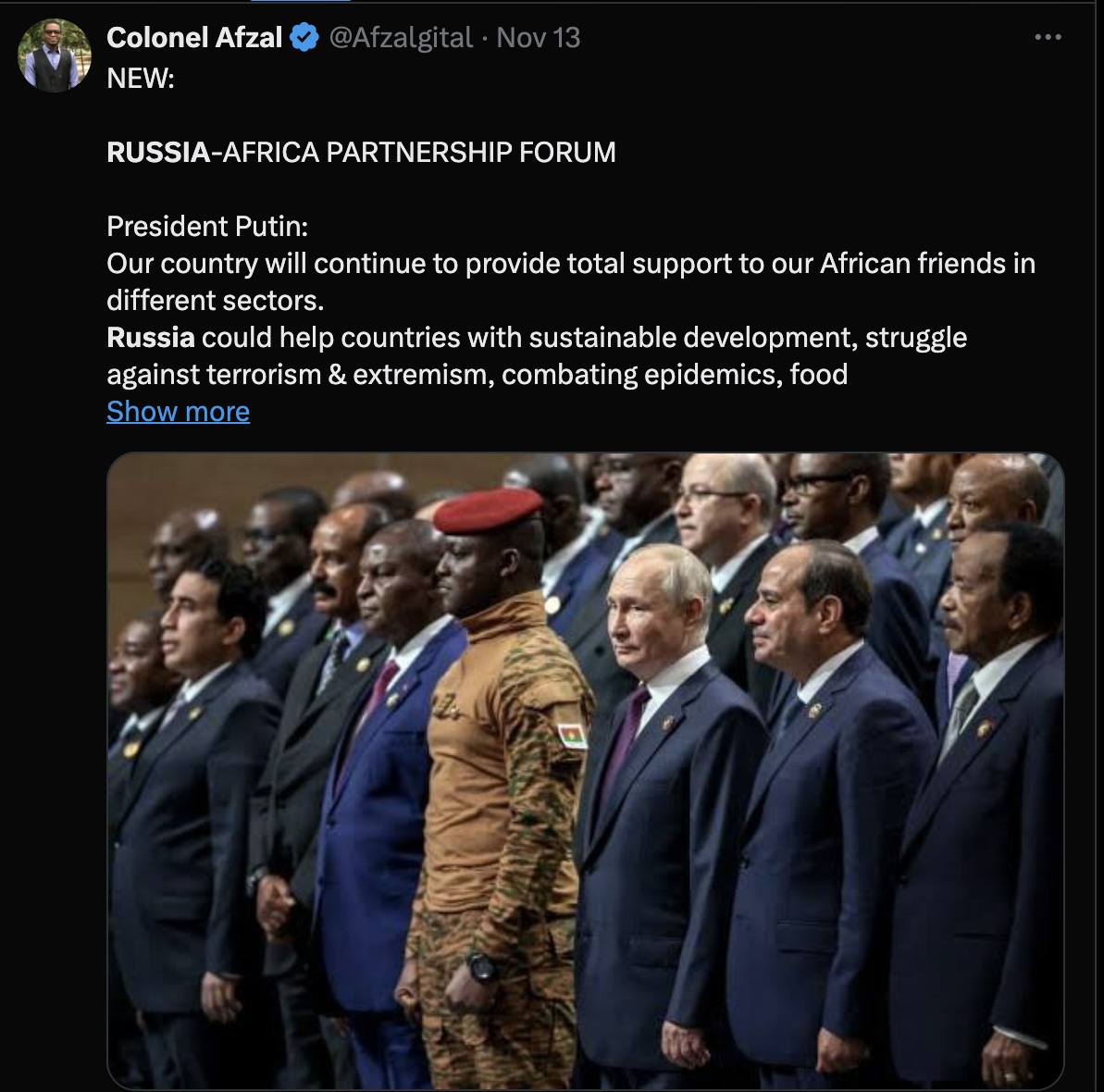
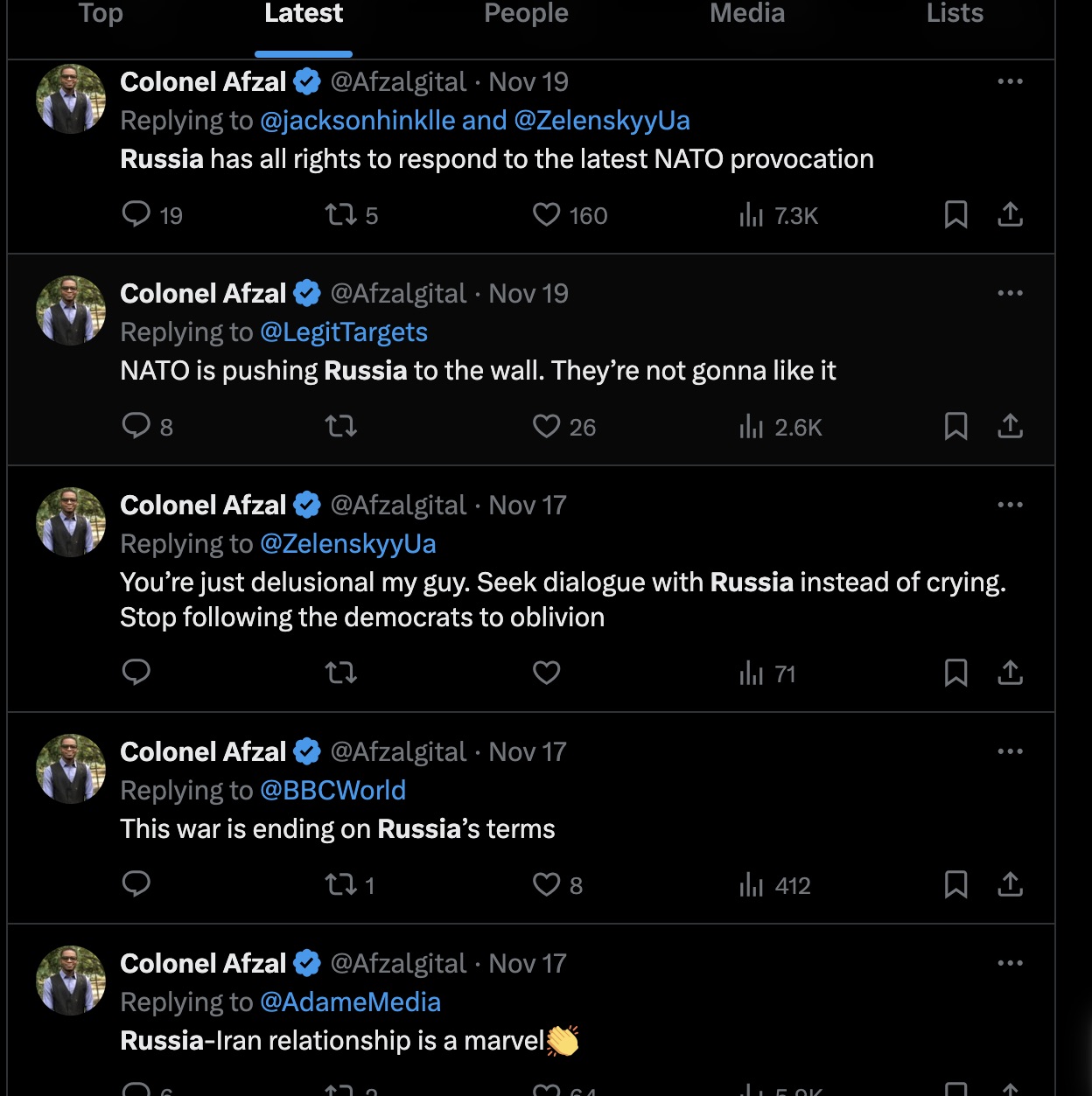
Two of the accounts from the list were found to share posts in English: @Africanman and @ColonelAfzal. They also identified themselves as pro-Russsian and pro-AES
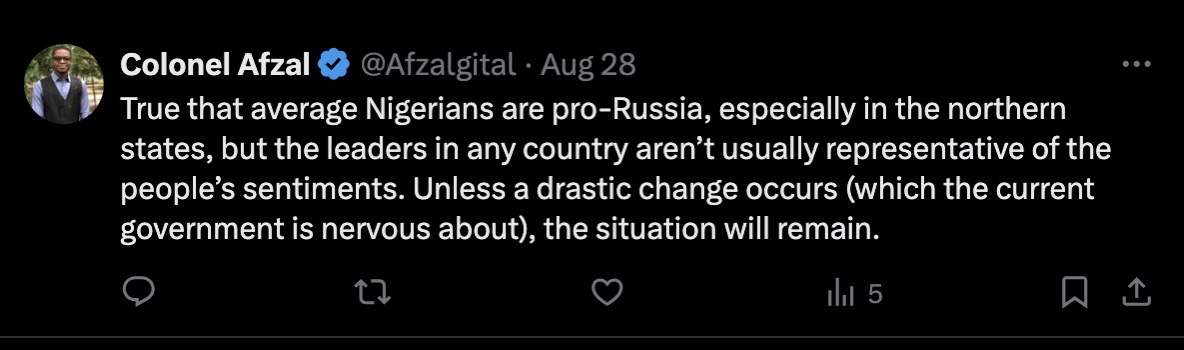
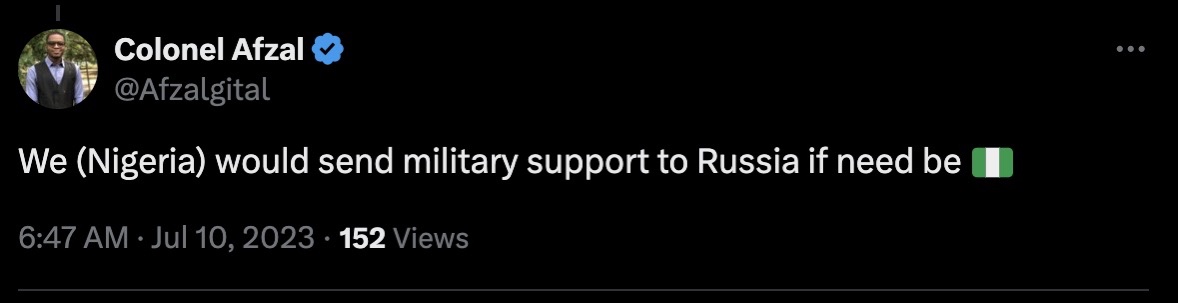
@ColnelAzfal is a Nigerian who refers to himself as an anti-Imperialist, a pan-Africanist who is pro-AES and believes that Russia does nothing but good, and does not hesitate to tweet about his support, thoughts and interest for Russia – a country he believes Nigeria should emulate.
@Africanman, who identifies as Ugandan, shares controversial opinions about Nigeria and promotes narratives that align with pro-Russian and anti-Western viewpoints.

A Screenshot of an African man’s X account.
Expert views on online campaigns targeted at Nigeria’s democracy
Mark Duerksen, the Strategic Communications Manager and Research Associate at the African Centre for Strategic Studies highlighted an increasing trend where local actors, such as influencers hired to spread specific narratives or organisations set up by Russian-connected figures, are influencing the political landscape. He noted:
“All this is to tilt the political landscape and cast doubt on any accurate reporting, and tilt the narrative that the military junta’s in the Sahel are popular, successful, and are doing what they promised they would do, and generally trying to paint a picture of Russia as a benevolent patron.”
Mr Duerksen further emphasized that these campaigns are relentless, with constant monitoring of local news environments and information spaces to counter objective reporting about Russia’s influence.
“We can take a step back and think of why Nigeria would be a target of these campaigns. We can read the geopolitical map and think about the fact that Nigeria, despite all of its flaws and democratic setbacks, has been a voice for consolidating ECOWAS to strengthen the rule of law processes in the region.”
He buttressed that it is more like a regional power in terms of enforcing those principles. But with the coup in the Sahel region, there will be an interest to diminish Nigeria’s oversight in the region, and one way of doing that is by driving internal crises and problems in the country so that Nigeria goes back to fixing internal issues and not become a strong voice in the region.
Mr Duerksen also discussed how digital campaigns can translate to offline disinformation and chaos, referencing a recent protest in Nigeria:
“These things are sabotage and violation of Nigeria’s sovereignty, and I do think it will continue, but it all depends on how the Kremlin operation becomes sophisticated and advanced techniques of using disinformation and strategic corruption, recruitment of politicians and local influencers, all intending to weaken Nigeria.”
He concluded by stressing the need for greater awareness of these tactics: “More awareness needs to be raised about these agendas, how they work in the sabotage we are seeing to further strengthen Nigeria’s democracy.”
X has a stern and clear policy against coordinated disinformation: “We do not allow any activity that attempts to manipulate our platform or disrupt our services through inauthentic accounts, behaviour or content,” an apparent offence that these coordinated activities have been perpetuating with no restrictions whatsoever from X.
In his final words, Mr Jonathan says it’s not just about disinformation but also about sovereignty, unity, and the future of a nation deeply connected to Africa’s political and economic landscape. “Nigeria’s strength should now lie in raising awareness, creating counter-narratives, and maintaining collective vigilance against all malicious schemes.”
]]>On 15th November, a popular celebrity and activist on X known as @AreaFada1, noted in a tweet that Mali is now a debt-free country.
In his exact words, he said: “Mali is now a debt free country. The country’s Finance Minister has announced, Mali becomes the first African country to be debt free. After the military took over, they sold all the assets belonging to the corrupt elites and sent them to jail including the former president’s son & Ministers. When will it be our turn?”.
The tweet which gained 5200 likes, 1700 retweets and 273k views went viral in the Nigerian social media space and attracted 413 comments (still counting).
Also, on LinkedIn, Emerging Alkebulan (Alkebulan Innovative Foundation), with 4,548 followers, made a similar post and gave details about the claim, emphasising that ‘Mali, under the leadership of General Assimi Goita, has achieved a significant milestone by becoming the first African nation to be debt-free.’
He noted that Mali’s achievement in becoming debt-free is commendable and serves as a beacon of hope for other African nations.
The post has since then gained 76 comments and 46 reposts at the time of compiling this.
Where is Mali?
Mali known officially as the Republic of Mali is a landlocked country situated in West Africa. It is the eighth-largest country in Africa with an area of over 1,240,192 square kilometres (478,841 sq mi).
The country shares a border with Algeria to the North then Niger to the East, with Mauritania to the North West.
Mali also shares a border with both Burkina Faso and Ivory Coast to the South and Guinea with Senegal to the West.
The country’s Capital, Bamako is the largest city in the country. With a population of 24,478,595, Mali is governed by a military junta headed by Assimi Goita who is the interim President after a successful coup he led in April 2021.
ROUNDCHECK Findings
The junta-led West African nation’s economy has been rocked by two coups in 2020-2021 and consequent regional sanctions which have contributed significantly to the continued high debt profile of the country.
On the 20th of October, Mali Economy and Finance Minister, Alousseni Sanou, in a news report by Reuters, acknowledged the increasing challenges the country is facing as debt repayment efforts begin.
The report disclosed that Mali will pay off 200 billion CFA francs ($332 million) of its internal debt starting from the following week until the end of the year in a bid to ease its debt burden.
In the report, IMF analysis warned that the direction and pace of debt accumulation are worrisome and that Mali’s domestic debt had risen from a low base of 8.1% of gross domestic product in 2015 to 22.1% as of 2021.
In another report, Mali’s economy minister revealed that the country expected to pay off $1.015 billion in domestic debt as part of its 2024 budget plan to ease the debt burden
However, the repayment of the $322 million of internal debt does not make the country debt-free as there are still other pending debts and financial obligations the country needs to fulfil.
According to official data, Mali’s domestic debt stood at CFA2,965.9 billion(about $5 billion) in 2023, making up over 55% of the country’s total public debt.
On the 18th of October, Moussa Diallo, Mali’s Minister of Industry and Commerce, during a session broadcasted by ORTM (Office de Radiodiffusion-Télévision du Mali), emphasised the broader impact of reducing the debt.
According to him, “By paying CFA 200 billion of the domestic debt, we are looking to restore the cash flow of businesses, help them meet their obligations to banks, and support domestic consumption. Overall, this initiative should help kick-start the economy.”
Mali’s Debt Profile
In 2022, Mali’s public debt was 51.7% of its GDP, and its external debt was $3,923,341,002. In the decade leading up to 2022, Mali’s public debt averaged 38.3% of its GDP. The World Bank and IMF projected that the public debt will increase to 47% of GDP in 2023, and then gradually decline to 43.2% of GDP in 2030.
According to Statista, the national debt in Mali was projected to continuously increase between 2024 and 2029 by 4.4 billion U.S. dollars (+36.64 per cent).
According to the International Monetary Fund, the general government gross debt consists of all liabilities that require payment or payments of interest and/or principal by the debtor to the creditor at a date or dates in the future.
The main external creditors were the IMF, World Bank, African Development Fund, West African Development Bank, Islamic Development Bank, and the governments of France, China, India, and Abu Dhabi.
IMF noted that Mali’s outstanding purchases and loans (SDR) were $344.68 million as of September 30, 2024, with Mali’s contingent liabilities estimated to be 14.3% of GDP at the end of 2024.
Mali’s debt service reached a historical record of $292 million in 2021. In 2022, Mali’s budget deficit widened to 5.3% of its GDP.
The International Monetary Fund (IMF) has warned that Mali’s debt accumulation is worrisome. However, Statista forecasts that Mali’s debt-to-GDP ratio will decrease to 54.41% by 2029.
Can a country be debt-free?
ROUNDCHECK findings showed that a country can be debt free but it is difficult to achieve. With the Heavily Indebted Poor Countries (HIPC) Initiative launched in 1996 by the International Monetary Fund (IMF) and World Bank, it can only help countries avoid unmanageable debt.
Also, in 2005, the Multilateral Debt Relief Initiative was added to help countries reach the United Nations’ Sustainable Development Goals. Countries that complete the HIPC Initiative process can receive 100% relief on eligible debts.
Findings revealed that these achievements paved the way for Somalia to conclude the Enhanced Heavily Indebted Poor Countries (HIPC) Initiative in December 2023.
As a result, the country received $4.5 billion in debt relief from the World Bank’s International Development Association (IDA), the International Monetary Fund (IMF), the African Development Fund, other multilateral creditors as well as bilateral and commercial creditors, mostly members of the Paris Club.
This achievement reduced Somalia’s external debt from 64% of GDP in 2018 to less than 6% of GDP by the end of 2023, allowing the country to re-enter the global financial system following two decades of isolation.
Conclusion
Our findings revealed that Mali is not a debt-free country yet.
]]>The 73rd Miss Universe pageant set to be held on the global stage in Arena CDMX in Mexico City, Mexico, on November 16, 2024, will host 19 inspiring contestants from across Africa.
This year’s contestants are not only beautiful but also exceptional in their fields, each bringing their unique cultures, talents, and advocacies to the global spotlight, from gender equality and healthcare to environmental conservation and cultural inclusivity.
Here is a closer look at these remarkable women representing the heart and diversity of Africa.
Angola
Nelma Tchissola Ferreira, a 26-year-old management and company administration graduate, is a dedicated volunteer with a vision for gender equality and reducing hunger. She previously competed in Miss World 2018 and hopes to revive Angola’s presence at Miss Universe, following Leila Lopes’ win in 2011.
Botswana
Dr. Thanolo Keutlwile a 28-year-old medical doctor and general practitioner focusing on women’s health.
She is also involved in humanitarian and philanthropic work. Inspired by Mpule Kwelagobe’s 1999 Miss Universe win, Thanolo aims to carry forward Botswana’s legacy.
Cameroon
Raïssa Noura Njikam was Crowned Miss Cameroon 2024. Noura is passionate about art and culture and advocates against violence toward women.
She won the People’s Choice Award with a large number of online votes.
Côte d’Ivoire
Marie-Emmanuelle Diamala is representing Ivory Coast for only the second time in history, Marie-Emmanuelle, a 20-year-old, is devoted to environmental conservation and community development.
Democratic Republic of the Congo
Ilda Amani is a menstrual health advocate from South Kivu, Ilda, with a background in business administration, champions peace and women’s empowerment in her conflict-stricken homeland.
Egypt
Logina Salah, a multifaceted woman, Logina is a finance graduate, mother, model, and vitiligo advocate.
She is poised to represent Egypt, bringing her skills as a makeup artist and TV presenter to the global stage.
Equatorial Guinea
Diana Dashaira Mouhafo, a 24-year-old commerce and marketing graduate, Diana is a mother and the first representative of Equatorial Guinea at Miss Universe. She hopes to achieve her country’s first semifinal placement.
Eritrea
Snit Tewoldemedhin, representing Eritrea’s debut at Miss Universe. Snit is a neuroscience graduate and advocate for children’s education, inspired by her sister with down syndrome and her late mother.
Guinea
Nene Mariama Saran Bah is represented as the first Miss Universe Guinea. Saran, a humanitarian through her NGO, previously placed in the top 40 at Miss World 2021/22. She focuses on supporting disadvantaged children.
Kenya
Irene Ng’endo Mukii is a software engineer and youth empowerment advocate, Irene combines her skills as a dancer, teacher, and entrepreneur to inspire young people. She previously won Miss Africa 2019.
Mauritius
Vishakha Tania René, a 28-year-old IT project manager and climate advocate, Tania promotes zero-waste initiatives in Mauritius. Fluent in four languages, she is passionate about anime and Japanese culture.
Namibia
Prisca Anyolo is a journalist and entrepreneur, Prisca owns Elysian Beauty Parlour and supports young women through job creation. She aims to secure Namibia’s first back-to-back semifinalist spot.
Nigeria
Chidimma Vanessa Onwe Adetshina, a law student and advocate for diversity and inclusion, Chidimma withdrew from Miss South Africa due to citizenship issues but now represents Nigeria. She founded SUEI to promote inclusivity.
Senegal
Fatou Bintou Gueye was originally the first runner-up at Miss Senegal. Fatou marks Senegal’s fourth participation in Miss Universe, with a mission to elevate her country’s standing on the international stage.
Somalia
Khadija Omar, a beauty influencer and founder of K Amani. Khadija is the first hijabi to represent Somalia. Born in a Kenyan refugee camp, she advocates for inclusivity and empowerment.
South Africa
Mia le Roux is the first ‘deaf woman’ to wear the Miss Universe South Africa crown. Mia uses a cochlear implant and aims to add to South Africa’s three previous Miss Universe wins.
Tanzania
Judith Peter Ngusa is a fashion model, actress, and health advocate, Judith, the first mother to represent Tanzania, has previously competed in Miss United Nations and is a champion for postpartum health.
Zambia
Brandina Lubuli, an advocate for women’s rights, Brandina is a philanthropist and science lab technologist. Zambia returns to Miss Universe after a hiatus, and she is the first married woman to represent her country.
Zimbabwe
Sakhile Dube is a healthcare advocate and fashion designer, Sakhile aims to enhance access to quality medical services and youth empowerment through employment opportunities.
As these African ambassadors prepare to grace the Miss Universe stage, they embody not just national pride but also the aspirations of their communities.
Their participation marks a transformative shift in beauty standards and highlights the importance of global conversations around inclusivity and empowerment.
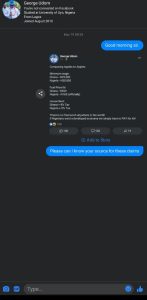
]]>Mr Udom made these claims while comparing the living situations between these two West-African Countries.
He said, “Comparing Apples to Apples:
Minimum wage:
Ghana N25,300
Nigeria – N30,000
Fuel Price/ltr
Ghana – N350
Nigeria – N165 (officially)
House Rent:
Ghana + 8% Tax Nigeria + 0% Tax
There is no free lunch anywhere in the world! If Nigerians want a developed economy we simply have to PAY for itit!”
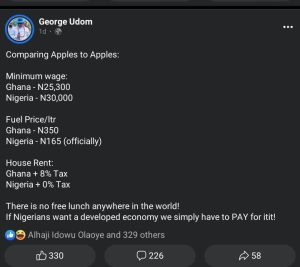
This post has generated a total of 330 likes, 226 comments, and 58 shares at the time of fact-checking.
When contacted for the source of his claims, Mr Udom left the inquiry message unanswered on his Facebook chatbox.
Roundcheck’s Findings
Claim 1
That minimum wage in Ghana is N25,300, while N30,000 in Nigeria
Findings by Roundcheck show that the claim that N30,000 is the monthly minimum wage in Nigeria is accurate, but that N25,300 is the monthly minimum wage in Ghana is false.
According to information available, as of March 2022, on Wageindicator, a non-profit organisation that shares and compares information about wages, labour law and careers in 196 countries globally, the minimum wage in Ghana is GHS13.53 daily, which is equal to 776.19 in Nigerian currency, according to Currency Matrix’s convert.
In Ghana, monthly minimum wage figures are calculated as daily minimum wage × 27 days, according to Wageindicatior. So going by mathematical calculation, GHS 13.53 in 27 days is equal to GHS 365.31 —equivalent to 20,820.64 in Nigerian currency.
Meanwhile, in Nigeria, the monthly minimum wage is N30,000 (522.94 in Ghanian cedis). According to Wageindicator, The minimum wage in Nigeria is based on monthly income with an average working period of 8 hours daily and 5 days weekly.
Verdict: While N30,000 as the monthly minimum wage in Nigeria as claimed by Udom is TRUE, the minimum wage in Ghana is GHS 13.53 (N776.19) daily, GHS 365.31 (N20,820.64) monthly, not N25,300 as claimed by Udom. This claim is Partially True.
 Claim 2
That 1 litre of fuel costs N350 in Ghana, while the official price is N165 in Nigeria.
According to a record found at GlobalPetrolPrices.com, petrol price in Ghana, according to data updated as of 14, March 2022, is GHS 8.618 per litre, equivalent to 491.18 in Nigerian currency.
The above price was also confirmed by Statista. According to them, as of March 14, 2022, the price of gasoline in Ghana stood at 8.62 Ghanaian cedis (GHS) per litre, corresponding to roughly 1.21 U.S. dollars.
Further findings reveal that the above update is the most recent, as at the time of writing this report, on petrol price in Ghana.
Meanwhile, in Nigeria, presently, the official pump price of petrol (PMS) is N165 (2.87 in Ghanian cedis, equivalent to 0.39 US Dollar), NigerianPrice.com — an online resource designed to help Nigerians (and others) to keep abreast of current prices of products and services available in the country, revealed.
The Verdict: The official petrol price in Nigeria is N165 as claimed, hence TRUE. But findings by this reporter revealed that the fuel price in Ghana is N491.18, not N350 as claimed, hence FALSE. This claim is Partially True.
Claim 3
That house rent tax in Ghana is 8%, while it is 0% in Nigeria.
According to Ghana Revenue Authority, There are two rates for rent tax; 8% for residential premises and 15% for non-residential premises.
Meanwhile, in Nigeria, despite several controversies that trail the issue of house rent tax, finding show that rent derived from the lease of real properties, whether for residential or commercial purposes, is not a supply of goods or services and is therefore not liable to Value Added Tax(VAT). What this means is that house rent tax in Nigeria is not recognised by the law.
The Verdict: The claim is TRUE.