The viral post circulating on WhatsApp claims that a child identified as ‘Gift’ is suffering from a serious medical condition and needs 1,983,000 naira for surgery. The post appeals for public donations and provides a bank account belonging to one Abdulsalam Momodu (Kuda Bank) while urging users to pray, share, and support the child financially.
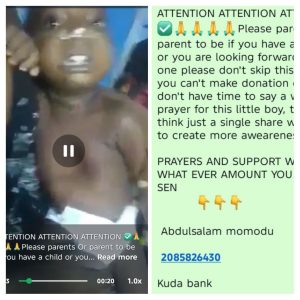
At first, I felt sympathy and considered contributing. But the repetition caught my attention. WhatsApp had also indicated that the message had been forwarded many times.
Why was the same video circulating through multiple accounts with identical messages? That simple moment of curiosity became the beginning of a deeper search for the truth.
ROUNDCHECK Findings
ROUNDCHECK observed that the post provides a personal bank account belonging to one Abdulsalam Momodu (Kuda Bank), with the account number 2085826430, for receiving donations. When entered into a bank transfer app, the name of the bank details matched.
After, we conducted a Google reverse image search and discovered that the image attached to the donation appeal appears to be a screenshot taken from a YouTube video (Archived here).
The image shows a young child wearing a diaper, which the viral appeal presents as evidence of the child’s alleged health condition. Examination of the image revealed visible clues from what appears to be a YouTube interface, including details that could be used to trace the original content.
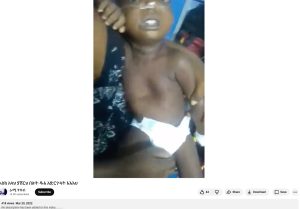
Using these clues, ROUNDCHECK conducted keyword searches and cross-checked the search results with the information visible in the screenshot. The search led to a matching YouTube video, which was then reviewed and compared with the image attached to the viral appeal to establish whether the content had been previously published and to determine its original context.
The video was posted on March 20, 2022, on @Ramii22’s YouTube channel (Archived here) and has 44 likes and 427 views. In the description of the video, an Amharic text was written and translated to English as ‘Until Allah heals him, say a prayer (dua) for him.’
Also, on June 3, 2026, the video was posted on Taiwo Adako’s YouTube channel (Archived here).
However, the image and video alone do not establish a) the identity of the child b)the location of the child c) the person who uploaded the video d) whether the child in the image is connected to the donation request or whether the requested funds are genuinely for medical treatment.
However, at the time of this investigation, there was no publicly available evidence confirming that Abdulsalam Momodu is the child’s parent or guardian, that the account is linked to a recognised hospital, that the child’s condition has been medically diagnosed, or that a verified medical facility issued the requested surgery amount.
Further checks led us to an Instagram post made by amycharleshopefoundation (Archived here) on Instagram on July 17, 2025, using the same video.
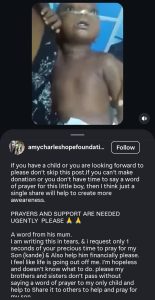
In the description of the post, the name of the child was mentioned as Kande. ROUNDCHECK noticed that the amount requested from the public is different from the previous claim ( ₦1,960,000 and said he only has ₦250,000). This differs from the first claimed amount and account information.
The account information on the post is for one Auwal Aisha, with account number 7025694542 attached to MOMO PSB Bank. ROUNDCHECK confirmed that the account details are active for transferring money.
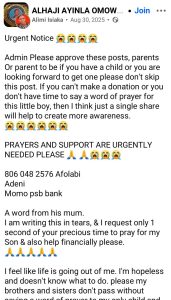
This video was seen on Instagram (Archived here). Also, it was posted on Facebook by Alimi Isiaka in a group named Alaaji Ayinla Omowura, Fans Club, The Eegunmogaji of Egbaland Worldwide. The details for payment also changed to Afolabi Adeni, 8060482576, MoMo PSB Bank.
Analysis of Possible Red Flags
The viral appeal contains several features that are commonly associated with online donation campaigns that require careful verification before members of the public decide to contribute. One of the most noticeable characteristics is its use of highly emotional language.
Phrases such as “I am writing this in tears” and “my son is dying slowly as days pass by” are designed to evoke sympathy and create a sense of urgency, encouraging readers to respond emotionally rather than critically assessing the authenticity of the claim.
Another notable feature is the repeated call for immediate action. The post urges readers to donate whatever amount they can afford and to share the message widely.
While genuine fundraising campaigns often encourage public support, the emphasis on urgent donations without first providing verifiable evidence may pressure people into making quick decisions without conducting basic checks.
The appeal also lacks essential medical documentation that would normally accompany a legitimate request for financial assistance.
It does not include the name of the hospital treating the child, a medical report, a doctor’s diagnosis, a treatment invoice, or any official documents confirming the child’s condition and the cost of the proposed surgery.
The absence of such information makes it difficult for potential donors to independently verify the appeal’s authenticity.
Furthermore, the donations are requested through a personal bank account rather than a hospital account, a registered charity, or another recognised fundraising platform.
Although using a personal account does not necessarily indicate fraudulent intent, it reduces transparency. It makes it more difficult for donors to confirm that their contributions will be used for the stated medical purpose.
Very specifically is the account number is always changing for everyone who posted the image. The inconsistency is a red flag.
Taken together, these indicators do not conclusively prove that the fundraising appeal is fraudulent. But the red flags should raise the consciousness that something does not add up in the different posts.
Also, they raise legitimate concerns and underscore the importance of verifying online medical donation campaigns before making financial contributions.
Expert Opinion: Why Medical Verification Matters
To understand whether a person’s medical condition can be verified through photographs shared online and the role of medical documentation in fundraising, Dr Bibilari Adewusi, a medical practitioner, spoke to ROUNDCHECK when we shared the image and the call for financial appeal with him.
According to Dr Adewusi, it is not always possible to accurately determine a person’s medical condition from photographs or videos alone, although some illnesses may present obvious physical signs.
He explained that recent controversies surrounding false medical claims on social media have contributed to growing public scepticism.
Dr Adewusi noted that certain diseases can sometimes be recognised visually.
“Depending on the medical condition, there are clinical conditions that one can identify from sight. For example, patients with goitre or cancrum oris (noma) may display obvious physical abnormalities that suggest they are unwell. However, a photograph alone cannot provide a definitive diagnosis or determine the exact nature or severity of a disease.”
On the documentation required for genuine medical fundraising, Dr Adewusi emphasised that medical reports should accompany public appeals for financial assistance.
“Ideally, medical reports should accompany such appeals. Unfortunately, recent incidents have shown that even medical reports can be manipulated. This means the public must now verify not only that a report exists but also that it is authentic,” he concluded.
To further examine how Nigerians can verify online medical fundraising appeals, ROUNDCHECK spoke with Nurse Taiwo Okediran, who works at the University College Hospital Ibadan. She cautioned that photographs and videos circulating online cannot, on their own, establish a child’s diagnosis, the severity of the condition, or the need for surgery.
She explained that while visible signs such as severe thinness, breathing difficulties, abdominal swelling, jaundice, seizures or visible masses may indicate that a child needs medical attention, proper diagnosis requires medical history, physical examination and, where necessary, laboratory tests or imaging.
Okediran said genuine medical fundraising appeals should provide current medical reports, official hospital cost estimates, relevant diagnostic records and consistent patient information. However, she cautioned that medical documents can also be manipulated, making independent verification important.
She advised donors to verify the child’s identity, diagnosis, hospital, treatment cost, and beneficiary’s bank account before donating. She also recommended using official hospital contacts to confirm claims and, where possible, paying directly into the hospital’s account.
“Urgency should never bypass fundamental verification. Taking time to verify the child, diagnosis, hospital, cost, and account ensures that assistance reaches legitimate patients while protecting donors from fraudulent appeals,” She said.
Verdict
The viral donation appeal is misleading because it recycles an older video with altered names, donation amounts, and bank details, without verifiable evidence linking the child to the fundraising claim.
]]>The message asked that she review relevant details by clicking a link.
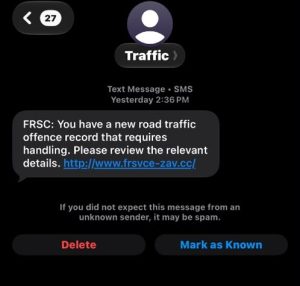
She paused for a second and wondered why she received this message, knowing she doesn’t own a car.
“I laughed and wondered why I should click the link when I don’t even own a car. It is clearly bizarre,” she told ROUNDCHECK.
ROUNDCHECK observed that many Nigerians also received this link; While Zaynab was able to decipher that it was a scam, others fell victim, losing millions of naira.
Nigerian comedian, Edeh Chisom, popularly called MC Monica, said he fell victim to the FRSC scam. According to him, he proceeded to pay a #5000 after receiving the text message, and what followed was a deduction of over a ‘million naira (#1,849,378)’ from his account.
Also, Actor Adekanla Desalu said he lost $2,500 after paying #2,500 through the FRSC scam link.
Although the FRSC debunked the claim days later, the impact had already been felt.
The FRSC noted that the scam message was designed to impersonate the digital identity of the Federal Road Safety Corps. “The Corps therefore unequivocally disowns the messages and the website, stressing that members of the public should not regard such communications as originating from FRSC,” the agency said.
Scammers continue to target unsuspecting members of the public using phishing links combined with emotionally crafted messages. In some cases, these messages are crafted around people’s day-to-day activities, making them appear credible and increasing the likelihood of victims falling for the scams.
How Did The FRSC Scam Work?
Members of the public received several text messages on their phones purportedly from FRSC, a regulatory agency responsible for the administration of traffic laws and regulations in Nigeria.
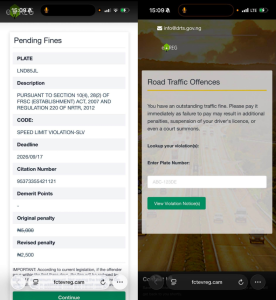
The messages informed recipients of a traffic offence and asked them to click a link to view details. The tactic was to take them to a separate website where they would be required to pay and fill in some details.
ROUNDCHECK observed that the website links received by recipients differ. Some of the links are www.fctevreg.cam/z, www.frsvce-zac.cc, www.frscc-zgh.cc, and are no longer accessible.
How Not To Fall Victim To Online Scams
Online scams are targeted at Susceptible members of the public, using relatable messages and emotion-driven statements to steal their personal information, money, and, in some extreme cases, cause harm to them.
Sometimes, they pose as recognised government agencies or institutions that members of the public interact with. To be safe, ROUNDCHECK has provided practical ways not to fall victim to these scams, just like the FRSC messages received by several Nigerians.
1) Don’t be forced to click; read again: The first thing that comes to mind when you see a message that speaks to your emotions is for you to click. Resist the urge to, and take your time to read again. Read the message again carefully to understand the context, the sender, and why you should be receiving that message. Bad actors will want you to click a scam message that has been crafted to appear emotional to you; do not click. Read it again, and again. One click can cause a lot of damage and expose you to risk.
2) Check the sender of the message and other information in it: Critically examine the sender of the message and other information included in it. This could include the name of the institution (Is it correctly written?), or even the website link attached in the message (Is this the verified website address of the organisation?). Check for errors in the sentences and use of punctuation. A recognised institution is unlikely to make sentence errors in its official messaging. Asking these questions can help protect you from getting scammed.
3) Conduct a keyword search: A keyword search on Google can reveal a lot of information about the message you’ve received. In the case of the FRSC message, a keyword search would be “ FRSC traffic offence link” or “FRSC traffic offence” or “FRSC traffic offence payment”. This will reveal the original website of the FRSC, traffic offence link, if any, and other related information of the FRSC that can help you make a decision.
4) Check the website domain: Most scam websites try to replicate the websites of an authentic organisation; however, some of the details are always different. Details like the URL spelling and the domain name are false if you check closely. Most authentic organisations will use familiar domain names like .com, .com.ng, .org.ng, .org, while government agencies in Nigeria use .gov.ng. It is important you check the spelling of these websites’ URLs and cross-check the domain.
5) Check reputable platforms: Checking through reputable platforms – including media organisations and social media – can help you know if the message or information is authentic. When you see a message telling you to click a link or promise financial rewards, your next step should be to check reputable news platforms and also verified social media handles of the organisation to confirm if the information is authentic.
6) Reach out to experts to confirm: When in doubt or uncertain about information you receive, your next step will be to reach out to experts who can help confirm if the information you’re about to act on is authentic. Experts could include fact-checking organisations (Like ROUNDCHECK), the contact number of the organisation, a financial expert, amongst others. Don’t make a decision based on half knowledge.
Conclusion
Online scams promise financial rewards for little or no effort, and most times are fuelled by emotionally charged messages. Checking a website or information thoroughly before acting on it will save you from getting scammed, data loss, and exposing yourself to danger.
]]>The announcement, made at the Republican Party’s midterm convention in Dallas, Texas, quickly drew attention.
While supporters applauded the prospect of receiving thousands of dollars, questions emerged over where such a huge sum would come from, whether Trump has the authority to make the payments, and whether the promise can actually be fulfilled.
With roughly 270 million adults in the United States, the proposed payout could cost the federal government well over $1.3 trillion. Vice President JD Vance has suggested that revenue from Trump’s tariffs could fund the payments, but no detailed funding or implementation plan has been announced.
So, is Trump really offering $5,000 to every American adult? Why is he making the promise, and can the “Trump Dividend” actually become reality?
ROUNDCHECK broke down what was promised, how it might be funded, and what would have to happen before Americans could see any money.
What Exactly Did Trump promise?
Speaking at the Republican Party’s midterm convention in Dallas on the night of September 9, 2026, Trump said that if Republicans keep control of both the House of Representatives and the Senate in the November midterms, he would issue a $5,000 dividend to every adult US citizen.
Trump also said the money would have to be spent inside the United States rather than taken abroad, naming Canada, China, and Germany as examples, though he did not explain how such a rule would be enforced.
This remains a political promise, not an existing government programme. No federal law has been passed creating the payment, and no American has been approved to receive it.
Why Is Trump Making The Offer?
The midterm elections are scheduled for November 3, 2026, and Trump’s Republican Party is fighting to hold on to Congress. Historically, the president’s party tends to lose seats in midterms, and current polling and projections favour Democrats to retake the House, an outcome that would sharply limit what the administration could pass legislatively for the rest of Trump’s term.
The dividend promise, made on the opening night of the first-ever Republican midterm convention, is widely read as an attempt to energise voters ahead of that risk.
The proposal also lets Trump frame his tariff-driven economic agenda as something that pays ordinary Americans directly, rather than as an abstract trade policy.
Where Would The $5,000 Come From?
Trump has not laid out a funding mechanism. Vice-President JD Vance has pointed to revenue from Trump’s tariffs on imported goods as the likely source, arguing that tariff collections have brought in substantial money that could eventually be returned to Americans as a dividend.
But tariff revenue and money legally available for direct payments are not the same thing.
Tariffs are taxes on imports, and their cost is often passed on to businesses and consumers through higher prices.
Even sizable tariff collections don’t automatically translate into funds the government can legally distribute as $5,000 checks; that would still require congressional appropriation.
How Much Would The Offer Cost?
At roughly 260 to 270 million adult citizens and $5,000 each, the total comes to somewhere between $1.3 and $1.35 trillion, a figure multiple outlets, including CNBC, have independently put at “more than $1 trillion.”
That makes it far larger than most federal transfer programmes and raises real doubts about whether tariff revenue alone could cover it.
Does Trump Have The Power To Simply Send Americans $5,000?
Congress controls federal spending, so a nationwide payment programme of this size would need congressional authorisation.
Reactions within Trump’s own party show the divide this creates: Ohio Senator Bernie Moreno publicly endorsed the idea and said he would draft legislation to enact the dividend after the election, while Texas Congressman Chip Roy was openly sceptical, questioning how Republicans would pay for a plan that could cost “well over $1 trillion.”
Trump himself has not said whether or how he would formally ask Congress to approve it.
Is The Proposal Legal?
US federal law makes it a crime to offer money as an inducement tied to how someone votes, punishable by a fine or up to a year in prison, with willful violations carrying penalties of up to two years.
That has raised questions about whether the dividend pledge could run afoul of election law.
However, Trump’s statement doesn’t explicitly say people must vote for him or Republicans to get the money; his stated condition is that Republicans must win control of Congress, not that any individual voter cast a particular ballot.
Some legal analysts argue that framing makes it more defensible as a campaign promise about future policy rather than a direct payment for votes. Others aren’t convinced, and CNBC has reported it sought comment from the White House on whether the plan could violate those provisions.
Ultimately, the legality would likely hinge on how or whether Congress eventually wrote it into law.
Is This The First Time Trump Has Promised Americans Money Like this?
No. This is at least the third time in roughly a year that Trump or his allies have floated a large direct payment funded by tariffs or spending cuts:
Earlier in his second term, Trump backed a “DOGE dividend” of $5,000, an idea originally floated by Elon Musk as a way to return savings from Department of Government Efficiency budget cuts to taxpayers.
Trump said he liked the idea, but it was never implemented.
In November 2025, Trump promised a dividend of “at least $2,000 a person,” funded by tariff revenue, would materialise “in the coming months.” That also never happened.
Separately, more than a million military service members did receive a one-time $1,776 “warrior dividend” in early 2026, but that payment came from a specific, congressionally approved military housing supplement, not a broad tariff dividend, and isn’t really comparable in scale or mechanism.
That track record, two prior tariff-funded dividend promises at $5,000 and $2,000, neither of which materialised, is the key reason analysts are treating the new $5,000 pledge as unproven until Congress acts.
Why Does Trump Call At A “Dividend”?
Trump and Vance are framing the payment as a return of money generated by tariff policy, comparing it to a company distributing profits to shareholders, rather than describing it as a stimulus check or welfare payment.
That framing ties the payment directly to Trump’s “America First” economic message rather than to pandemic-era-style relief spending.
What Are The Biggest Unanswered Questions?
- Who exactly qualifies? Trump said “every adult citizen,” but no detailed eligibility rules have been released.
- Would high-income Americans get it too?
- How would the money actually be distributed?
- Would Congress pass the necessary legislation, and would it survive if Democrats win the House?
- Is tariff revenue actually sufficient to cover $1.3 trillion-plus?
- Could a payment this large add to inflation or consumer prices?
- How, if at all, would the government enforce the “must be spent in the US” condition?
- If approved, when would Americans actually receive the money?
Conclusively, ROUNDCHECK understands that Trump has promised a $5,000 “dividend” to every adult US citizen if Republicans win both chambers of Congress; however, the payment, mode and source of the money aren’t publicly available.
]]>The claim, which had circulated on X, featured an image purportedly showing the front page of a newspaper called The Daily Tribune.
As of September 2, 2026, the post had garnered 209 reposts, 164 quotes, 680 likes, 98,200 views and 90 bookmarks. While many had lifted it and posted it on several social media platforms.
A Facebook user had also shared the same image, claiming that ‘Atiku would compel landlords to stop collecting rent from tenants if he becomes president.’
According to the claim, ‘Atiku would introduce a law prohibiting landlords from collecting rent from tenants and that landlords who violate the proposed law would face up to 10 years in prison.’
However, another X user challenged the authenticity of the claim, describing it as a false statement attributed to Atiku Abubakar.
The claim has gained attention online at a time when housing affordability and rising rental costs remain important concerns for many Nigerians and if left unverified. Such a claim could shape perceptions of Atiku Abubakar’s proposed policies and potentially influence public opinion ahead of the 2027 presidential election.
The claim also presents a specific policy proposal and attributes it directly to a major political figure. Such claims require verification, particularly when they circulate widely on social media alongside what appears to be a newspaper report.
Given the potential of the claim to mislead the public about a presidential candidate’s position on housing and rental policy, ROUNDCHECK decided to check further whether Atiku Abubakar actually made the statement attributed to him.
Who is Atiku Abubakar?
Atiku Abubakar is a Nigerian politician, businessman and former Vice President of Nigeria. He was born on November 25, 1946, in Jada, present-day Adamawa State. He is the 2027 Presidential candidate.
He served as Vice President of Nigeria from 1999 to 2007 under former President Olusegun Obasanjo.
Atiku has contested the Nigerian presidency several times. Most recently, he was the Peoples Democratic Party’s presidential candidate in the 2023 presidential election, where he finished second behind Bola Tinubu.
Before rising to prominence in politics, Atiku worked with the Nigeria Customs Service and later ventured into business, with investments spanning education and other sectors. He founded the American University of Nigeria (AUN) in Yola, Adamawa State.
ROUNDCHECK Findings
ROUNDCHECK searched through credible media platforms and Atiku Abubakar’s publicly available statements for evidence that he promised to abolish house rent for Nigerians if elected president in 2027.
The search found no credible report or statement from Atiku in which he promised to stop landlords from collecting rent from tenants or threatened landlords with a 10-year prison sentence for violating such a law.
ROUNDCHECK discovered that Atiku only promised to release Local Government Funds directly if elected president in 2027.
Although newspapers with names similar to The Daily Tribune exist in countries such as the Philippines and Bahrain– not related to Nigeria.
ROUNDCHECK examined the newspaper front-page image used to support the claim and found no credible evidence that The Daily Tribune, as presented in the image, is an existing or verifiable newspaper publication in Nigeria.
Therefore, searches for the newspaper publication, including the alleged report and its attribution to Atiku Abubakar, produced no credible records confirming its authenticity.
In addition, ROUNDCHECK reviewed Atiku’s publicly available policy positions and statements on housing and related economic issues here, here, and here.
While he has discussed issues affecting Nigerians’ living conditions and the economy, no evidence was found linking him to a policy proposal that would completely abolish house rent or criminalise landlords for collecting rent.
ROUNDCHECK also searched Atiku Abubakar’s official social media platforms (Instagram, Facebook, and X) and other publicly available sources for the alleged announcement but found no corresponding statement.
The claim therefore appears to be based on an unauthenticated newspaper image rather than a verifiable statement from Atiku Abubakar. The front page of the newspaper looks doctored as a form of propaganda.
A similar popular newspaper daily, Nigerian Tribune has also debunked and distanced itself from the front page headline.
Verdict
The claim is INCORRECT. ROUNDCHECK found no credible evidence that Atiku Abubakar promised to abolish house rent for Nigerians, prohibit landlords from collecting rent, or impose a 10-year prison sentence on landlords if elected president in 2027.
The newspaper image used to support the claim could also not be traced to a verifiable publication or credible report.
]]>Following the 2026 Osun State governorship election, messages claiming that residents can receive 15,000 naira as a cash reward to celebrate Governor Ademola Adeleke’s election victory are circulating online.
The messages are designed to attract attention with the promise of quick and easy money. One version claims the reward is being offered by Governor Adeleke and is “powered by” Nigerian musician Davido. It further encourages recipients to click a link and claim the money.
One example reads:
“15,000 naira cash Transfer Governor Ademola Adeleke’s Celebrating Osun state ELECTION Victory NOW! with the sum of ₦15,000. POWERED BY: Davido. I just got my Now. Click below to get yours.”
The message directs users to https://celebration.davidocollaborate.forum for celebration.
Why Should You Be Concerned?
The biggest warning sign is the promise of an unexpected cash reward through an unfamiliar website.
A legitimate government cash-transfer programme would normally be announced through verifiable official channels, such as the relevant government website, official social media accounts or recognised government communication platforms.
The use of a politician’s name does not automatically make a message genuine. Likewise, mentioning a celebrity such as Davido does not prove that the celebrity is associated with the offer.
The link itself should also raise questions. A website address containing a person’s name or a generic phrase does not establish that it is an official platform of the Osun State Government.
What Could Happen If You Click?
Not every suspicious link will necessarily cause harm, but unfamiliar reward links can lead users to websites designed to collect personal information or deceive them into taking further actions.
A user may be asked to provide details such as a phone number, email address, bank information, card details, passwords or one-time passwords (OTPs).
Such information can potentially be exploited for fraudulent activities.
Some deceptive reward schemes may also encourage users to forward the link to friends or WhatsApp groups before they can supposedly claim their reward. This helps the misleading message spread rapidly.
How Can You Verify Such Claims?
Before clicking on a link promising election-related rewards, ask three simple questions:
Who is offering the money?
Look for an official announcement from the organisation or government body supposedly responsible for the payment.
Where was the announcement published?
Check verified official channels rather than relying on forwarded messages, screenshots or claims from unknown accounts.
Where does the link lead?
Be cautious when the website address does not clearly correspond to the official organisation being mentioned.
Most importantly, never provide your bank PIN, OTP, password or other sensitive financial information simply because a website promises you money.
The 15,000 naira should not be the reason you stop thinking
The appeal of instant cash can make people act quickly. That is precisely why reward-based misinformation can be effective.
The lesson from the circulating Osun election message is simple: a claim becomes less credible because it promises money.
If you receive a message promising 15,000 naira or any other election-related reward, do not click immediately, do not enter your personal information and do not forward it until you have independently verified the claim through official sources.
When the reward looks too easy, verify before you click.
Verdict
The circulating message and image claiming that Osun State Governor Ademola Adeleke is sharing 15,000 naira through Nigerian musician Davido is INCORRECT.
The message is aimed at harvesting individuals’ personal details.
]]>The first article features an interview with a purported medical expert, Dermawan Rahmat, described as a Chinese doctor and scientist who has lived in Nigeria for over five years.
In the article, Dermawan alleged that Nigerian urologists are dishonest towards patients and claimed the country’s methods of treating prostate inflammation and improving male potency are 30 years behind modern methods.

His words further read in part, “There is a solution to this problem, and I have good news for those who suffer from prostatitis. There is a supplement that is amazingly effective for men of all ages and surpasses its world analogues in effectiveness! Moreover, this product was developed in Nigeria, although it has not received the recognition it deserves. It is much more affordable and effective than similar products from the USA. This product is called Xenoprost Active and was created at the University of Medicine and Pharmacy.”
He recommends the supplement to all men aged 40 and above, claiming it contains a 2007 breakthrough substance called alpha-hydroxyretinol that can eliminate prostate inflammation.
The second article (with a self-updating publication date) was further used to promote the product. The article stated that an ‘anonymous survey’ revealed that nine out of 10 women in Nigeria admit they would cheat if their husbands can not satisfy them.
The article shows a supposed interview with a sexologist, identified as Emma Johnson and a claimed medical doctor, William Johnson, purported to be the head of the National Urology Center. These purported experts were used to support the survey and endorse the product.

These articles also promote Xenoprost Active as a supplement to increase testosterone and improve erectile function. One of the articles claimed that the supplement was developed at ‘a University of Medicine and Pharmacy’.
The articles further use editor’s notes, a 50 per cent discount, and a ‘Rush My Order’ button to hasten readers. Both articles present comment sections filled with supposed testimonials.

What is prostatitis?
Prostatitis is the inflammation of the prostate gland and is a significant health concern for men globally, including in Nigeria. According to Mayo Clinic, a global medical institution, prostatitis can make urination painful or difficult and may cause pain in the groin, pelvic area or genitals.
A study by the National Institute of Health (NIH) categorised prostatitis into four bacterial and non-bacterial types, with treatments typically involving antibiotics, alpha-blockers, or anti-inflammatory drugs depending on a clinical diagnosis.
The National Institute of Diabetes, Digestive and Kidney Diseases (NIDDK) also revealed that while prostatitis can affect men of all ages, it is the most common prostate problem for men under the age of 50.
ROUNDCHECK investigated the claim, considering it a public health issue and to check the validity of the supplement the website promotes.
ROUNDCHECK Findings
Seeing that the website presents itself as a news website, we conducted a keyword search on Google. The result revealed that no credible news organisation in Nigeria bears the name Nigerianews.store.
ROUNDCHECK analysed the website’s domain name on Whois, a domain verification tool. The result revealed that the website was registered on September 1, 2025 and expires on September 1, 2026.
We checked the registrant contact on Whois and found that it contains “Street: Kalkofnsvegur 2, City: Reykjavík”, an address identified as Withheld for Privacy, an Iceland-based domain privacy service.
According to a 2024 New York Times investigation, the same address has been used as the default contact for millions of domains, including numerous phishing, fraud and disinformation websites.
Withheld for Privacy service allows domain owners to replace their personal contact information in WHOIS records with the company’s address, which makes it difficult to identify the real operators of websites. The use of this address by Nigerianews.store registrant(s) raises questions about the website’s transparency and credibility.
On the WHOIS page, it lists a phone number with the country code +354, which is the country code for Iceland.

While the website presents its pages in a news-style format, the articles direct readers towards a commercial order process, including discount offers and ‘Rush My Order’ prompts. This indicates a commercial marketing tactic rather than independent news reporting.
Who is Dr Dermawan Rahmat?

ROUNDCHECK searched the Medical and Dental Council of Nigeria (MDCN). This statutory body regulates the practice of medicine in Nigeria.
The search did not return a practitioner listed as Dermawan Rahmat, nor could we independently verify the article’s claim that he is a doctor practising in Nigeria.
We found no independent or verifiable professional profile, medical licence, institutional affiliation, or publication record for a doctor identified as Dermawan Rahmat that matches the persona in the article.
Furthermore, we conducted reverse image searches on Google Images, Yandex and TinEye using the keyframe.
These reverse image tools did not show exact matches, and AI-image detection tools like Hive Moderation did not flag the image as AI-generated.
ROUNDCHECK conducted a Google keyword search and found the same image had previously been used in a separate advertorial promoting another health product.
The image, together with its translated accompanying text, was not accompanied by verifiable information identifying the person as Dermawan Rahmat.
The article claimed that the Xenoprost Active supplement was created at ‘a University of Medicine and Pharmacy’ without identifying the university by name, country or department.
We conducted a keyword search on Google using the keywords ‘Xenoprost Active+University’ and ‘University of Medicine and Pharmacy’ and found some notable universities in Romania, such as the Carol Davila University of Medicine and Pharmacy and Iuliu Hațieganu University of Medicine and Pharmacy, among others, that have the name as part of their institution name.
However, we found no university with the single name, “University of Medicine and Pharmacy”.
Publicly available records did not show any credible publication, clinical trial or institutional record linking the product to a university or research programme.
AI-generated Doctors, Fabricated Social Proof
Due to the suspicion around the named doctors, ROUNDCHECK subjected their keyframes to Hive Moderation, an AI-image detection tool.
Analysis showed that the image of the supposed doctor William Johnson is 99.9 per cent AI-generated.
We observed that the individual’s grip of the product in the image looks unnatural.

Seeing that the website also claimed that William is the head of the National Urology Center, we checked if such an institution exists in Nigeria.
We checked the Federal Ministry of Health hospital services listings, MDCN records, Corporate Affairs Commission (CAC) public records and Google Maps.
While there are specialised urology clinics and teaching hospitals that serve as national or regional hubs for prostatitis or prostate care in Nigeria, ROUNDCHECK found no federal government-owned or centralised facility officially named the National Urology Centre in Nigeria.
Also, no credible source identified the portrayed individual with any credible urology centre in Nigeria or globally.
We further analysed the keyframe of the supposed sexologist, Emma Johnson on Hive Moderation. The result shows it is 99.9 per cent AI-generated.

To cross-verify the results, we analysed both images on other AI-image detection tools, including Is It AI and Fake Image Detector.
The tools also flagged the images as 99 per cent AI-generated and likely computer-generated images, respectively.
While AI-detection tools may not be 100 per cent accurate, the absence of verifiable professional records and the image’s visual inconsistencies, such as an unnatural grip, raise serious doubts about the identities presented in the articles.
ROUNDCHECK also observed that both articles display ‘Latest Comments’ that appear to be from satisfied customers.
We revisited the articles on different dates and refreshed them repeatedly. We observed that the comments remain static and retain the same relative timestamps.
This pattern suggests that the comments may be pre-set page elements rather than live users’ testimonials.
What Is Xenoprost Active?
Xenoprost Active is a commercially marketed dietary supplement sold online in Nigeria and listed by LibidSafe on Amazon India.
The marketing claims vary between these sellers and websites, with some describing Xenoprost Active as a nutritional supplement while other promotional pages claim it supports prostate health, urinary function and male vitality.
It is also being promoted through international affiliate-marketing networks like OfferVault, as a prostatitis product targeting Nigeria and Uganda.
The price on Indiamart was listed as ₹2,450 (equivalent to about N34,000). Current Nigerian prices show that the product is being sold between N48,000 and N59,000 here and here, including on online selling platforms like Konga and here.
Despite the clinical claims of the product on these selling platforms, we found no study or peer-reviewed clinical trial showing that Xenoprost Active cures prostatitis, boosts testosterone or improves erectile function.
Instead, the public food recall of the Food Safety and Standards Authority of India (FSSAI), published on page 8 in the Times of India newspaper, declared Xenoprost Active, batch XPF07, “unsafe food” pursuant to an FSSAI recall order dated May 28, 2025.
According to the public notice, the batch was manufactured by Natcon Biollifesciences Pvt. Ltd., an Indian nutraceutical and herbal supplement manufacturer.
ROUNDCHECK also found that in January 2024, an Indian fact-checking organisation, NewsMeter, investigated a separate Xenoprost Active advertorial promoting a supposed three-day cure for prostatitis.
According to the report, the claim’s purported expert could not be independently verified. However, a physician and sexologist consulted clarified that Xenoprost cannot treat prostatitis in three days.
Xenoprost Active Is Not Registered With NAFDAC
The National Agency for Food and Drug Administration and Control (NAFDAC) is a government body that registers all drugs and herbal supplements sold in Nigeria.
On 18 June 2026, ROUNDCHECK searched the NAFDAC Greenbook, a database for registered health products in the country.
The supplement was not found on the NAFDAC Greenbook even as of the time of filing this report. We also found no evidence of a NAFDAC registration number for the product.
We reached out to NAFDAC through the email addresses (reforms@nafdac.gov.ng and sf.alert@nafdac.gov.ng) listed on its official website for direct confirmation of the product. We sent the product’s image and inquiries to the NAFDAC email addresses on 9 July 2026; however, as of the time of this publication, the agency had not replied.
We further called the agency through the available phone numbers (+234 1 460 9750 and +234 909 763 0506) on its website, but the calls were unanswered.

However, NAFDAC, in a risk statement, emphasised that potential poisoning, treatment failure, and even death are serious public health risks associated with consuming unregistered drugs.
The statement added that the safety, quality and effectiveness of unregistered products cannot be guaranteed because such products have not gone through NAFDAC’s necessary evaluations.
Claim That Nine Out Of 10 Nigerian Women Admit To Infidelity, Unsupported
The second article claims that nine out of 10 Nigerian women admit to cheating due to sexual dissatisfaction with their husbands.
The headline reads, “Study Shocks Nigeria: 9 in 10 Women Admit They Would Cheat If Husband Can’t Satisfy—Here’s What Urologists Recommend”.
ROUNDCHECK checked for publicly available scientific studies to verify the claim. Existing studies only identify sexual dissatisfaction as one among many factors associated with infidelity among couples.
For instance, a study published in the European Journal of Educational Studies on the cause and effect of increased infidelity among married women in Nigeria revealed sexual incompatibility and personal dissatisfaction as one of the several causes of infidelity, which is common in both women and men.
Another study, focused on Lagos State literate working-class women, only highlighted sexual dysfunction of a spouse as one of the causes of infidelity, among several other reasons.
ROUNDCHECK found no identifiable survey, methodology, sample size, institution, publication date or peer-reviewed research supporting the supposed study or statistics that nine out of 10 Nigerian women admit to infidelity on the grounds of husbands’ sexual dysfunction.
Keyword search revealed that many more suspicious websites have used the same sexologist’s image and supposed study to promote unproven male sex enhancement products here and here.
The claim that nine out of 10 Nigerian women admit to cheating due to sexual dissatisfaction with their husbands is unconfirmed.
Alpha-hydroxyretinol Myth
The website claims that in 2007, scientists discovered alpha-hydroxyretinol from Gotu Kola, adding that treatment with it can cure prostate inflammation.
ROUNDCHECK searched the World Health Organization (WHO), PubMed, Google Scholar, and the American Urological Association (AUA) archives.
We found no recognised clinical evidence supporting ‘alpha-hydroxyretinol’ as a treatment for prostate inflammation.
Retinol (a form of Vitamin A) and Alpha-Hydroxy Acids (AHAs) are typical ingredients used in dermatology and cosmetics. We found no evidence that a recognised medical compound called ‘alpha-hydroxyretinol’ is used to treat prostatitis.
Although laboratory and early-stage studies have examined the possible anti-inflammatory properties of Gotu Kola, also known as centella asiatica, ROUNDCHECK found no high-quality clinical evidence that it cures prostatitis.
Medical Authorities’ Recommendations
ROUNDCHECK found no credible clinical evidence that Xenoprost Active is proven to eliminate prostatitis, increase testosterone or improve erectile function.
For the testosterone boosting and improving erectile function claims, we searched major medical authorities, including the American Urological Association (AUA), the U.S. National Center for Complementary and Integrative Health, and the Food and Drug Administration (FDA).
These medical authorities do not recognise over-the-counter dietary supplements as proven treatments for testosterone deficiency or to improve erectile function.
A study revealed that evidence supporting supplements for erectile dysfunction (ED) and testosterone boosting is limited and inconsistent.
Instead, testosterone therapy is recommended only for men with medically confirmed testosterone deficiency. According to the European Association of Urology, erectile dysfunction requires evaluation and treatment based on its underlying cause.
For the prostatitis elimination claim, global medical bodies, like Mayo Clinic and The Urology Care Foundation, have emphasised that treatment of prostatitis depends on the type, patients’ symptoms, laboratory tests and evaluation for urinary or pelvic symptoms, which may include a medical history, physical examination and urine testing.
Similarly, the American Urological Association (AUA) recommends that, depending on a patient’s age, symptoms and clinical findings, a clinician may also consider additional tests, including PSA testing.
However, AUA highlights antibiotics, prostate massage, lifestyle changes, alpha-blockers, anti-inflammatory agents and pelvic floor physical therapy as treatments for prostatitis, adding that they should be guided by a qualified healthcare professional.
Cleveland Clinic also stated that the treatment of prostatitis depends on the cause and type, emphasising that there is no generic treatment for prostatitis.
ROUNDCHECK spoke to a consultant urologist at the Ahmadu Bello University Teaching Hospital, Kaduna State, Nigeria, Mohammed Ahmed.
He emphasised that, due to false assurances of a miracle cure, patients avoid seeking appropriate medical care, such as early diagnosis and treatment.
“As a result, some who have the disease sometimes come to the hospital when the disease has become incurable or complicated. There are no proven records or studies to show that some of these so-called supplements really do prevent the disease,” he said.
Mohammed advised that men experiencing urinary symptoms, pelvic pain or painful urination should seek prompt medical screening or consultation rather than relying on supplements marketed as miracle cures.
Verdict
The claim that Xenoprost Active eliminates prostatitis, boosts testosterone and improves erectile function is INCORRECT.
At the time of publication, the product was not listed in the NAFDAC Green Book. ROUNDCHECK found no credible clinical evidence to support the product’s advertised claims. The website uses unverifiable and non-existent experts, unsupported medical claims and persuasive marketing tactics to promote the product.
]]>This live fact-checking effort seeks to curb the spread of misinformation, disinformation, and political propaganda that often cloud Nigeria’s electoral processes. By scrutinising information regarding the election as it emerges, the coalition aims to promote fact-based political discourse, minimise tensions driven by false narratives, enhance voter awareness, and uphold a transparent and credible election.
At a time when Nigeria faces increasing threats from false information and manipulative content, the NFC’s proactive approach is a crucial safeguard for democracy. It empowers citizens with verified information, ensuring that electoral choices are guided by truth rather than deception.
Stay tuned as our team brings you verified insights and real-time updates from the NFC’s fact-checking situation rooms.
Live Check Updates
CLAIM: The Nation Newspaper claimed (archived) that the Social Democratic Party (SDP) has withdrawn support for its governorship candidate, Peter Obafemi, and adopted incumbent Governor Biodun Oyebanji of the All Progressives Congress (APC).
FINDINGS: The Nigerian Fact-Checkers’ Coalition (NFC) found several reports stating that the SDP, at the state level, has rallied support and aligned its structure with the APC to support the governor’s re-election bid.
However, in a statement reported by TVC News and The Independent Newspaper, the SDP national leadership publicly distanced itself from the statement. The National Organising Secretary, Dr Uchechukwu Chukwuma Ogbonna, assured members of the party that they remain behind the party’s candidate, Peter Olugbenga Obafemi.
Obafemi also reaffirmed his position as one of the people’s options at the polls. He said this while discussing his plans for the people of Ekiti on the TVC News YouTube page on Thursday, 18 June 2026.
Despite the intra-party dispute in SDP, INEC told the NFC that the party remains on the ballot and that votes cast for the party will be recorded.
VERDICT: MISLEADING
CLAIM: A Facebook user shared an image (archived here) claiming it shows Ekiti residents collecting food items from politicians ahead of the June 20, 2026, gubernatorial elections.
FINDINGS: Google Reverse Image Search results linked the image to a separate event, which took place in Oyo State on June 9, 2026. Sahara Reporters, Lagelu FM and Punch explained that the image showed some Oyo residents expressing their support for Sharafadeen Alli, an APC politician, after he distributed 1kg sachets of Semovita during a political outreach.
VERDICT: MISLEADING.
CLAIM: An X user @OyoNews1 claims (archived here) that INEC cleared 13 political parties.
FINDINGS: The Independent National Electoral Commission (INEC), Centre for Journalism, Innovation and Development (CJID), and DUBAWA’s publications reveal there were 14 candidates cleared by INEC to contest for the top political seat in Ekiti State.
However, Joseph Anifowose of the Allied Peoples Movement party, in May 2026, declared support for the current governor, Abiodun Oyebanji of the All Progressives Congress party. Victor Adetunji of the Zenith Labour Party also stepped down in support of the APC candidate on Thursday, June 18, 2026.
Meanwhile, INEC has included the Social Democratic Party’s candidate, Peter Obafemi, in the governorship race, despite its leadership crisis. INEC in Ekiti State told the Nigerian Fact-Checking Coalition that, despite the inclusion, there is no updated official list reflecting the new development. Consequently, only 13 candidates are currently in the race.
VERDICT: CORRECT.
CLAIM: A picture is going viral on WhatsApp with the headline, “Ekiti High Court “nullifies” Supreme Court’s Verdict,” linking the story to the ongoing elections in the state.
FINDINGS: A Google search revealed that the picture in question was a screenshot of an old news article published by The Nation in 2019. The context is the relocation of the Ilejemeje local government council headquarters from Iye-Ekiti to Eda-Oniyo, Ekiti State.
After a unanimous decision by the Supreme Court in support of the relocation, Justice Abiodun Adesodun of the Ekiti High Court faulted the government’s compliance with the verdict and insisted that the status quo be maintained until the final ruling of the lower court on the case.
The story was also reported by Vanguard News and Premium Times Nigeria that same year.
VERDICT: MISLEADING
CLAIM: An X user shared a video claiming unrest in Isan-Ekiti after a man was shot dead ahead of the election.
FINDINGS: Abayomi Shogunle, Ekiti State Commissioner of Police, confirmed there was unrest on the eve of the election. He claimed it was the result of a football match in the community, not election-related. Observers deployed by the Centre for Journalism Innovation and Development (CJID) confirmed that a bus which conveyed police officers from Abuja to Ekiti, two tippers, and the police station were burnt down. While there was unrest, Police and other sources said that it was unrelated to the election.
VERDICT: PARTLY CORRECT
CLAIM: Roundoff News, a news blog, has claimed it (archived) that the Zenith Labour Party candidate, Victor Adetunji, has stepped down and endorsed the incumbent Ekiti State Governor, Biodun Oyebanji.
FINDINGS: The Nigerian Fact-Checkers’ Coalition (NFC) spoke with Yahaya Makama, the National Secretary of the Zenith Labour Party (ZLP). Makama confirmed the claim to be true but noted that the ZLP was not consulted before the candidate, Victor Adetunji, stepped down and endorsed Oyebanji.
“We didn’t endorse it here, and at the national level. We don’t know anything, as far as we are concerned. We are not aware of it, and we don’t endorse it. He did it without the consent of the national level.”
Makama added that the candidate’s action is the reason the party took action against its state chairperson, and the party does not endorse the All Progressives Congress candidate.
Yinka Oyebode, the Chief Press Secretary to the Governor, also confirmed Adetunji stepped down and has shown support for Oyebanji.
VERDICT: CORRECT
CLAIM: An X user, @DaddyTwinzz, posted photos of a branded sachet of alcohol, claiming it is being used to buy votes in the ongoing Ekiti state election.
FINDINGS: Closer inspection of the photo and a Google Reverse Image Search revealed that the branded sachet gin was used as a campaign material by Hon. Adewale Olatunji during the 2025 Ibadan North By-Elections.
There is no link between the sachet alcohol and the ongoing Ekiti State elections.
VERDICT: MISLEADING!
CLAIM: An X user claimed (archived here) that the All Progressive Congress (APC) is not involved in financial inducement or vote buying in the Ekiti State 2026 gubernatorial election.
FINDINGS: The claim is contradicted by field reports and media coverage from the election. A video published by Sahara Reporters captured a resident confirming that votes were indeed being sold at a polling unit. Also, Punch Newspaper reported that allegations of vote buying involving APC supporters led to a violent clash with supporters of the African Democratic Congress (ADC), resulting in an injury. A resident contacted by the Nigerian Fact-checkers Coalition also confirmed witnessing vote-buying activities.
VERDICT: INCORRECT
CLAIM: A Facebook user shares a picture as evidence of massive voter turnout in Ado-Ekiti.
FINDINGS: Manual examination of the image reveals characteristics consistent with AI-generated images. We analysed the image using multiple AI detection tools, such as AI or Not and Deep AI. The results show that the images were 99% and 97% AI-generated, respectively. Also, we used Google Reverse Image Search on the image, but we found no source for it.
VERDICT: INCORRECT
This report is courtesy of the Nigerian Factcheckers Coalition and will be updated timely.
]]>The move, according to the post, is in response to CAF’s decision to strip Senegal of the 2025 AFCON title, which sparked several controversies.
A part of the claim reads, “ This movement could reshape African football, with Eto’o and Weah emerging as potential leaders. Eto’o’s experience and Weah’s prestige as the only African World Player of the Year make them strong candidates for the top roles.”
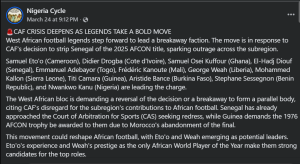
The post identified several African past footballers pushing the breakaway faction, including Samuel Eto from Cameroon, Didier Drogba from Cote d’Ivoire, and Samuel Osei Kuffour from Ghana, amongst others.
The post has since then garnered 1,000 likes, 500 comments, and 128 shares as at March 25, 2026.
ROUNDCHECK observed that several Facebook users had conflicting views about the claim.
Facebook user Eghwubare Ogberahwe noted that “ This is a very good move to break out of the lackadaisical attitude of CAF in Africa”.
Another user, Muhammad Nasir Shuaibu, however, had a conflicting opinion. He said, “ It is a great move but breakaway and forming a parallel organisation will not get FIFA’s approval. FIFA is to mend fences in international and regional footballs not to support regional nations disunity. The best option is to fight the injustice meted on Senegal. I am a Nigerian, I stand for Senegal I stand for justice”.
This claim is spreading weeks after CAF removed Senegal as the African Cup of Nations (AFCON) 2025 champions and awarded the title to Morocco.
The African football body noted that Senegal players’ walk-off during a penalty protest in the January 18 AFCON final breached Articles 82 and 84 of the Regulations of the Africa Cup of Nations.
In reaction, the Senegalese Football Federation (FSF) rejected the decision and appealed to the Court of Arbitration for Sport.
However, the Facebook claim of a breakaway faction can mislead the public, fuel tensions among fans and also affect trust in football governance, hence the need for ROUNDCHECK to dig into it.
ROUNDCHECK FINDINGS
ROUNDCHECK conducted a keyword search on Google. We found no verified information relating to the claim.
Further findings by ROUNDCHECK revealed that several people are pushing this narrative in reaction to the CAF decision that stripped Senegal of its title.
In a Facebook post that has gone viral, Desmond Ekwueme urged several African football stars to emerge if there will be a breakaway faction from the Confederation of African Football (CAF).
This wasn’t directly said by the football stars highlighted in the claim.
We checked several social media accounts of some of the African football stars that were included in the claim ( Didier Drogba X and Facebook; Emmanuel Adebayor Facebook), and found nothing regarding the claim.
Also, we checked through several media platforms, and there has been no report of African football stars making plans to form a breakout faction from CAF.
Verdict
The post claiming that African football stars are leading a breakaway faction from CAF is MISLEADING. Based on our findings, there is no evidence of African football stars forming a breakaway from CAF.
]]>
OPay is a financial technology company operating primarily in Nigeria, focused on providing accessible and affordable digital financial services.
It was established in 2018 as part of Opera’s expansion into emerging markets, under the parent company Opera Limited. Since its launch, OPay has grown rapidly, becoming one of the most widely used mobile money platforms in the country.
ROUNDCHECK investigated this claim to determine whether this bonus is from the Fintech company.
ROUNDCHECK Findings
When ROUNDCHECK accessed the link, we saw a pop-up message claiming we are eligible for a ₦10,000 Easter bonus and requested our OPay account details.
After submission, we were then redirected to another website, claiming that 32,049 customers have already received the bonus, while our status remains ‘pending’ until a supposed withdrawal process is completed. ROUNDCHECK observed several comments underneath the website post claiming the bonus is real.

To verify if this is true, we first subjected the links attached to the claims to different verification platforms.
Using ‘e.Veritas,’ a web link verification tool, we found that all three links recorded a very low safety score of 10/100, indicating potential risks such as phishing, malware, blacklisting, or unsafe redirects.

Further checks with ScamAdviser revealed additional concerns. The first link, (vreeoffre.com/easter-bonus) was flagged as likely unsafe, with a trust score of 30/100, based on multiple red flags.

The second link, (ebekpone.com/get-easter-bonus), performed even worse, earning a 25/100 trust score, suggesting a high risk to users.

The inclusion of fabricated testimonials, such as a comment by ‘Joseph Emmanuel’ claiming to have received the money, serves as fake social proof to build trust and urgency.
Notably, a review of OPay’s official newsroom shows no record of any such promotion.
Moreover, the instruction to submit account details through external links is a clear red flag, as legitimate financial institutions do not request sensitive information in this manner.
Also, none of the links provided for the Easter bonus were not linked or associated with Opay, neither does it lead to OPay’s website.
Verdict
The claim that OPay is giving out a ₦10,000 Easter bonus through unverified links is INCORRECT. It is a hoax, designed to collect details of unsuspecting internet users.
]]>This is raising concerns about the accuracy of its public communication to its members and the general public.
On the party’s page, there are inconsistencies in how the name of David Mark is spelt ‘Sen. DAB Mark’ and Rauf Aregbesola, spelt ‘H.E. Segun Oresegbola’, are presented.
While both figures are well-known in Nigeria’s political space, their names appear incorrectly spelt in parts of the ADC website, differing from the widely accepted versions used in official records, media reports, and prior public service documentation.

About ADC
The African Democratic Congress (ADC) is a Nigerian political party founded by Ralph Okey Nwosu in 2005 as part of efforts to broaden democratic participation beyond the country’s dominant parties.
Over the years, the ADC has attracted a mix of politicians, technocrats, and young people seeking alternative political expression. The party gained wider national attention during the 2019 general elections, when it fielded prominent candidates like Oby Ezekwesili and expanded its visibility across several states.
In the 2023 general elections, the party further strengthened its presence by presenting Dumebi Kachikwu as its presidential candidate.
Ahead of the 2027 election, ADC has been in the news for its coalition efforts aimed at uniting opposition groups. The move is largely driven by the need to challenge dominant parties like the All Progressives Congress (APC) and the Peoples Democratic Party (PDP), while reducing fragmentation among smaller parties.
Prominent political figures such as Atiku Abubakar, Peter Obi, Rabiu Kwakwanso, Rotimi Amaechi and Nasir El-Rufai have been associated with the coalition discussions, alongside other stakeholders seeking a strong third-force platform.
The coalition has gained relevance amid rising public dissatisfaction with economic conditions and governance, increasing demand for credible alternatives.
The Independent National Electoral Commission (INEC) has also moved to remove the names of the National Working Committee led by David Mark.
Where the Errors Appear
Recent internal leadership disputes are ongoing within the ADC, involving multiple factions and questions over the legitimacy of the National Working Committee.
In such a sensitive context, inconsistencies on official platforms may further complicate public understanding and deepen uncertainty around the party’s structure.
A closer review of the party’s leadership page (https://adc.org.ng/leadership) reveals specific editorial errors, particularly the misspelling and inconsistent rendering of names of key officials
For instance, names of the disputed National Chairman and National Secretary are written on the homepage but appear incorrectly spelt, in the leadership section, indicating lapses in content management.
The National Chairman’s picture which appeared on the ADC website, has the name ‘Sen. DAB Mark’ under it, while that of the National Secretary has ‘ H.E Segun Oresegbola’ under it.
If we are to match the name with the pictures used, both names are incorrect.
The image referring to the National Chairman is that of ‘David Mark’, a former Senate President of Nigeria – not ‘DAB Mark’.
The image referring to the National Secretary is that of ‘Rauf Aregbesola’, a former interior minister in Nigeria – not ‘Segun Oresegbola’.
Independent records and reports consistently identify the individuals as ‘David Mark’ and ‘Rauf Aregbesola.’ These are the spellings that align with their long-standing public identities and official documentation.
Although ‘DAB’ as written by ADC could obviously mean ‘David Alechenu Bonaventure’, which is also David Mark’s name. But for someone holding such a position, accuracy of name is important for supporters.
Why Does This Matter
These errors should be corrected by standardising all names to match their verified and officially recognised spellings across every section of the website.
Ensuring consistency in how party leaders are identified is essential for credibility, especially in a period of internal contestation, as inaccuracies risk misinforming the public and undermining trust in the party’s official communication channels.
Accuracy in naming public officials is a fundamental standard in institutional communication, especially for political organisations seeking credibility and public trust.
Misspelling the names of top party leaders, especially on an official website, can undermine credibility, create confusion, and reflect weak internal review processes.
It can also misinform journalists and researchers who are not familiar with the Nigerian political landscape.
]]>