What began as a social media opinion during the EndSARS protests quickly spiralled out of control. Angel, a writer and journalist, who opined that women should focus more on protesting issues directly affecting them, became the pawn of intense online harassment.
Strangers leaked her contact number; she received threatening messages and the abuse she faced extended beyond digital spaces, which forced her to change her route to work for her own safety.
“I had to change my routes to work because I was receiving threatening calls after my number was leaked out,” she said.
Angel was doxed when her phone number leaked. “I received rape threats,” she said, and also death threats both on her telephone line and on X. Her mother was dragged into it, and her life experienced massive disruptions. This changed the way she interacted online as she tweaked her X notification settings to only receive notifications about comments from people who are mutuals with her. “Even if we are mutually following each other, I might not respond to you,” she concluded.
For Nifemi, an entrepreneur, sharing her opinion during a debate on X about whether wives should cook at family gatherings made her the target of harassment that went beyond criticism of her views. Users searched through old posts on her account, reposted an account number she had posted for business purposes and used it to mock her.
“They started calling me a beggar, broke babe,” she shared.
The attacks became personal with men allegedly contacting her on WhatsApp pretending to be customers only to insult her. One instance she said was particularly humiliating. “Someone even came and asked if I did hookup (prostitution) and would like to book me,” she said.
The attack extended to her family, leading to insults towards her mother. She couldn’t stand it and deleted the tweet out of respect for her mother.
“I felt bullied. I was sad for days,” she said. “I cried a lot. The funny thing, there was nobody to talk to except one of my friends that kept telling me to ignore”.
According to her, some users still returned to her business post to shame her over the account number. The persistent attacks made her more withdrawn online and fearful of expressing opinion to avoid backlash.
“It taught me to not always put out most of my thoughts here,” she said. “I don’t have strong mental health for drags.”
The United Nations Women (UN Women), the UN organisation dedicated to promoting women’s rights and achieving gender equality worldwide, defines Online Gender Based Violence (OGBV) as any harmful act that is committed, assisted, aggravated, or amplified by the use of digital tools or information communication technologies. These acts can result in or have the potential to cause physical, sexual, psychological, social, political, or economic harm, as well as infringe on rights and freedoms.
Forms of OGBV against women include doxxing, which is the public release of private or identifying information about the victim. It is also cyberstalking and surveillance, online grooming, targeted verbal abuse and hate disinformation, sextortion, deepfakes and AI manipulation, nonconsensual sharing of intimate images, sextortion, amongst others.
OGBV against women is not alien and it has been funkified to be termed “banter” and “dragging.” Perpetrators are making use of digital tools such as social media, messaging applications, tracking devices, and surveillance cameras. In Nigeria, OGBV is highly rooted in patriarchal norms and is used as a tool for digital silencing of women.
A 2022 study by Plan International, an international humanitarian and development organisation that works to advance children’s rights and equality for girls, found that 58 percent of women and girls globally have been harassed online.
OGBV goes beyond online bullying- there is always a devastating, long-lasting consequence which affects women mentally, physically, sexually and socio-economically. It undermines women’s ability to participate fully in society and further escalates physical violence. Tabitha Empowerment, a non-profit organisation that helps survivors of OGBV and physical abuse, emphasised how online abuse increasingly overlaps with offline violence. In some cases, online grooming and manipulation reportedly progressed into physical sexual violence after perpetrators gained survivors’ trust digitally.
Personal testimonies from a 2025 report on Paradigm Initiative on Technology Facilitated Gender Violence, which spans across six countries: Cameroon, Kenya, Senegal, Nigeria, Zambia and Zimbabwe, reveal profound emotional, psychological, and reputational harm on women. It further states that many survivors resort to self-censorship, withdrawing from platforms, or relying solely on friends and family.
Angel is not alone, as several women, regardless of nationality, status, occupation, or wealth, are constantly abused online.
A tweet by Jewel that read, “All men hate women, know this and know peace,” which appeared harmless to her, triggered an outpouring of vile reactions from X users across Nigeria and beyond.
“I was scared and sad,” she said, as it was the first time she had been exposed to such reactions. She was advised to deactivate her account due to the bullying she received. However, she took a break on social media, reducing the way she commented and responded to issues online.
“I’d rather say whatever I have to say to myself,” she concluded.
Public Figures Facing Gender-Based Violence Online
Over the years, Nigerian artist Oyinkansola Aderibigbe, professionally called “Ayra Starr”, has been constantly bullied because of her clothing choices and feminist views. On the 6th of June, 2025, numerous news platforms reported her demanding to be left alone, voicing her frustration over relentless online bullying.
Some social media users made degrading comments in Pidgin English such as “Ayra Starr dey gba,” “So Ayra Starr mouth dey smell,” and “If na to shout stop killing our men, feminists and Ayra Starr go wear short skirt and shout”, a reflection of how online abuse can come in the form of personal humiliation and gendered attacks.
Popular artist Simisola Kosoko, professionally known as Simi, was bullied massively on X for tweeting against the rape of women. With an X user tweeting, “You have let emotions get the better of you. I hope you can withstand the backlash about to be melted on you. If you hadn’t even replied it would have been better than this.”
Simi has also been subjected to further bullying over her collaboration with singer Chike, who is currently involved in a public scandal.
An occurrence of non-consensual intimate image (NCII), a sexual or intimate image or video of a person that is created, shared, or published without their consent, occurred to a popular herbal concoction seller on TikTok, popularly called Sisi Alagbo. The video reportedly showed an intimate encounter involving her, her husband, and another woman.
Following the release of the video, she was subjected to cyberbullying as it was widely circulated across platforms such as Facebook and X. Sisi Alagbo later issued an apology for the video, despite being the victim
Two weeks later, another NCII incident of a 200-level student of Enugu State University of Science and Technology (ESUT) emerged, one said to have been influenced by her female friend. This occurrence was followed by intense public backlash online and a physical occurrence where female students of ESUT stormed her hostel to harass and mock her, a clear indication of how technology-facilitated violence escalates offline.
With this, a pattern can be drawn on how social media platforms enable these attacks. TikTok is often used for non-consensual intimate image sharing. X (formerly Twitter) is characterised by coordinated attacks on women for speaking up on issues, especially women’s rights, feminism, and relationships, amongst others.
Legal and Institutional Response to Online Gender-Based Violence
Although Nigeria is a signatory to various international and regional legal instruments as well as local laws that continue to ask state parties to ensure protection of women, OGBV persists.
The General Recommendation NO 35 of Convention for the Elimination of All Forms of Discrimination Against Women (CEDAW) mandates protection from all forms of violence.
Article 3 of the Maputo Protocol, formally known as the Protocol to the African Charter on Human and Peoples’ Rights on the Rights of Women in Africa, is one of the strongest regional legal instruments applicable to Nigeria. It guarantees women the right to dignity and protection from all forms of harm and exploitation.
Also, the Violence Against Persons Prohibition (VAPP) act postulated in 2015, is a critical tool for prosecuting cases, especially where the form of Online GBV is revenge pornography or non-consensual sharing of intimate images.
While it doesn’t explicitly use the term online gender-based violence, it speaks against offences like stalking, which can be found in Section 17 of the VAPP Act. It also criticises emotional and verbal abuse under Section 14 and intimidation found under Section 18.
Section 24 of the Cybercrimes Prohibition Act of 2014 (amended in 2024) speaks extensively on cyberstalking. It criminalises sending offensive or false messages online. It criminalises several online activities like identity theft and impersonation, cyberstalking, child pornography, amongst others. The 2024 amendment clarifies it in scope, focusing on genuine harm rather than free speech.
Likewise, the Nigerian Data Protection Act of 2023 provides a legal framework for the protection of personal information. It safeguards privacy, regulates the processing of personal data, and protects the rights of data subjects, among other provisions. This Act represents a new frontier in protecting privacy rights and provides legal grounds to challenge forms of online gender-based violence (OGBV), such as doxxing.
The Nigerian Constitution also addresses freedom from discrimination, life and privacy. With these laws, OGBV is a breach of someone’s right to privacy.
Psychological Impact, Legal and Structural Challenges in Responding to Online Gender Violence
Speaking to Gladys Emmanuel, a human rights lawyer based in Abuja, she says that persistent online abuse forces women to withdraw from digital spaces and public discussions, as many women resort to self-censorship out of fear of backlash and harassment.
“We see depression and survivors living in fear,” she said, recounting a case where a survivor stayed indoors for almost two weeks due to trauma from online abuse. Gladys spoke of the psychological impact of OGBV, as many survivors suffer depression, fear, social withdrawal and in cases of intimate images, extortion.
She identified challenges such as implementation gaps, as most cybercrime units are based in urban areas like Abuja and Lagos, leaving rural areas with no access, delayed investigations, poor infrastructure and abandonment of legal processes due to victim stigmatisation.
According to her, survivors of OGBV must understand that the first 24 to 48 hours after an incident are critical. She mentioned that the first step a survivor should take is prioritising safety by avoiding further engagement with the perpetrator and resisting the urge to retaliate online despite possible provocation. After that comes preserving the digital trail.
Gladys stressed that Online platforms often retain traces of abusive interactions; therefore, survivors are advised to take screenshots of abusive messages, comments, posts, or conversations, ensuring that details such as usernames, timestamps, and profile information are visible.
“Obtaining metadata, including URLs, timestamps, and message headers, could strengthen digital evidence,” she said.
Gladys further stated that digital evidence may require authentication under Nigerian law, making the involvement of law enforcement agencies important. According to her, agencies with forensic departments can assist in extracting, preserving, and authenticating digital evidence for investigations and possible prosecution. Survivors are also encouraged to make use of reporting mechanisms available on social media platforms.
While response may take time, she said that reporting creates an official record of the incident. She emphasised that platform reports should be followed with formal complaints to agencies such as the Nigerian Police Cybercrime Unit or the National Agency for the Prohibition of Trafficking in Persons, adding that survivors who are unsure of how to navigate the reporting process can seek support from non-governmental organisations experienced in handling OGBV cases.
Speaking to Gbemisola Adebowale, Women’s Digital Rights and Safety Officer at TechHer, a community of learning, support and collaboration for women working with technology, said OGBV mirrors offline societal gender biases and restrictions.
According to her, Non-Consensual Intimate Images (NCII) dominate OGBV cases by 77% according to data analysed by TechHer in the past four years. NCII is further linked to sextortion where perpetrators demand sexual or financial favours. She also stressed that OGBV often escalates into offline harm through doxing and public exposure of survivors’ private details.
Adebowale, on her part, highlighted survivor hesitation to pursue a court case, anonymity of perpetrators as trolls and abusers often operate with unknown identities, as challenges of OGBV. She noted that collaboration with law enforcement like the Federal CID is costly, and the current Cybercrime Act lacks detailed provisions specifically targeting OGBV, which weakens enforcement and social media platforms often respond slowly or inadequately.
How Organisations Are Responding (Support Systems & Intervention)
Despite the frustrations that come with helping survivors, there are some organisations which are dedicated to assisting survivors of gender-based violence both offline and online to get over their trauma and receive justice; TechHer and Tabitha Empowerment are two of such organisations.
For many survivors of online gender-based violence, the first challenge is not simply escaping abuse, but finding someone willing to listen without judgement. TechHer operates a reporting and response platform called Kuram, designed to support survivors of online gender-based violence. At TechHer, survivors can report cases of technology-facilitated gender-based violence, ranging from cyberstalking and image-based abuse to digital surveillance and harassment.
Adebowale stated that the organisation’s first response is centred on the survivor’s emotional wellbeing. She explained that TechHer adopts a survivor-centred approach, allowing survivors to determine what form of justice or intervention they want rather than imposing decisions on them.
“When survivors reach out to us, the first thing we ask is how they are doing”, she said. “We try to understand their mental state and reassure them that what happened is not their fault, but the fault of the perpetrator.”
After documenting the case, the organisation presents survivors with possible options, ranging from content takedowns and cease-and-desist interventions to arrests and court action.
“We will not do what the survivor does not want. At the heart of our support system is putting the survivor’s needs at the center,” Adebowale said.
For cases involving legal action, TechHer works with a network of 150 volunteer lawyers across the 36 states in Nigeria. The organisation connects survivors and lawyers within the relevant jurisdictions, depending on where the survivor and perpetrator are located. The support extends beyond legal assistance, as TechHer also collaborates with therapists and other mental health professionals for survivors who require specialised psychosocial care. In cases involving minors, the organisation partners with groups working on violence against children.
While TechHer collaborates with platforms like TikTok and Meta, content in cases concerning NCII, takedowns can still take time. The organisation also uses tools such as StopNCII, a platform that helps prevent the spread of intimate images online by creating a digital hash that detects and removes matching uploads across participating platforms.
For TechHer, these interventions are not only about removing harmful content, but about helping survivors regain a sense of safety and control in digital spaces that often fail to protect them.
One of the biggest gaps survivors face in OGBV is not only access to justice but finding support systems willing to walk with them through the aftermath of abuse. At Tabitha Empowerment Centre, survivors of online abuse can reach the organisation through social media platforms, email, referrals, or by physically walking into any of its offices across different states.
Speaking to Gladys Emmanuel, Tabitha Empowerment Abuja; David Isaac of Tabitha Empowerment Plateau and Gladys Mathew of Tabitha Empowerment Kaduna – cases reported range from cyberstalking and online sexual harassment to non-consensual sharing of intimate images, deepfakes, digital blackmail, and online grooming.
Representatives of the organisation said image-based abuse remains one of the most common forms of technology-facilitated violence reported by survivors, particularly among students in higher institutions. In many cases, intimate images taken during relationships are later circulated online after conflicts or breakups.
“Most survivors tell us they had no idea when the images or videos were taken or how they ended up online,” one of the organisation’s legal representatives said during an interview. “By the time the content spreads, the intention is often to shame and destroy the survivor’s reputation.”
Beyond revenge pornography, the organisation also handles cases involving persistent cyberstalking, anonymous threats, sexual harassment in comment sections, digitally manipulated images, and online grooming that sometimes escalates into offline sexual violence. According to Tabitha, many survivors arrive deeply traumatised and unable to narrate their experiences immediately. As a result, its support system is built around a survivor-centred and trauma-informed approach.
“The first thing we try to do is reassure survivors that we believe their story,” a representative said. “We do not pressure them into making decisions. Some survivors need several counseling sessions before they are even able to fully speak about what happened.”
Depending on the survivor’s needs, the organisation provides psychosocial support, trauma counselling, legal consultation, mediation, referrals, and court representation. Survivors are also informed of the legal options available to them, but the final decision on how far to pursue a case rests entirely with them.
“We allow survivors to take ownership of the process”, representatives explained. “Some people want the matter taken to court immediately. Others simply want the abuse to stop or need emotional support first.”
Tabitha Empowerment works closely with law enforcement agencies, legal aid partners, and other civil society groups when cases require criminal investigations or urgent interventions. This is possible through stakeholder partnerships with the Sexual and Gender-Based Violence department of the Federal Ministry of Justice, the Centre supports survivors seeking restraining orders, prosecutions, or other legal remedies.
In one case handled by the organisation, a survivor’s intimate images were allegedly distributed across multiple WhatsApp groups by a former partner after their relationship ended. The organisation escalated the matter to the appropriate authorities for investigation and digital tracing.
The organisation also highlighted how online abuse increasingly overlaps with offline violence. In some cases, online grooming and manipulation reportedly progressed into physical sexual violence after perpetrators gained survivors’ trust digitally. Despite these challenges, the Centre says its work goes beyond legal representation. Staff members described survivors needing long-term therapy, emotional support, and continuous reassurance after experiencing technology-facilitated abuse.
For Tabitha Empowerment, supporting survivors means more than pursuing convictions. It also means helping them regain safety, confidence, and a sense of control after violence that often follows them from digital spaces into real life.
While some survivors eventually find relief through platform reporting mechanisms, counselling or blocking their abusers, for others, the violence doesn’t end there. The fear continues to live with them, affecting their lives.
Conclusion
As technology continues to shape our Nigerian lives, responses to gender based violence must continue to evolve, as OGBV is no longer a private experience but a public and systemic issue that demands coordinated action.
Communities and families have important roles to play in preventing and responding to OGBV. Families have to support survivors instead of blaming them and refrain from morality sermons. This will give them the strength to seek justice.
There is also the need for increased digital literacy in communities and schools, stronger support systems for survivors to address OGBV, like a centralised reporting system connecting survivors to law enforcement, legal aid and psychosocial support services across the country. More importantly, survivor-centred and trauma-informed responses should be implemented to help survivors without pressure on them.
This report was commissioned with support from the Centre for Journalism Innovation and Development (CJID) under a journalism support initiative funded by the Royal Norwegian Embassy.
]]>ROUNDCHECK covered the session as part of its commitment to promoting informed civic engagement, strengthening democratic participation, and spotlighting issues that shape public discourse. As an organisation working to combat misinformation and support credible information ecosystems, ROUNDCHECK recognises that inclusive participation in governance is critical to building a healthy democracy.
At the heart of the discussion was a growing concern that many women who choose to participate in politics, governance, and public advocacy are increasingly becoming targets of political intimidation, online harassment, gender-based attacks, and coordinated digital violence.
Speakers argued that these challenges go beyond individual experiences. They warned that when women are discouraged from participating in public life, democracy itself suffers. The exclusion of women from political processes limits diversity in decision-making, weakens representation, and reduces the range of perspectives needed to address complex national challenges.
Participants noted that while conversations around gender inclusion have gained momentum over the years, many women continue to encounter significant challenges when seeking leadership positions or expressing political opinions. These barriers often manifest through threats, cyberbullying, misinformation campaigns, character assassination, and social pressures aimed at silencing female voices.
The discussion also explored the intersection between misinformation, digital platforms, and political participation. Experts highlighted how false narratives, manipulated content, and coordinated online attacks are increasingly used to undermine women in public spaces. Such tactics not only damage reputations but also create an atmosphere of fear that discourages meaningful civic engagement.
For ROUNDCHECK, these concerns reflect broader issues within Nigeria’s information and democratic landscape. Disinformation and online abuse do not merely affect individuals; they erode public trust, distort democratic conversations, and restrict the ability of citizens to participate freely in governance. When misinformation is weaponised against specific groups, particularly women, the result is a less inclusive and less representative democracy.
Participants further stressed that Nigeria’s development challenges cannot be divorced from questions of inclusion and representation. According to discussants, sustainable development requires the active involvement of all segments of society. A political system that fails to create safe and equitable opportunities for women to participate risks overlooking critical perspectives on governance, education, healthcare, economic growth, and social welfare.
Several speakers called for stronger institutional protections against digital violence, improved accountability from technology platforms, greater support for women seeking public office, and sustained civic education efforts to challenge harmful stereotypes and discriminatory practices.
The session also served as a reminder that civic participation often comes with personal sacrifice. However, participants maintained that no citizen should have to endure harassment, intimidation, or violence simply for exercising their democratic rights. Rather than accepting these challenges as normal, stakeholders argued that collective action is needed to make political participation safer and more accessible.
As CAUSTIVAL 2026 concluded, a recurring message emerged from the conversation, which is that Nigeria’s democratic future depends on its ability to create a political environment where every citizen can participate freely and safely. Addressing violence against women in politics is therefore not only a gender issue but a democratic imperative.
]]>Surrogacy is a form of assisted reproduction in which a woman (the surrogate) carries a pregnancy on behalf of a third party—the intended parent. Usually, the surrogate is paid for her service in a commercial arrangement.
The global surrogacy industry is valued at $27.9 billion, and the United Nations regards the practice as a form of violence against women and girls. Meanwhile, in Nigeria, surrogacy is becoming increasingly common. Celebrities like Nancy Umeh, Ini Edo, and Chimamanda Adichie have used surrogate services. Lifestyle influencer Ife Agoro also plans to use one regardless of health challenges.
But what is the experience of surrogates in Africa’s most populous country, and how did it become so common? I followed Temitope’s journey from pregnancy to postpartum through a Facebook Messenger conversation, where she unveiled her experience with me. I would eventually meet with her for more details.
Temitope became a surrogate in May 2024. She was paid about N2,233,000, including transportation, accommodation allowance, childbirth fee, and wardrobe allowance.

However, her compensation did not reflect Nigeria’s economic realities. Her N3,000 transportation allowance was insufficient to cover her logistics. She lives at Sango Ota, along Oju ore in Ogun State, and was to travel 41.9 kilometres to her healthcare centre in Ikorodu.
Although her transport fare was later increased to N5,000 after several complaints, the catch was that she would visit a clinic in Ikeja, Lagos State. Amidst tears, Temitope swore she always added an extra N1,000 from her funds to cover the lapse in logistics costs while enduring the stress of commuting farther. She also barely had enough money to eat after she paid her rent and her children’s school fees.
Her teary voice, while sharing her experience, soon switched to anger when she recounted that her agent collected N450,000 for logistics from intending parents, alleging they went to the hospital via Uber.
“Nigerians are users,” she said, her voice hoarse. “They just use people because of what they are going through. They did not even look at the stress of carrying pregnancies, vomiting, and everything. They are just using us as slaves because they believe that if you don’t do it, another person will.”
Although Temitope was informed of the compensation plan from the outset, she wasn’t aware of the terms and conditions until much later. Her contract, dated August 26, 2024, was given to her to sign when she was already three months pregnant. It includes a death clause stating she understands that she could die. A BBC report highlights that Nigeria is the worst country to give birth in, with one death happening every seven minutes. Also, Temitope’s contract mandates that only the intended parent and the doctor can decide how to proceed if the pregnancy is harming her health. She is also forbidden to speak to the media.

During her journey as a surrogate, Temitope was prohibited from leaving her home and eating specific food items for two weeks: noodles, oranges, pineapples, mineral drinks, and anything that burns were forbidden. She was also mandated to visit the agency regularly, even when she didn’t feel like it, or her child was sick.
After she delivered the baby on Feb 24, 2025, Temitope suffered several medical conditions. She began menstruating thrice a month, had a fibroid and ovarian cysts, and often suffered from lightheadedness. When she complained, she was told by her agent that post-partum healthcare ends at six weeks.
“I feel used, stupid, and depressed,” she said, expressing regret at being a surrogate. “At the end of the day, my husband still went to prison on Dec. 18, 2024.”
Like Temitope, another surrogate I spoke to reported medical challenges after childbirth. The student of the University of Benin, who wants to be kept anonymous, gave birth to twins as a surrogate. She shared that her healing process after birth was difficult, and she spent half of the money she was paid just to get better.
Dr Sunday Olarenwaju, the managing director of Mother and Child Hospital, said that twin pregnancies are dangerous.

He explained that the more children a woman carries, the higher the risk of being exposed to diseases, including hypertension, haemorrhage, and even death. Researchers also document that when a woman gestates an embryo unrelated to her genes, she is more likely to develop placental issues and preeclampsia, among other ailments.
“Nigerians do not understand,” Temitope said, explaining she once tried to raise concerns about the experience of surrogates on social media. “They say we agreed to it. If not for financial problems, who would agree to such a thing? There is no one to fight for us,” her voice flattened in resignation.
Meta’s Complicity in Fuelling Surrogacy in Nigeria
While the surrogates I conversed with are of different age groups, one thing they have in common is that they belong to the Facebook Surrogate group: Egg donor and surrogate mother in Nigeria. The community, created on January 5, 2023, has over 4,800 members within two years.

Countless surrogacy adverts flood the group daily. Some adverts encourage people to contact them via DM (Facebook Messenger) and WhatsApp.

Meta is the parent company of Facebook, Instagram, WhatsApp, and Messenger. The multinational technology company has an estimated monthly active user base of 3.98 billion on its apps and has a community standard guiding its platforms.
Its website states that it has “a responsibility to promote the best of what people can do together by keeping people safe and preventing harm.” Its Community Standards, which guide Facebook advertisements, also prohibit content that facilitates human exploitation, such as sales of children and labour exploitation.
I contacted Meta through their dedicated email for the press. I inquired whether they consider surrogacy a form of human exploitation and, if so, why surrogacy groups such as Egg donors and surrogate mothers in Nigeria, which facilitate surrogacy for women like Temitope, exist. The tech giant deleted the group, with the response,
“Ads and Groups that exploit people through the sale or illegal adoption of children violate our policies, and we remove this content when it’s found – as we have done in this case.”

However, Olivia Maurel, the spokesperson for the Casablanca Declaration, an international non-governmental organisation working on the universal ban of surrogacy, advised that, beyond deleting such groups, Facebook should implement a policy that monitors and bans all forms of surrogacy advertisements in vulnerable regions like Nigeria.
Misinformation abounds
Beyond its rules against human exploitation, Meta is explicit in its intolerance for misinformation. Yet, conversations with surrogate agents on WhatsApp are often half-truths, outright lies, or concealment in their pursuit to recruit women.
One such experience is an interaction I had with a surrogate agent, Omobolanle Oguntolu, on WhatsApp. I found her advertisement for Surrogacy on Facebook in the Surrogate Mothers Nigeria group, which has over 5,600 members. She added her phone number to the post so interested surrogates could contact her through her agency, Regal Surrogate Services.

I brought the group Surrogate Mothers Nigeria to Meta’s attention, and they deleted it. However, when I contacted Omobolanle on WhatsApp about being a surrogate, she claimed she had helped more than 35 women become surrogates.
She told me I would be paid about N2,243,000 and sent me a breakdown.

I tried negotiating a higher figure with her and other agents, but soon discovered it was a take-it-or-leave-it deal. One surrogate agent, who identified herself simply as Sophia, had a disclaimer to the financial offer she gave me. “Kindly read through the rules and regulations of the payment plan; there must be no complaints once you have signed the contract.”
I returned to Omobolanle. I told her that it was my first time being a surrogate and that she should tell me everything I needed to know. She responded that aside from the payment, there wasn’t much, but she offered to answer any more questions I had.
“Since this is your first time, you should know what you are getting yourself into,” she said.
But when I asked her which hospital I would use as a surrogate, she told me it was confidential and she wouldn’t give me the details until I was on my way there. Puzzled, I asked her how I could research the hospital with which my fate lies; she said I couldn’t. I asked what would happen if I experienced complications during the pregnancy or if I died. Surprisingly, she gave me a “100% guarantee for safety.”
Jumoke Falade, a nurse practitioner at Lagos State University Teaching Hospital, was shocked that surrogacy could be tagged “safe,” saying that it came with risks associated with pregnancy, including death.
Omobolanle also claimed that as a surrogate, I would birth the baby through a cesarean section (CS) because it was “better and safer” than a natural birth. However, Olarenwaju, who is also a gynaecologist at Mother and Child Hospital, revealed that natural birth, not CS, is better for a surrogate because it comes with a faster post-delivery recovery process and does not leave a scar.
The medical professional further clarified that surrogacy does not deal only with the usage of the woman’s womb.
“The woman’s lungs are being used to help the baby breathe. The blood is used for circulation, and the nutrients from the woman’s body nourish the baby,” he said. “The womb is only the house of the baby.”
Beyond the health misinformation, Omobolanle affirms that commercial surrogacy is legal in Nigeria, and that is why it is a norm in the country.
But, legal practitioner Marvellous Igbineweka argues that the National Health Act of 2014 provides a framework that makes commercial surrogacy illegal. The Act prohibits the donation of human organs, cells, or tissue for monetary purposes, gains, or profit.
The learned fellow further cited that the Child Rights Act of 2003, Section 13 of the Trafficking in Persons (Prohibition) Enforcement and Administration Act, and Order 23 of the Code of Medical Ethics in Nigeria can be used to argue the illegality of the practice.
Another lawyer, Dogo Joy Njeb, emphasised that it is only an argument. She states that “anything the law has not explicitly criminalised is legal.” She added that Nigeria allows citizens to engage in contractual agreements, under which many surrogate arrangements occur.
So, when I asked Omobolanle why I couldn’t find online information about her agency, Regal Surrogate Services, to confirm her legitimacy, she responded that it is just something “she calls herself.”
Nigeria Government Complicity
Omobolanle’s surrogate agency is unregistered, but no Nigerian law requires her to be. Nigeria is silent on the practice of surrogacy, so the legality of commercial surrogacy is debatable. Members of the National Assembly, responsible for making legislation in the country, have attempted to pass a law but were unsuccessful.
The Bill for Establishing a Nigerian Assisted Reproduction Authority (2012) and the Assisted Reproductive Technology (Regulatory) Bill 2016 were not passed due to lawmakers’ lack of majority support.
I contacted Christiana Eguma, the Head of the Gender Technical Unit (GTU) in the National Assembly, regarding Nigeria’s lack of a surrogacy bill. Christiana is also the Programme Coordinator of Women’s Rights Advancement & Protection Alternatives (WRAPA). She stated that the GTU would intervene by developing a policy brief to highlight the gender, ethical, and health implications of unregulated surrogacy practices.
However, Hon. Olamijuwonlo Alao-Akala, a House of Representatives member representing Ogbomoso North, South and Oriire constituencies, is sponsoring a National Surrogacy Regulatory Commission Bill (2024) to remedy the lack of legislation in the country. The bill passed the second reading in the House of Representatives in October 2024.
It is expected to monitor and mandate the registration of surrogate agencies, making surrogacy legal. It will also prohibit monetary compensation in surrogacy arrangements (commercial surrogacy). This means that surrogates would not be paid for their service. Hence, carrying a baby without payment (altruistic surrogacy) would be the norm.
Regarding the bill’s relevance, Hon. Olamijuwonlo argued, “It is to regulate and evaluate surrogacy in Nigeria, thereby ensuring medical and health laws are not flouted.”
Similarly, Hon. Uchenna Okonkwo, representing the Idemili North/Idemili South Federal Constituency of Anambra State, is sponsoring a surrogacy bill titled “A Bill for an Act to Protect the Health and Well-being of Women, Particularly in Relation to Surrogacy and for Related Matters.” The bill will also criminalise commercial surrogacy but legitimise altruistic surrogacy.
However, Olivia, who is also a woman born through surrogacy, during an email correspondence with me, decries the problem with such bills.
“We should not differentiate between commercial and altruistic surrogacy, ever, because there is no real difference between the two. Both rely on the same mechanism: using a woman’s body to fulfil the desires of others, often at the cost of her own health, autonomy, and dignity.”
The United Nations also recommends that countries must eradicate surrogacy in all its forms, criminalise surrogacy agencies and those facilitating it, nullify surrogacy contracts, provide exit support strategies for surrogate mothers and regard them as the legal mothers of the babies they carry.
I contacted Hon. Olamijuwonlo via X (formerly Twitter), WhatsApp and email regarding the bill he is sponsoring and the international standard, but he failed to comment. I then spoke to Hon. Uchenna Okonkwo about discussing his surrogacy bill. The lawmaker asked to call back in two hours but never responded to subsequent calls, texts, or emails.
Meanwhile, Olivia warns, “If Nigeria doesn’t act now, it risks becoming a hub for a global market that treats women’s bodies as tools and children as products.”
Back to Square 1
As Temitope continues to battle health challenges as a result of being a surrogate, the N1.3m she was paid for birthing the child was exhausted in three months.
She spent the larger portion of the money to feed, pay her four children’s school fees, send money to her husband in prison, and settle the debts she owed.

With all the money gone, Temitope now sells dried ponmo (local cow skin), hoping she can make enough to survive and care for her children.
]]>Claim
A viral post shared on Whatsapp claims that toilet paper causes UTIs, especially in women.
“Take note that this toilet paper causes UTIs for women. Please stay healthy and wish you a happy New year.” a part of the post reads.

This post has stirred a widespread reaction among social media users, and seeing that it is targeted at women’s health, ROUNDCHECK investigated it.
ROUNDCHECK Findings
Toilet paper is a soft, thin, and absorbent paper product typically rolled onto a cardboard core used for cleaning oneself after using the toilet. It’s a personal hygiene item.
Toilet papers are not just produced from any tree. It is a process of using both hardwood and softwood from “virgin trees.” The combination of hardwood to softwood is approximately 30% softwood and 70% hardwood.
Urinary Tract Infections (UTIs) are infections in any part of the urinary tract — the body’s drainage system for removing urine, a waste product containing excess fluid and waste materials.
While the primary material for toilet paper is usually not inherently harmful, the processes and chemicals used during its production, especially bleaching and per- and polyfluoroalkyl substances(PFAS) chemicals, can be.
ROUNDCHECK, however, did not discover any research linking toilet paper to the direct cause of UTI. In a 2024 research, Post-Toilet Wiping Style was found to be Associated With the Risk of Urinary Tract Infection in Women
This study was conducted with individuals who visited the following two hospitals in Japan between April 2020 and March 2023: Kesennuma City Municipal Motoyoshi Hospital (Kesennuma, Japan) and Tohoku University Hospital (Sendai, Japan).
According to the research, subgroup analyses by age demonstrated a potential risk of post-toilet wiping with the arm from the front between the legs for the development of UTI in middle-aged women aged 40-59 years old. This relationship was not observed in younger women, older women, or men.
Experts Weigh In
ROUNDCHECK spoke to experts to gather more findings. A consultant gynaecologist, Dr. Awazi Onoja at the Jos University Teaching Hospital (JUTH), noted that various microorganisms and practices increase the spread of microorganisms to the urinary tract.
According to her, a woman who uses tissue paper to wipe her anus and then uses the same piece to clean herself after urinating is likely to get a UTI.
“Poor hygienic practices encourage the spread of causative organisms from the gastrointestinal tract (anus) to the urinary tract, but not the tissue paper causing it,” she said.
Another medical expert, Dr. Joshua Amali, who works at the 212 Battalion Hospital, Maiduguri, Borno State, Nigeria, told ROUNDCHECK that there is currently no conclusive evidence that toilet paper directly causes UTIs in women.
“However, good hygiene practices, such as wiping correctly and maintaining genital area cleanliness, can help reduce the risk of UTIs,” he said.
Verdict
The claim that toilet paper can cause UTIs, especially in women, is misleading. Our findings show that toilet paper does not directly cause UTIs; rather, poor hygiene and other factors can lead to the infection.
This report was done under the Roundcheck Volunteer Network 4th Cohort
]]>However, many users on X are prompting Grok AI to undress women, raising serious ethical and privacy concerns.
On May 3, 2025, an X user, Adellah Tillya (@AdellaTillya), posted a picture of herself in France with the caption “From Holland, Belgium to France KOMASAVA.” Surprisingly, Grok AI removed her underpants the next day following a prompt by a user identified as Bitaeli (@bitaeli01) to remove her “underwear.”
Similarly, another X user, Hanifa (@Honeyfarsafi), had her top removed by a prompt to Grok, leaving her wearing a singlet.
This new image provided by Grok had 121,700 views as of May 24, 2025.
Another example can be seen here, where another X user’s clothing was removed and replaced with a bikini and a bra.
These commands and prompts raise ethical concerns about AI usage and threaten women’s privacy on X, with its 586 million users worldwide. This prompted DUBAWA to investigate this trend.
How is this done?
X users prompt Grok AI to remove their clothes with short prompts like “grok remove her clothes, “Grok remove her dress,” “Grok remove her top and leave her with bra.” Grok takes action, acting accordingly to these prompts and responding with an edited version of the image under which the prompt was given.
DUBAWA discovered that these prompts are becoming a norm on X, with users targeting women.

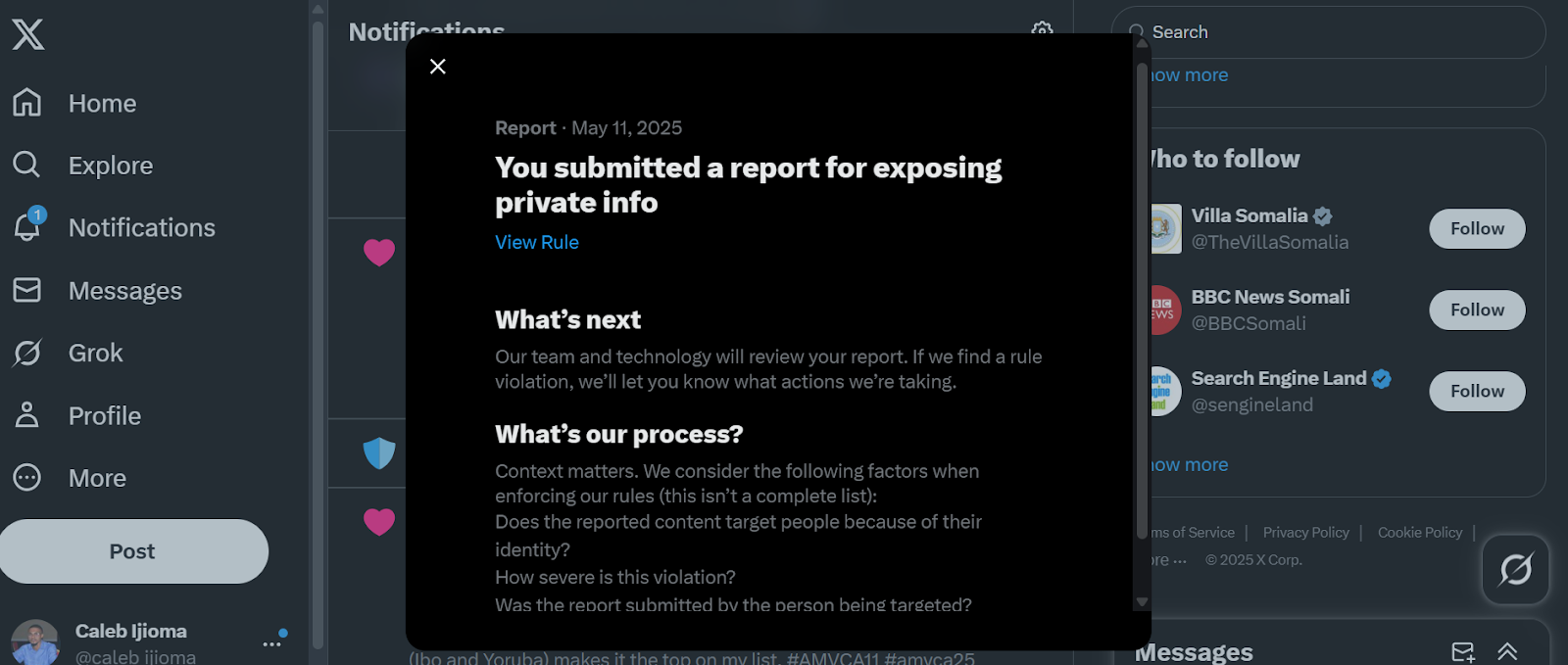
One X user, @queeen_minah, who has been affected by this prompt, told DUBAWA that she felt violated. She had uploaded an image of herself, and, on that same day, another user, @Ignoremeitscool, promoted grok to remove her clothes. Grok, complying with this prompt, removed her clothes and replaced them with a bra, thereby revealing her body.
“This post is causing more insults and humiliation to me, and as it spreads, it ruins my reputation,” she told DUBAWA.
Minah, who then reported the post to X for violations, received a follow-up email saying the post, which prompted Grok to remove her clothes, didn’t violate X’s policies.
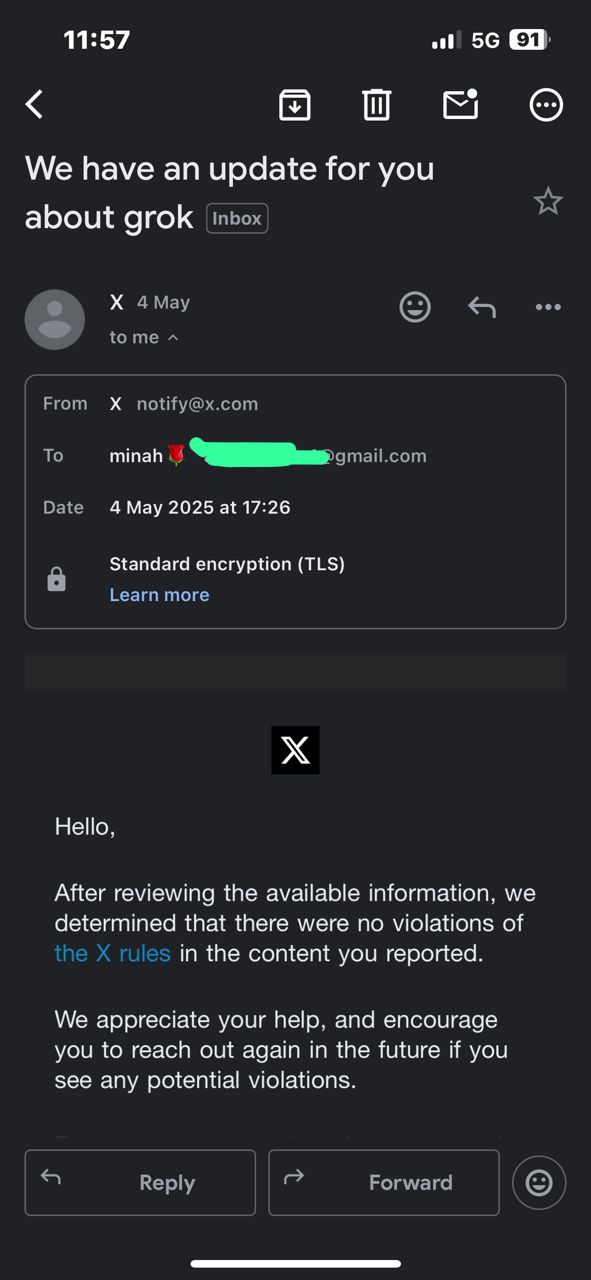
She stated that her followers helped report the account that prompted Grok, but it was restored after a few minutes of suspension. DUBAWA observed that X has yet to take the post down.
With this, she told DUBAWA that X is never a safe place for women.
“We are bullied and humiliated like that all the time, we don’t like it, we just ignore it because it has become a norm, ” she said.
“Personally, I had to block Grok and all possible people that made Grok generate that post in order to feel comfortable posting again without more violations.”
Grok violates X’s privacy policies
According to X, Grok is designed to answer almost any question with a touch of wit and humour while providing helpful and insightful responses.
The Grok help centre page does not state what kind of content is not permitted. According to the page, “Grok’s access to real-time public X posts allows Grok to respond to user queries with up-to-date information and insights on a wide range of topics.”
However, Grok AI activity around undressing women as a result of users’ prompts violates X’s non-consensual nudity policy. This policy states that users may not post or share intimate photos or videos of someone produced or distributed without their consent.
X emphasises that this policy has been “severely violated” if (a) creepshots or upskirts – images or videos taken of people’s buttocks, up an individual’s skirt/dress or other clothes that allows people to see the person’s genitals, buttocks, or breasts; and (b) images or videos that superimpose or otherwise digitally manipulate an individual’s face onto another person’s nude body.
DUBAWA tried to contact X to get a response about this privacy violation, but the social media platform has so far not responded.
However, DUBAWA observed that Grok has been helpful in other areas. For example, Grok clarified a claim that vaccinated people who walked towards the computer emitted a Bluetooth code.
AI ethical standards
The Organisation for Economic Co-operation and Development (OECD), AI Principles adopted in 2019, was to ensure that human rights and democratic values are respected. These principles have been adopted by the 38 member countries, including the United States, where X’s headquarters are situated.
These principles include Inclusive growth, sustainable development, and well-being; human rights and democratic values, including fairness and privacy; transparency and explainability; Robustness, security, and safety; and Accountability.
Also in November 2021, UNESCO produced the first-ever global standard on AI ethics titled ‘Recommendation on the Ethics of Artificial Intelligence.’ This applies to all 194 member states of UNESCO.
The recommended ethics; proportionality and Do No Harm, safety and security, right to privacy and data protection, human oversight and determination, transparency and explainability, responsibility and accountability, inclusiveness and non-discrimination, sustainability, Awareness and literacy, and multi-stakeholder and adaptive governance, lay out a human-rights-centred approach to the Ethics of AI.
However, the use of AI continues to go against these adopted ethics, and the proliferation of deepfakes and synthetic media continues to raise concerns.
Sensity AI, a firm that specialises in deepfake content and detection, reveals that in October 2020, researchers reported over 100,000 computer-generated fake nude images of women created without their consent or knowledge.
In 2024, Maria Walsh, one of the representatives from Ireland in the European Parliament, noted that deepfakes have emerged with the development of AI technology. According to her, women are “overwhelmingly” the targets of many deepfakes involving non-consensual sexual imagery.
Walsh noted that these manipulated videos, often superimposing a person’s face onto someone else’s body in sexually explicit scenes, are created without the victim’s knowledge or consent.
“They are designed to exert control and assert power over women’s identities and bodies. Women’s careers, reputations, relationships and personal lives are all on the line. On top of the personal consequences, my concern is the impact this issue has on the participation of women in public life,” she said.
In a recent effort to criminalise the production of nonconsensual, AI-generated sexual images and increase accountability for the tech platforms where the content is shared, President Donald Trump signed the Take It Down Act into law, proposing a three-year jail term for defaulters.
This is the first federal legislation in the United States that directly addresses the misuse of artificial intelligence.
Experts raise concerns
Kwaku Asante, manager for the Independent Journalism Project at the Media Foundation for West Africa (MFWA) and an advocate against gender disinformation, told DUBAWA that social media platforms that rely on Generative AI (GenAI) have contributed to worsening an already bad situation of gender disinformation, particularly in the production of consensual explicit images of women.
Kwaku noted that Gen AI has made it easier to produce non-consensual sexually explicit videos of women, amplified with the rise of machine learning platforms, which have promoted the creation of applications that take women’s clothes off.
He expressed concerns that this could make it difficult for women to stay on online platforms, further widening the gender digital gap that experts have been complaining about.
While providing solutions to the sexualisation of women on social media platforms, including X, Kwaku said social media platforms should restrict these prompts used in removing women’s clothing. He added that there can be several restrictions to stop its users from sexualising women’s pictures, including stopping the prompt.
“On the role of social media owners, it brings in the big question of content moderation and contextual appreciation of these issues. We need to ensure that the accountability is really placed on their feet. We need to keep raising concerns about issues like this. It’s about time we raise these concerns, especially as it affects the part of the world,” he said.
Similarly, Silas Jonathan, the Digital Investigations Manager at the Centre for Journalism Innovation and Development (CJID), stressed the need for social media platforms to promote AI ethics and have an AI ethics page.
Silas, who noted that there is still a long lingering conversation around AI ethics, believes it can be achieved.
“Yes, it can be achieved, but these are necessary conversations between social media owners and information experts. And that can happen the same way it happened years back when mis/disinformation became rampant, that social media platforms had to come up with the 3rd party fact-checking initiative,” he emphasised.
Monsur Hussain, Head of Innovation at CJID, emphasised that prompting Grok to undress women is digital sexual harassment, and it is a clear ethical and legal violation.
He stressed the need for X to take responsibility and safeguard users against this.
“However, the bulk of the fault is not on the users. The big tech responsible for Grok itself has a responsibility to provide safeguards against this. The tool should not be built to accept such user requests,” he added.
Conclusion
While Grok has been helpful to X users, it has also been used in a way that violates women’s privacy and existing ethical principles. Experts fear that if AI ethics are not adopted and Tech giants are not made responsible for AI activities on their platforms, the spread of targeted disinformation generated by AI will continue to negatively impact women.
This report was published under the Dubawa Kwame KariKari Factchecking and OSINT Fellowship.
]]>At first, it was harmless, but on closer look, several other TikTok users began to believe this claim as it continued to generate conversation.
With the username irewolegodwin and about 334.8k followers, this viral video came with a series of claims concerning the use of Pregnancy Test ( PT) strips.
His claims were pointing to one single thing- that a pregnancy test strip does not reveal the pregnancy status of a woman, but rather that the strip can still be positive even when a person is not pregnant.

Could this be true?
“If you put soap or bleach, it is going to read positive; they know, we don’t know. If you put too much urine, it is going to read positive; they know, we don’t know. E get some kind medicine wey you go use, even you as a man, if you piss dia, e go read positive”[sic]. These were the exact words of this Nigerian TikToker, wherein he made the claims.
In the video posted on January 31, 2025, he has gathered 48.1k likes, 1843 comments, 6133 shares and 4490 saves.
This Nigerian TikToker went on to add that even male urine can make a pregnancy test strip show positive.
We broke down the claims as follows
- If one makes use of Coke or soda on the strip, it would read positively
- If one makes use of soap or bleach, the strip would read positive
- If excess urine is used for the test, it would read positive.
- A man’s urine would read positive
How Does a Pregnancy Test Strip Work?
A pregnancy test strip works by detecting the level of hcg ( Human Chorionic Gonadotropin) in the user’s urine.
This hcg is the hormone produced by the placenta after a fertilised egg attaches to the Uterine lining.
According to its use, if the pregnancy test strip shows two red lines, the user is positive, and if it reads a single red line, the user is negative.
When does the PT Strip Show Positive or Negative?
A pregnancy test strip is positive when the urine of a pregnant person comes in contact with it and it shows two red lines.
A pregnancy test strip is negative when the urine of a pregnant person comes in contact with it and it shows a single red line.
If the pregnancy test strip doesn’t read any line or shows a line towards the tips immersed in urine, it is If the PT Strip doesn’t read any line or shows a line towards the tips immersed in urine, it is Invalid..
ROUNDCHECK Findings
Having established what a Pregnancy test strip is and how it can be either positive or negative. We delve into a practical verification process to debunk this claim.
Verification Process
This researcher bought samples of unused Pregnancy Test Strips for the sole purpose of experimenting with them using the claims by the Nigerian Tiktoker.
We dipped them into three liquid substances: Coke, Soap and Urine.
The pregnancy test strip dipped into Coke and soap came out negative, and the one dipped into excess urine came out invalid.
- Can Coke/ Soda Make a PT Strip read Positive?
Soda consists of water, flavourings, sugar or artificial sweetener, additives like Citric Acid amongst others, making it impossible for it to contain hcg. Practical checks, in which the result can be found below, emphasise that it is impossible.
The pregnancy test strip, when dipped into a certain amount of soda, showed negative.
This dispels the claim by the Tiktoker that a Pregnancy test strip shows positive when dipped into soda.

- Can Soap And Bleach Make a Pregnancy Test Strip Show Positive
Soap is made up of the following composition: Sodium Silicate, Soda Ash, Sodium Sulphate, Beizeme Sulphate, amongst others.
This researcher dipped a sample of an unused Pregnancy test strip in soap to test if the result would show positive, as the Tiktoker had claimed.
Practical checks, in which the result can be found below, show the impossibility of this claim, as the Pregnancy Test Strip, when dipped into a soap solution, showed negative.
Further research showed that the composition of soap can not make pregnancy-related test strips positive.

- Can Using Too Much Urine Make a PT Strip Read Positive
Practical checks on the authenticity of this claim show that the result obtained from the pregnancy test strip would be invalid. This is because the quantity of urine would make it possible for the strip to accurately determine the level of hcg in the urine.
Experts provide insights
In an interview with ROUNDCHECK, Dr. Charles Emuchay, a medical laboratory scientist with over 20 years of experience, clarified that pregnancy test strips detect the hormone human chorionic gonadotropin (hCG), not antibodies, as commonly misunderstood. “The hormone that the test detects is hCG, and it begins to appear in the blood and urine after a fertilised egg implants in the uterus,” he said
According to him, hCG detection through blood (serum) is often possible within the first week after a missed period, and is more sensitive than urine testing. Urine-based tests typically pick up the hormone from the second week onward, when the concentration has increased.
“This is why early clinical tests often rely on serum hCG for higher accuracy,” he said.
Dr. Emuchay emphasised that hCG levels may remain in the body for weeks, even in situations when a pregnancy ends, either through miscarriage or abortion.
“So even after the pregnancy has been terminated, the hormone doesn’t disappear immediately. It can remain for up to a month or more, which can lead to a false positive result,” he noted.
Dr. Emuchay added that in rare situations, a positive pregnancy test result could be caused by non-pregnancy-related conditions such as
- Hormonal imbalances that elevate hCG levels in the blood.
- Tumours, including certain cancers, can produce hormones that mimic hCG.
- Molar pregnancies (Hydatidiform mole), a condition where abnormal tissue grows in the uterus and causes extremely high hCG levels far above what is found in pregnancies
Dr. Emuchay said such cases can be distinguished using dilution tests. “With a molar pregnancy, even when we dilute the sample heavily, it still tests positive. That’s a key way to differentiate it from a normal pregnancy.”
On viral claims that substances like soda, detergent can cause false positives on pregnancy strips, Dr. Emuchay declared them false.
“That’s not scientific. In the lab, we follow standard operating procedures (SOPs). Anything done outside the SOP is considered unreliable and invalid. Results from unapproved methods have no place in professional practice,” Dr. Emuchay explained.
To further understand how test strips work and why misuse can lead to confusion, ROUNDCHECK also spoke with Adebayo Ayomide, another medical laboratory scientist.
Ayomide explained that hCG is produced only after implantation and is the key element that pregnancy test strips are designed to detect. She emphasised that serum testing is preferred by medical professionals because it is precise, and can be detected earlier, compared to urine.
“Blood tests can detect hCG as early as six days after fertilisation. That’s why hospitals rely on them for more accurate and early diagnosis,” she said.
Ayomide also listed several factors that can interfere with a pregnancy test strip by especially when done at home. They are:
- Unclean or contaminated collection containers, such as cups with soap residue or traces of disinfectants.
- Chemical interference, including certain household substances that may alter the chemical balance in the test.
- Bacterial contamination can affect urine pH and lead to inaccurate results.
- Improper timing, such as reading results too early or too late.
- Expired or poorly stored test kits can degrade the chemical reagents and yield false outcomes.
“There are also certain medical conditions, like some tumours that can produce hCG and trick the test into showing a false positive”, she added. “But these are rare, and proper laboratory evaluation can rule them out.”
Verdict
The above-mentioned claims are INCORRECT.
It is important that the above-mentioned claim is fact-checked as it speaks on a sensitive health issue, which is pregnancy. Misinformation, such as using coke, soap or excess urine, can cause confusion and decision-making based on fake information.
It arms the public with ample information towards making informed decisions, prevents the spread of myths and most importantly, retains the confidence in public health workers and services.
Tips on How to Effectively Use a PT Strip
- Use the first morning urine
- Avoid excess fluid intake before testing to prevent the dilution of hCG level.
- Follow the instructions carefully
- Consult results for professional confirmation from a healthcare professional
Falmata’s mother, Yakaya Aisami, who was heavily pregnant, delighted in having local cuisines. After breaking her fast one evening, Aisami took a sip of the pap prepared by Falmata, remarked on how delicious it tasted, and offered a little of the pap to Falmata. Upon tasting it, Falmata commented that it was not as sweet as her mother had expressed. To Awana, this was displeasing, and he accused Falmata of disrespecting her mother, resulting in a heated argument.
Awana, who had a history of abusing Falmata, threatened to kill her, claiming he had dug her grave. Despite attempts from family and community leaders to resolve the issue and force Falmata to apologise, Awana remained obstinate.
During the early hours of one morning, while Aisami and Falmata were deeply asleep, Aisami woke up to the haunting screams of her daughter. She found Awana standing over her daughter, holding a sharpened piece of wood that resembled an axe, dripping with blood. Awana had killed Falmata. After performing his ablution, he prayed and slept as though he had not just taken a life.
Just like Falmata, many women have lost their lives to femicide. In 2024, Nigeria recorded 135 reported femicide cases, according to the DOHS Cares Foundation.
In August 2024, Christiana Idowu, a 21-year-old undergraduate from the Federal University of Agriculture, Abeokuta, was killed by her male friend and fellow church member, Ayo Adeleye. Christiana, who was on her way to Unilag from Itaoluwa, Ikorodu, through Yaba, sought shelter with Ayo under the shade of shops in front of his house while it was raining.
As the downpour intensified, Ayo suggested Christiana enter the house for proper shelter. While at his home, Ayo attempted to rape Christiana and subsequently murdered her.
A month later, Habibat Akinsanya suffered a similar fate. 18-year-old Habibat was reportedly murdered by one Onyeka and was found dead on September 2, 2024. Her lifeless body was discovered on her father’s farm around Mile 6 in Abeokuta, Ogun State, on the 4th of September. She had been raped and strangled to death. Before her murder, Onyeka had pleaded for temporary accommodation at her parents’ house on the 31st of August.
Following Habiba’s death, 55-year-old Hauwa Yusai was beaten to death by her neighbours. Brothers Husaini Ali, aged 45, and Yau Ali, aged 20, inflicted fatal injuries on her with sticks over witchcraft allegations. Her death was reported on the 16th of October 2024.
A few days after Habiba’s death was announced, 24-year-old Priscilla Ocheme was found dead on the 21st of October 2024, with blood covering her face. Priscilla had visited her male friend Ekosuehi Iseh Elvis, also known as Richard, and never returned home. Richard claimed she left his house shortly after he went out, but inconsistencies in their chats suggested otherwise. He was released before the police conducted an autopsy.
Femicide Tied To Culture
Falmata was killed because her uncle, Awana, thought his actions upheld family honour. This can be linked to honour killing, a traditional practice in some countries which allows killing a family member who is believed to have disgraced the family.
Kosisochukwu Ani, a gender expert, attributed these femicide cases to cultural factors like Bride Price, Virginity Bidding, Female Genital Mutilation (FGM) and Grooming as cultures that encourage femicide and femicide denial.
“Societal or Cultural factors also contribute to femicide denial. All those cultures are saying women are property,” Kosisochukwu says.
Despite Killings, There Are Still Denials
ROUNDCHECK have traced several comments on X (formerly Twitter) depicting Femicide denial. This refusal to acknowledge or recognise the deliberate killings of women based on their gender has resulted in the spread of gender misinformation.
On November 21, 2024, X user Official PMC, while reacting to UN Women’s post on femicide, commented that there was nothing like Femicide and called the organisation lunatics.
Likewise, another X user, Annesj, replied to the same post and said regardless of femicide statistics, females are more protected, and their lives are not worth more than his.
On January 15, 2024, a user with the username Och!eng made a tweet that said it’s not femicide, it’s ‘prostitucide’ because women who live decent lives are alive and making their money.
This tweet is a clear example of victim blaming.
Experts Weigh In
Gender expert Kosisochukwu identified victim blaming, which prompts questions like, “What was she wearing? What was she doing at night?” These questions often act as shields for perpetrators.
She noted that the lack of appropriate legislation to deal with perpetrators and provide justice to victims contributes to femicide denial, as perpetrators often believe they can get away with their actions.
Ololade Ajayi, founder of the DOHS Foundation, noted that femicide denial in Nigeria is rooted in the country’s patriarchal society. This societal structure results in widespread discrimination and bias against women and girls, with male children being valued more than female children in many communities.
Ololade emphasised that victims are often blamed for circulating false rumours to divert attention from the case. “Take the case of Augusta, who Benjamin killed. Posts were made accusing her father of condemning her, while her mother was said to have encouraged the gifts she received from him. Meanwhile, her father had been deceased for a long time.”
“There are also dismissive comments such as, ‘Oh, what about women who kill men?’ or, ‘100 cases is fair since Nigeria is a country of 200 million people,’” Ololade said.
According to Ololade, the DOHS Foundation recognises that the consequence of femicide denial is likely an increase in the number of femicide cases.
“When there is no justice for victims, and the government remains indifferent to these killings, the cycle of violence will continue.”
Ololade, who has consistently called for femicide legislation to tackle the problem, says,
“If we do not recognise femicide as a distinct type of gender-based violence (GBV), we won’t be able to address it. Calling it femicide means acknowledging it as a specific crime that occurs when there is a gender-related motive.”
She argued that the lack of recognition allows perpetrators to escape accountability for their crimes, perpetuating the cycle of violence.
This report is produced from Roundcheck’s gender disinformation desk.
]]>