The viral post circulating on WhatsApp claims that a child identified as ‘Gift’ is suffering from a serious medical condition and needs 1,983,000 naira for surgery. The post appeals for public donations and provides a bank account belonging to one Abdulsalam Momodu (Kuda Bank) while urging users to pray, share, and support the child financially.

At first, I felt sympathy and considered contributing. But the repetition caught my attention. WhatsApp had also indicated that the message had been forwarded many times.
Why was the same video circulating through multiple accounts with identical messages? That simple moment of curiosity became the beginning of a deeper search for the truth.
ROUNDCHECK Findings
ROUNDCHECK observed that the post provides a personal bank account belonging to one Abdulsalam Momodu (Kuda Bank), with the account number 2085826430, for receiving donations. When entered into a bank transfer app, the name of the bank details matched.
After, we conducted a Google reverse image search and discovered that the image attached to the donation appeal appears to be a screenshot taken from a YouTube video (Archived here).
The image shows a young child wearing a diaper, which the viral appeal presents as evidence of the child’s alleged health condition. Examination of the image revealed visible clues from what appears to be a YouTube interface, including details that could be used to trace the original content.

Using these clues, ROUNDCHECK conducted keyword searches and cross-checked the search results with the information visible in the screenshot. The search led to a matching YouTube video, which was then reviewed and compared with the image attached to the viral appeal to establish whether the content had been previously published and to determine its original context.
The video was posted on March 20, 2022, on @Ramii22’s YouTube channel (Archived here) and has 44 likes and 427 views. In the description of the video, an Amharic text was written and translated to English as ‘Until Allah heals him, say a prayer (dua) for him.’
Also, on June 3, 2026, the video was posted on Taiwo Adako’s YouTube channel (Archived here).
However, the image and video alone do not establish a) the identity of the child b)the location of the child c) the person who uploaded the video d) whether the child in the image is connected to the donation request or whether the requested funds are genuinely for medical treatment.
However, at the time of this investigation, there was no publicly available evidence confirming that Abdulsalam Momodu is the child’s parent or guardian, that the account is linked to a recognised hospital, that the child’s condition has been medically diagnosed, or that a verified medical facility issued the requested surgery amount.
Further checks led us to an Instagram post made by amycharleshopefoundation (Archived here) on Instagram on July 17, 2025, using the same video.

In the description of the post, the name of the child was mentioned as Kande. ROUNDCHECK noticed that the amount requested from the public is different from the previous claim ( ₦1,960,000 and said he only has ₦250,000). This differs from the first claimed amount and account information.
The account information on the post is for one Auwal Aisha, with account number 7025694542 attached to MOMO PSB Bank. ROUNDCHECK confirmed that the account details are active for transferring money.
This video was seen on Instagram (Archived here). Also, it was posted on Facebook by Alimi Isiaka in a group named Alaaji Ayinla Omowura, Fans Club, The Eegunmogaji of Egbaland Worldwide. The details for payment also changed to Afolabi Adeni, 8060482576, MoMo PSB Bank.
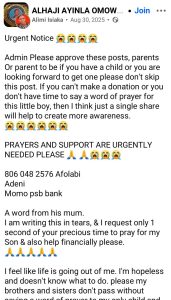
Analysis of Possible Red Flags
The viral appeal contains several features that are commonly associated with online donation campaigns that require careful verification before members of the public decide to contribute. One of the most noticeable characteristics is its use of highly emotional language.
Phrases such as “I am writing this in tears” and “my son is dying slowly as days pass by” are designed to evoke sympathy and create a sense of urgency, encouraging readers to respond emotionally rather than critically assessing the authenticity of the claim.
Another notable feature is the repeated call for immediate action. The post urges readers to donate whatever amount they can afford and to share the message widely.
While genuine fundraising campaigns often encourage public support, the emphasis on urgent donations without first providing verifiable evidence may pressure people into making quick decisions without conducting basic checks.
The appeal also lacks essential medical documentation that would normally accompany a legitimate request for financial assistance.
It does not include the name of the hospital treating the child, a medical report, a doctor’s diagnosis, a treatment invoice, or any official documents confirming the child’s condition and the cost of the proposed surgery.
The absence of such information makes it difficult for potential donors to independently verify the appeal’s authenticity.
Furthermore, the donations are requested through a personal bank account rather than a hospital account, a registered charity, or another recognised fundraising platform.
Although using a personal account does not necessarily indicate fraudulent intent, it reduces transparency. It makes it more difficult for donors to confirm that their contributions will be used for the stated medical purpose.
Very specifically is the account number is always changing for everyone who posted the image. The inconsistency is a red flag.
Taken together, these indicators do not conclusively prove that the fundraising appeal is fraudulent. But the red flags should raise the consciousness that something does not add up in the different posts.
Also, they raise legitimate concerns and underscore the importance of verifying online medical donation campaigns before making financial contributions.
Expert Opinion: Why Medical Verification Matters
To understand whether a person’s medical condition can be verified through photographs shared online and the role of medical documentation in fundraising, Dr Bibilari Adewusi, a medical practitioner, spoke to ROUNDCHECK when we shared the image and the call for financial appeal with him.
According to Dr Adewusi, it is not always possible to accurately determine a person’s medical condition from photographs or videos alone, although some illnesses may present obvious physical signs.
He explained that recent controversies surrounding false medical claims on social media have contributed to growing public scepticism.
Dr Adewusi noted that certain diseases can sometimes be recognised visually.
“Depending on the medical condition, there are clinical conditions that one can identify from sight. For example, patients with goitre or cancrum oris (noma) may display obvious physical abnormalities that suggest they are unwell. However, a photograph alone cannot provide a definitive diagnosis or determine the exact nature or severity of a disease.”
On the documentation required for genuine medical fundraising, Dr Adewusi emphasised that medical reports should accompany public appeals for financial assistance.
“Ideally, medical reports should accompany such appeals. Unfortunately, recent incidents have shown that even medical reports can be manipulated. This means the public must now verify not only that a report exists but also that it is authentic,” he concluded.
To further examine how Nigerians can verify online medical fundraising appeals, ROUNDCHECK spoke with Nurse Taiwo Okediran, who works at the University College Hospital Ibadan. She cautioned that photographs and videos circulating online cannot, on their own, establish a child’s diagnosis, the severity of the condition, or the need for surgery.
She explained that while visible signs such as severe thinness, breathing difficulties, abdominal swelling, jaundice, seizures or visible masses may indicate that a child needs medical attention, proper diagnosis requires medical history, physical examination and, where necessary, laboratory tests or imaging.
Okediran said genuine medical fundraising appeals should provide current medical reports, official hospital cost estimates, relevant diagnostic records and consistent patient information. However, she cautioned that medical documents can also be manipulated, making independent verification important.
She advised donors to verify the child’s identity, diagnosis, hospital, treatment cost, and beneficiary’s bank account before donating. She also recommended using official hospital contacts to confirm claims and, where possible, paying directly into the hospital’s account.
“Urgency should never bypass fundamental verification. Taking time to verify the child, diagnosis, hospital, cost, and account ensures that assistance reaches legitimate patients while protecting donors from fraudulent appeals,” She said.
Verdict
The viral donation appeal is misleading because it recycles an older video with altered names, donation amounts, and bank details, without verifiable evidence linking the child to the fundraising claim.
]]>The first article features an interview with a purported medical expert, Dermawan Rahmat, described as a Chinese doctor and scientist who has lived in Nigeria for over five years.
In the article, Dermawan alleged that Nigerian urologists are dishonest towards patients and claimed the country’s methods of treating prostate inflammation and improving male potency are 30 years behind modern methods.

His words further read in part, “There is a solution to this problem, and I have good news for those who suffer from prostatitis. There is a supplement that is amazingly effective for men of all ages and surpasses its world analogues in effectiveness! Moreover, this product was developed in Nigeria, although it has not received the recognition it deserves. It is much more affordable and effective than similar products from the USA. This product is called Xenoprost Active and was created at the University of Medicine and Pharmacy.”
He recommends the supplement to all men aged 40 and above, claiming it contains a 2007 breakthrough substance called alpha-hydroxyretinol that can eliminate prostate inflammation.
The second article (with a self-updating publication date) was further used to promote the product. The article stated that an ‘anonymous survey’ revealed that nine out of 10 women in Nigeria admit they would cheat if their husbands can not satisfy them.
The article shows a supposed interview with a sexologist, identified as Emma Johnson and a claimed medical doctor, William Johnson, purported to be the head of the National Urology Center. These purported experts were used to support the survey and endorse the product.

These articles also promote Xenoprost Active as a supplement to increase testosterone and improve erectile function. One of the articles claimed that the supplement was developed at ‘a University of Medicine and Pharmacy’.
The articles further use editor’s notes, a 50 per cent discount, and a ‘Rush My Order’ button to hasten readers. Both articles present comment sections filled with supposed testimonials.

What is prostatitis?
Prostatitis is the inflammation of the prostate gland and is a significant health concern for men globally, including in Nigeria. According to Mayo Clinic, a global medical institution, prostatitis can make urination painful or difficult and may cause pain in the groin, pelvic area or genitals.
A study by the National Institute of Health (NIH) categorised prostatitis into four bacterial and non-bacterial types, with treatments typically involving antibiotics, alpha-blockers, or anti-inflammatory drugs depending on a clinical diagnosis.
The National Institute of Diabetes, Digestive and Kidney Diseases (NIDDK) also revealed that while prostatitis can affect men of all ages, it is the most common prostate problem for men under the age of 50.
ROUNDCHECK investigated the claim, considering it a public health issue and to check the validity of the supplement the website promotes.
ROUNDCHECK Findings
Seeing that the website presents itself as a news website, we conducted a keyword search on Google. The result revealed that no credible news organisation in Nigeria bears the name Nigerianews.store.
ROUNDCHECK analysed the website’s domain name on Whois, a domain verification tool. The result revealed that the website was registered on September 1, 2025 and expires on September 1, 2026.
We checked the registrant contact on Whois and found that it contains “Street: Kalkofnsvegur 2, City: Reykjavík”, an address identified as Withheld for Privacy, an Iceland-based domain privacy service.
According to a 2024 New York Times investigation, the same address has been used as the default contact for millions of domains, including numerous phishing, fraud and disinformation websites.
Withheld for Privacy service allows domain owners to replace their personal contact information in WHOIS records with the company’s address, which makes it difficult to identify the real operators of websites. The use of this address by Nigerianews.store registrant(s) raises questions about the website’s transparency and credibility.
On the WHOIS page, it lists a phone number with the country code +354, which is the country code for Iceland.

While the website presents its pages in a news-style format, the articles direct readers towards a commercial order process, including discount offers and ‘Rush My Order’ prompts. This indicates a commercial marketing tactic rather than independent news reporting.
Who is Dr Dermawan Rahmat?

ROUNDCHECK searched the Medical and Dental Council of Nigeria (MDCN). This statutory body regulates the practice of medicine in Nigeria.
The search did not return a practitioner listed as Dermawan Rahmat, nor could we independently verify the article’s claim that he is a doctor practising in Nigeria.
We found no independent or verifiable professional profile, medical licence, institutional affiliation, or publication record for a doctor identified as Dermawan Rahmat that matches the persona in the article.
Furthermore, we conducted reverse image searches on Google Images, Yandex and TinEye using the keyframe.
These reverse image tools did not show exact matches, and AI-image detection tools like Hive Moderation did not flag the image as AI-generated.
ROUNDCHECK conducted a Google keyword search and found the same image had previously been used in a separate advertorial promoting another health product.
The image, together with its translated accompanying text, was not accompanied by verifiable information identifying the person as Dermawan Rahmat.
The article claimed that the Xenoprost Active supplement was created at ‘a University of Medicine and Pharmacy’ without identifying the university by name, country or department.
We conducted a keyword search on Google using the keywords ‘Xenoprost Active+University’ and ‘University of Medicine and Pharmacy’ and found some notable universities in Romania, such as the Carol Davila University of Medicine and Pharmacy and Iuliu Hațieganu University of Medicine and Pharmacy, among others, that have the name as part of their institution name.
However, we found no university with the single name, “University of Medicine and Pharmacy”.
Publicly available records did not show any credible publication, clinical trial or institutional record linking the product to a university or research programme.
AI-generated Doctors, Fabricated Social Proof
Due to the suspicion around the named doctors, ROUNDCHECK subjected their keyframes to Hive Moderation, an AI-image detection tool.
Analysis showed that the image of the supposed doctor William Johnson is 99.9 per cent AI-generated.
We observed that the individual’s grip of the product in the image looks unnatural.

Seeing that the website also claimed that William is the head of the National Urology Center, we checked if such an institution exists in Nigeria.
We checked the Federal Ministry of Health hospital services listings, MDCN records, Corporate Affairs Commission (CAC) public records and Google Maps.
While there are specialised urology clinics and teaching hospitals that serve as national or regional hubs for prostatitis or prostate care in Nigeria, ROUNDCHECK found no federal government-owned or centralised facility officially named the National Urology Centre in Nigeria.
Also, no credible source identified the portrayed individual with any credible urology centre in Nigeria or globally.
We further analysed the keyframe of the supposed sexologist, Emma Johnson on Hive Moderation. The result shows it is 99.9 per cent AI-generated.

To cross-verify the results, we analysed both images on other AI-image detection tools, including Is It AI and Fake Image Detector.
The tools also flagged the images as 99 per cent AI-generated and likely computer-generated images, respectively.
While AI-detection tools may not be 100 per cent accurate, the absence of verifiable professional records and the image’s visual inconsistencies, such as an unnatural grip, raise serious doubts about the identities presented in the articles.
ROUNDCHECK also observed that both articles display ‘Latest Comments’ that appear to be from satisfied customers.
We revisited the articles on different dates and refreshed them repeatedly. We observed that the comments remain static and retain the same relative timestamps.
This pattern suggests that the comments may be pre-set page elements rather than live users’ testimonials.
What Is Xenoprost Active?
Xenoprost Active is a commercially marketed dietary supplement sold online in Nigeria and listed by LibidSafe on Amazon India.
The marketing claims vary between these sellers and websites, with some describing Xenoprost Active as a nutritional supplement while other promotional pages claim it supports prostate health, urinary function and male vitality.
It is also being promoted through international affiliate-marketing networks like OfferVault, as a prostatitis product targeting Nigeria and Uganda.
The price on Indiamart was listed as ₹2,450 (equivalent to about N34,000). Current Nigerian prices show that the product is being sold between N48,000 and N59,000 here and here, including on online selling platforms like Konga and here.
Despite the clinical claims of the product on these selling platforms, we found no study or peer-reviewed clinical trial showing that Xenoprost Active cures prostatitis, boosts testosterone or improves erectile function.
Instead, the public food recall of the Food Safety and Standards Authority of India (FSSAI), published on page 8 in the Times of India newspaper, declared Xenoprost Active, batch XPF07, “unsafe food” pursuant to an FSSAI recall order dated May 28, 2025.
According to the public notice, the batch was manufactured by Natcon Biollifesciences Pvt. Ltd., an Indian nutraceutical and herbal supplement manufacturer.
ROUNDCHECK also found that in January 2024, an Indian fact-checking organisation, NewsMeter, investigated a separate Xenoprost Active advertorial promoting a supposed three-day cure for prostatitis.
According to the report, the claim’s purported expert could not be independently verified. However, a physician and sexologist consulted clarified that Xenoprost cannot treat prostatitis in three days.
Xenoprost Active Is Not Registered With NAFDAC
The National Agency for Food and Drug Administration and Control (NAFDAC) is a government body that registers all drugs and herbal supplements sold in Nigeria.
On 18 June 2026, ROUNDCHECK searched the NAFDAC Greenbook, a database for registered health products in the country.
The supplement was not found on the NAFDAC Greenbook even as of the time of filing this report. We also found no evidence of a NAFDAC registration number for the product.
We reached out to NAFDAC through the email addresses (reforms@nafdac.gov.ng and sf.alert@nafdac.gov.ng) listed on its official website for direct confirmation of the product. We sent the product’s image and inquiries to the NAFDAC email addresses on 9 July 2026; however, as of the time of this publication, the agency had not replied.
We further called the agency through the available phone numbers (+234 1 460 9750 and +234 909 763 0506) on its website, but the calls were unanswered.

However, NAFDAC, in a risk statement, emphasised that potential poisoning, treatment failure, and even death are serious public health risks associated with consuming unregistered drugs.
The statement added that the safety, quality and effectiveness of unregistered products cannot be guaranteed because such products have not gone through NAFDAC’s necessary evaluations.
Claim That Nine Out Of 10 Nigerian Women Admit To Infidelity, Unsupported
The second article claims that nine out of 10 Nigerian women admit to cheating due to sexual dissatisfaction with their husbands.
The headline reads, “Study Shocks Nigeria: 9 in 10 Women Admit They Would Cheat If Husband Can’t Satisfy—Here’s What Urologists Recommend”.
ROUNDCHECK checked for publicly available scientific studies to verify the claim. Existing studies only identify sexual dissatisfaction as one among many factors associated with infidelity among couples.
For instance, a study published in the European Journal of Educational Studies on the cause and effect of increased infidelity among married women in Nigeria revealed sexual incompatibility and personal dissatisfaction as one of the several causes of infidelity, which is common in both women and men.
Another study, focused on Lagos State literate working-class women, only highlighted sexual dysfunction of a spouse as one of the causes of infidelity, among several other reasons.
ROUNDCHECK found no identifiable survey, methodology, sample size, institution, publication date or peer-reviewed research supporting the supposed study or statistics that nine out of 10 Nigerian women admit to infidelity on the grounds of husbands’ sexual dysfunction.
Keyword search revealed that many more suspicious websites have used the same sexologist’s image and supposed study to promote unproven male sex enhancement products here and here.
The claim that nine out of 10 Nigerian women admit to cheating due to sexual dissatisfaction with their husbands is unconfirmed.
Alpha-hydroxyretinol Myth
The website claims that in 2007, scientists discovered alpha-hydroxyretinol from Gotu Kola, adding that treatment with it can cure prostate inflammation.
ROUNDCHECK searched the World Health Organization (WHO), PubMed, Google Scholar, and the American Urological Association (AUA) archives.
We found no recognised clinical evidence supporting ‘alpha-hydroxyretinol’ as a treatment for prostate inflammation.
Retinol (a form of Vitamin A) and Alpha-Hydroxy Acids (AHAs) are typical ingredients used in dermatology and cosmetics. We found no evidence that a recognised medical compound called ‘alpha-hydroxyretinol’ is used to treat prostatitis.
Although laboratory and early-stage studies have examined the possible anti-inflammatory properties of Gotu Kola, also known as centella asiatica, ROUNDCHECK found no high-quality clinical evidence that it cures prostatitis.
Medical Authorities’ Recommendations
ROUNDCHECK found no credible clinical evidence that Xenoprost Active is proven to eliminate prostatitis, increase testosterone or improve erectile function.
For the testosterone boosting and improving erectile function claims, we searched major medical authorities, including the American Urological Association (AUA), the U.S. National Center for Complementary and Integrative Health, and the Food and Drug Administration (FDA).
These medical authorities do not recognise over-the-counter dietary supplements as proven treatments for testosterone deficiency or to improve erectile function.
A study revealed that evidence supporting supplements for erectile dysfunction (ED) and testosterone boosting is limited and inconsistent.
Instead, testosterone therapy is recommended only for men with medically confirmed testosterone deficiency. According to the European Association of Urology, erectile dysfunction requires evaluation and treatment based on its underlying cause.
For the prostatitis elimination claim, global medical bodies, like Mayo Clinic and The Urology Care Foundation, have emphasised that treatment of prostatitis depends on the type, patients’ symptoms, laboratory tests and evaluation for urinary or pelvic symptoms, which may include a medical history, physical examination and urine testing.
Similarly, the American Urological Association (AUA) recommends that, depending on a patient’s age, symptoms and clinical findings, a clinician may also consider additional tests, including PSA testing.
However, AUA highlights antibiotics, prostate massage, lifestyle changes, alpha-blockers, anti-inflammatory agents and pelvic floor physical therapy as treatments for prostatitis, adding that they should be guided by a qualified healthcare professional.
Cleveland Clinic also stated that the treatment of prostatitis depends on the cause and type, emphasising that there is no generic treatment for prostatitis.
ROUNDCHECK spoke to a consultant urologist at the Ahmadu Bello University Teaching Hospital, Kaduna State, Nigeria, Mohammed Ahmed.
He emphasised that, due to false assurances of a miracle cure, patients avoid seeking appropriate medical care, such as early diagnosis and treatment.
“As a result, some who have the disease sometimes come to the hospital when the disease has become incurable or complicated. There are no proven records or studies to show that some of these so-called supplements really do prevent the disease,” he said.
Mohammed advised that men experiencing urinary symptoms, pelvic pain or painful urination should seek prompt medical screening or consultation rather than relying on supplements marketed as miracle cures.
Verdict
The claim that Xenoprost Active eliminates prostatitis, boosts testosterone and improves erectile function is INCORRECT.
At the time of publication, the product was not listed in the NAFDAC Green Book. ROUNDCHECK found no credible clinical evidence to support the product’s advertised claims. The website uses unverifiable and non-existent experts, unsupported medical claims and persuasive marketing tactics to promote the product.
]]>Claim
A viral post shared on Whatsapp claims that toilet paper causes UTIs, especially in women.
“Take note that this toilet paper causes UTIs for women. Please stay healthy and wish you a happy New year.” a part of the post reads.

This post has stirred a widespread reaction among social media users, and seeing that it is targeted at women’s health, ROUNDCHECK investigated it.
ROUNDCHECK Findings
Toilet paper is a soft, thin, and absorbent paper product typically rolled onto a cardboard core used for cleaning oneself after using the toilet. It’s a personal hygiene item.
Toilet papers are not just produced from any tree. It is a process of using both hardwood and softwood from “virgin trees.” The combination of hardwood to softwood is approximately 30% softwood and 70% hardwood.
Urinary Tract Infections (UTIs) are infections in any part of the urinary tract — the body’s drainage system for removing urine, a waste product containing excess fluid and waste materials.
While the primary material for toilet paper is usually not inherently harmful, the processes and chemicals used during its production, especially bleaching and per- and polyfluoroalkyl substances(PFAS) chemicals, can be.
ROUNDCHECK, however, did not discover any research linking toilet paper to the direct cause of UTI. In a 2024 research, Post-Toilet Wiping Style was found to be Associated With the Risk of Urinary Tract Infection in Women
This study was conducted with individuals who visited the following two hospitals in Japan between April 2020 and March 2023: Kesennuma City Municipal Motoyoshi Hospital (Kesennuma, Japan) and Tohoku University Hospital (Sendai, Japan).
According to the research, subgroup analyses by age demonstrated a potential risk of post-toilet wiping with the arm from the front between the legs for the development of UTI in middle-aged women aged 40-59 years old. This relationship was not observed in younger women, older women, or men.
Experts Weigh In
ROUNDCHECK spoke to experts to gather more findings. A consultant gynaecologist, Dr. Awazi Onoja at the Jos University Teaching Hospital (JUTH), noted that various microorganisms and practices increase the spread of microorganisms to the urinary tract.
According to her, a woman who uses tissue paper to wipe her anus and then uses the same piece to clean herself after urinating is likely to get a UTI.
“Poor hygienic practices encourage the spread of causative organisms from the gastrointestinal tract (anus) to the urinary tract, but not the tissue paper causing it,” she said.
Another medical expert, Dr. Joshua Amali, who works at the 212 Battalion Hospital, Maiduguri, Borno State, Nigeria, told ROUNDCHECK that there is currently no conclusive evidence that toilet paper directly causes UTIs in women.
“However, good hygiene practices, such as wiping correctly and maintaining genital area cleanliness, can help reduce the risk of UTIs,” he said.
Verdict
The claim that toilet paper can cause UTIs, especially in women, is misleading. Our findings show that toilet paper does not directly cause UTIs; rather, poor hygiene and other factors can lead to the infection.
This report was done under the Roundcheck Volunteer Network 4th Cohort
]]>A YouTube page, Wellness Wise Self, claims that fasting for 36 hours is good for the body because it helps to reduce body fat and recycle dead cells and toxins built up in the body. This AI-generated video claim has generated 419,000 likes and 5,828 comments as of June 8, 2025.
This video resonates with other YouTube users. For example, a user, @dessiebahiru, said that “Fasting is the best medication not only for the physical body but also emotional and spiritual wellbeing.”
Another user, @ruthmerino681, said, “I never imagined fasting would make me feel sooo good!”
This claim raises questions about whether fasting for 36 hours is good for the body or not. Should people have to fast for 36 hours to reduce body fat? Does this fasting period hurt the body?
As this claim is capable of influencing people’s health choices, it is imperative that ROUNDCHECK investigate it.
ROUNDCHECK Findings
ROUNDCHECK discovered that intermittent and periodic fasting could offer major health benefits. In a recent study by a neuroscientist, Dr. Mark Mattson noted that studies of intermittent fasting, period fasting, and time-restricted feeding in normal and overweight subjects have demonstrated efficacy for weight loss and improvements in multiple health indicators, with benefits including improved insulin sensitivity and reduced cardiovascular risk.
He explained that the benefits come from changes at the cellular level.
“The mechanisms involve activation of adaptive stress response pathways that enhance mitochondrial health, DNA repair and autophagy,” he wrote. Period fasting may also promote stem cell regeneration and long-lasting metabolic effects.
However, Mattson warned that more clinical trials are needed. According to him, randomised controlled trials will be required to establish the efficacy of Intermittent Fasting in improving general health and managing major diseases of ageing.
Noting a gap in medical training, he said, “Most physicians are not trained to prescribe specific intermittent-fasting interventions,” he said. Mattson suggested gradually narrowing the eating window to 16 to 18 hours of fasting a day or using the 5:2 approach, starting with one low-calorie day per week and increasing over time.
Mattson advised that a dietitian or nutritionist should be consulted, adding that Physicians should also provide ongoing support and education, just as with any lifestyle changes.
Also, Tiffany A. Dong, a Cardiologist, in one of her articles on Intermittent fasting and dietary, states that Intermittent fasting induces a ketogenic state, as evidenced by the rise in β-hydroxybutyrate levels(β-Hydroxybutyrate is a ketone body produced by the liver when it breaks down fat for energy. Elevated levels of BHB can indicate a state of ketosis, which can occur during fasting, starvation, or a low-carb diet) in overweight individuals who fast.
After 6-8 hours of fasting, ketone levels become detectable, which signals a switch from fat storage to fat use with a decrease in low-density lipoproteins(LDLs, also known as “bad” cholesterol, is a type of lipoprotein that carries cholesterol from the liver to the cells).
According to the report, high levels of LDL can lead to plaque buildup in the arteries, increasing the risk of heart disease and an increase in high-density lipoproteins(HDLs, also known as “good” cholesterol, is a type of lipoprotein that carries excess cholesterol from the cells to the liver for excretion. High levels of HDL are associated with a lower risk of heart disease) levels.
She also stated that “intermittent fasting appears to have the ability to lower blood pressure, which thus could improve mortality from cardiovascular disease.”
The report highlighted that intermittent fasting does appear to be more beneficial when food intake occurs during times of activity as compared to more dormant times, as measured by hepatic production of circadian genes such as molecular period protein (mPER)and molecular Circadian Locomotor Output Cycles Kaput( mCLOCK).
Nutritionists Reacts
A Lagos-based certified nutritionist, Desewa Ottu, stated that some of the information contained in the video can be misleading if proper care is not taken.
She said that fasting for 36 hours can cause various physiological responses in the body. “Some people may experience benefits from it, but it is essential to understand the potential risk,” she said.
She explained that extended fasting can lead to a calorie deficit, which leads to prompting the body to utilise fat stored for energy. This metabolic shift may aid weight loss over time.
“Fasting may stimulate autophagy which is a cellular process that removes damaged components, potentially reducing the risk of certain diseases. Also, intermittent fasting can enhance insulin sensitivity, which may help in blood sugar regulation”.
Desewa emphasised that“there are some potential risks that must also be considered when fasting for an extended period, as prolonged fasting can lead to low blood sugar levels resulting in symptoms like dizziness, fatigue, and irritability.
While raising concerns around extended fasting without proper nutritional planning, she said that this may result in deficiencies of essential vitamins and minerals.
“It is not suitable for everyone. Someone with health conditions like diabetes, or those who are pregnant or breastfeeding, should not do prolonged fasting without medical supervision,” she said
“While a 36-hour fast may give one some health benefits, it’s not suitable for all, and it carries potential risks. It’s important to approach this fasting with caution, while ensuring proper hydration and nutritional planning.”
Conclusion
While the claim includes partially accurate information as discussed by experts, it oversimplifies complex health processes and ignores critical safety considerations.
Fasting for a long period has its benefits, and also its side effects. Based on findings and experts’ opinions, it is advisable to take caution when embarking on intermittent fasting, most especially when it involves long hours.
This report was done under the ROUNDCHECK Volunteer Network project 2025.
]]>With 14 students hospitalised and 34 close contacts under observation, health authorities are racing to contain the spread of this preventable but potentially deadly bacterial infection.
This highlights the deadly risk of this largely preventable disease.
In response to the growing concerns, health experts have emphasised that vaccination remains the most effective protection against diphtheria.
The Lagos State government has announced a mass vaccination campaign set to begin on Monday, with nearly 500,000 doses ready for deployment in high-risk areas.
But what exactly is diphtheria, and why is it so dangerous? Understanding its nature, spread, and prevention is key to stopping further infections.
What is Diphtheria?
Diphtheria is a serious bacterial infection caused by Corynebacterium diphtheriae. It primarily affects the mucous membranes of the nose and throat, leading to respiratory complications and, in some cases, severe damage to the heart and nervous system.
According to the Nigeria Centre for Disease Control and Prevention (NCDC), the bacteria produce a toxin that spreads through the tissues of the respiratory system, heart, and nerves.
This can cause difficulty breathing and swallowing and, in severe cases, life-threatening complications.
How Does Diphtheria Spread?
Diphtheria, if untreated, can lead to severe complications, including Heart damage (myocarditis), which can be fatal, and nerve damage, which can affect muscle function and swallowing.
Diphtheria has a fatality rate of 5% to 10%, with the highest risk in children under five and adults over 40.
Diphtheria is highly contagious and can be spread or transmitted through:
- Airborne droplets when an infected person coughs or sneezes
- Direct contact with infected wounds
- Touching contaminated objects (e.g., used tissues, shared utensils)
- Asymptomatic carriers, who show no symptoms but can still spread the disease
Symptoms of Diphtheria
Symptoms usually appear 2 to 5 days after infection. They may include:
- A thick, gray membrane covering the throat and tonsils
- Sore throat and hoarseness
- Swollen glands (enlarged lymph nodes) in the neck
- Difficulty breathing or rapid breathing
- Nasal discharge
- Fever and chills
- Tiredness and weakness
Some infected individuals may experience only mild symptoms or none, yet they can still spread the disease. These individuals are known as carriers of diphtheria.
Diphtheria can also affect the skin, causing painful, red, swollen sores or ulcers covered by a gray membrane.
While this form is more common in tropical climates, it has also been reported in areas with poor hygiene and crowded living conditions.
Diphtheria in Nigeria
The diphtheria outbreak at King’s College in Lagos has stirred concerns, but it’s not the first time Nigeria has faced such a challenge.
In 2011, Borno, in north-eastern Nigeria, was hit by a severe outbreak of diphtheria, recording 98 cases and 21 deaths, with a staggering case fatality ratio of 21.4% according to World Health Organization reports.
In December 2022, the Nigeria Centre for Disease Control and Prevention (NCDC) received notification of suspected outbreaks in Kano and Lagos states, prompting rapid response teams to investigate and confirm the spread of the disease.
By early 2023, confirmed cases had been reported across several states, with Kano, Yobe, and Lagos. Over 4,160 cases were reported between May 2022 and July 2023, spreading across 27 states and 139 Local Government Areas (LGAs).
By mid-September 2023, Nigeria had recorded 6,048 confirmed cases out of 10,077 suspected cases, with Kano State alone accounting for 85% of the total confirmed cases.
By the end of 2023, the outbreak had reached an alarming scale, with a total of 22,293 suspected cases reported across 36 states and 297 LGAs. Kano (14,126), Yobe (2,238), Katsina (1,734), Bauchi (1,376), Borno (1,148), Kaduna (573), and Jigawa (256) accounted for over 96% of all suspected cases.
67.6% of the cases were children aged 1 to 14, and only 25.2% of confirmed cases were fully vaccinated with a diphtheria toxoid-containing vaccine.
The outbreak led to 598 recorded deaths, with a case fatality rate (CFR) of 4.5%.
Nigeria’s vulnerability to diphtheria stems from persistently low vaccination coverage. UNICEF and WHO estimates show that the country’s Diphtheria-Tetanus-Pertussis (DTP3) vaccine coverage has remained below 80% for decades.
This makes Nigeria one of eight countries responsible for over 50% of unvaccinated children globally.
Prevention and Treatment
We outline some ways diphtheria can be prevented:
- Diphtheria can be prevented through vaccination, which is the most effective defence. The standard childhood vaccination schedule includes five shots: at ages 2 months, 4 months, 6 months, 15-18 months, and 4-6 years.
- Adults should receive booster shots every 10 years.
- Good hygiene practices.
- Avoid crowded places and close contact with infected individuals.
What to Do If You Are Infected
If you experience symptoms such as sore throat, fever, difficulty breathing, and swollen neck glands, seek immediate medical attention, as early treatment is crucial.
]]>On Monday, August 19, the Nigeria Centre for Disease Control and Prevention (NCDC) announced that Nigeria had recorded 39 confirmed cases of monkeypox across 19 states and the Federal Capital Territory (FCT) since the beginning of 2024, with zero reported deaths.
This announcement followed the World Health Organization’s declaration on Wednesday, August 14, 2024, that monkeypox, also known as Mpox, is a global health emergency, citing the virus’s spread across Africa.
The Africa Centres for Disease Control and Prevention (Africa CDC) declared Mpox a public health emergency a day earlier.
The Director General of the NCDC, Dr. Jide Idris, disclosed at a press briefing that the declaration of Mpox as a public health emergency is of international concern.
According to the Infectious Diseases Society of America (IDSA), monkeypox was first discovered in Nigeria in 1971, with two cases reported, followed by another in 1978.
However, in 2017, Mpox reemerged in Nigeria after 39 years, with 122 recorded cases. In 2021, cases of Mpox were reported in Delta, Lagos, Bayelsa, Rivers, Edo, the FCT, Niger, and Ogun.
Between 2017 and 2021, there were 226 recorded cases, with eight deaths recorded.
By September 2022, Nigeria had recorded over 300 cases and four recorded deaths.
What is Monkeypox
Mpox, also known as monkeypox, is an infectious viral disease that can occur in both humans and other animals and leads to rashes and flu-like symptoms. There are two types of Mpox: clade I (originated in Central Africa) and clade II (originated in West Africa).
How Is Monkeypox Transmitted
- Direct skin-to-skin contact with Mpox rash or scabs from an infected person.
- Contact with saliva, upper respiratory secretions (snot, mucus), and bodily fluids or lesions around the anus, rectum, or vagina from an infected person.
- Pregnant people with Mpox can transmit the virus to the fetus during pregnancy or to the newborn during and after birth.
- The disease can be transmitted during activities like hunting, trapping, or processing infected wild animals in areas where Mpox is endemic.
Symptoms of monkeypox can include:
- Cold
- Exhaustion
- Fever
- Headache
- Muscle aches and backache
- Swollen lymph nodes
- Respiratory symptoms (e.g., sore throat, nasal congestion, or cough)
Those infected with Mpox often develop rashes that may be located on the hands, chest, feet, mouth, face, or near the genitals, including the penis, testicles, vagina, labia, and anus.
]]>A bacterium called Vibrio cholerae causes cholera infection. The deadly effects of the disease are the result of a toxin the bacteria produces in the small intestine. The toxin causes the body to secrete enormous amounts of water, leading to diarrhea and a rapid loss of fluids and salts (electrolytes).
Cholera bacteria might not cause illness in all people who are exposed to them, but they still pass the bacteria in their stool, which can contaminate food and water supplies.
According to MayoClinic, most people exposed to the cholera bacterium (Vibrio cholerae) don’t become ill and don’t know they’ve been infected.
But because they shed cholera bacteria in their stool for seven to 14 days, they can still infect others through contaminated water.
Most cases of cholera that cause symptoms cause mild or moderate diarrhoea that’s often hard to tell apart from diarrhoea caused by other problems. Others develop more-serious signs and symptoms of cholera, usually within a few days of infection.
Contaminated water supplies are the main source of cholera infection. The bacterium can be found in:
- Surface or well water: Contaminated public wells are frequent sources of large-scale cholera outbreaks. People living in crowded conditions without adequate sanitation are especially at risk.
- Seafood: Eating raw or undercooked seafood, especially shellfish, that comes from certain places can expose you to cholera bacteria.
- Raw fruits and vegetables: Raw, unpeeled fruits and vegetables are a frequent source of cholera infection in areas where there’s cholera.
- Grains: In Nigeria where cholera is widespread, grains such as rice and millet that are contaminated after cooking and kept at room temperature for several hours can grow cholera bacteria.
ROUNDCHECK noted its preventive measures and how to mitigate the ongoing pandemic of Cholera.
- Wash your hands with soap and water frequently, especially after using the toilet and before handling food. Rub soapy, wet hands together for at least 15 seconds before rinsing. If soap and water aren’t available, use an alcohol-based hand sanitizer.
- Drink only safe water, including bottled water or water you’ve boiled or disinfected yourself.
- Eat food that’s completely cooked.
- Avoid street vendor food, if possible. If you do buy a meal from a street vendor, make sure it is cooked in your presence and served hot.
- Stick to fruits and vegetables that you can peel yourself, such as bananas, oranges and avocados.
- Stay away from salads and fruits that can’t be peeled, such as grapes and berries- that are prepared outside without your knowledge.
As reported by the Nigeria Centre for Disease Control and Prevention (NCDC), said the country has recorded 1,528 suspected cases of cholera and 53 deaths in 31 states across 107 Local Government Areas.
The Director General of the NCDC, Dr Jide Idris, gave a report at a press briefing on the update on cholera situation in the country.
ROUNDCHECK noted that this is not the first time Nigeria will be having an outbreak.
The first outbreak of epidemic cholera in Nigeria was in 1972. This outbreak happens especially during the rainy season when the disease tends to spread more easily due to poor drainage systems, hygiene practices and limited access to clean drinkable water in rural areas.
The most recent cholera outbreak in Nigeria occurred in September 2022 in Bauchi where it lasted for over four months. The state recorded 12,496 confirmed cases with 394 deaths (confirmed 288, suspected 106) from (17 September 2022 to 23 December 2022) in 17 out of 27 Local Government Areas (LGAs) according to World Health Organization (WHO) data.
However, Cholera is a bacterial disease usually spread through contaminated water. Cholera causes severe diarrhoea and dehydration. If left untreated, cholera can be fatal within hours, even in previously healthy people.
What Is Cholera
Cholera is a disease caused by eating food and drinking water contaminated with the bacterium Vibrio cholerae.
How Does Cholera Spread
- Cholera can spread when people do not wash their hands with soap and water after defecating and then cook or serve food with unwashed hands.
- Cholera also spreads when people eat food without washing their hands before and after eating.
- If cooked food is not covered, it may get contaminated from flies that carry the bacteria.
- Cholera also spreads when raw fruits and vegetables are not thoroughly washed in clean running water before being eaten.
- Eating raw seafood contaminated with cholera bacterium is another way people get infected.
With the current outbreak, ROUNDCHECK highlights the symptoms of this cholera and how to spot it.
Symptoms of cholera infection can include:
- Diarrhoea: Cholera-related diarrhoea comes on suddenly and can quickly cause dangerous fluid loss. Diarrhoea due to cholera often has a pale, milky appearance that resembles water in which rice has been rinsed.
- Nausea and Vomiting: Vomiting occurs especially in the early stages of cholera and can last for hours.
- Low blood pressure- There will be a drop in the level of blood pressure.
- Weakness: There is a sudden weakness that comes with cholera infection.
- Dehydration/Thirst: Dehydration can develop within hours after cholera symptoms start and range from mild to severe. A loss of 10% or more of body weight indicates severe dehydration.
Signs and symptoms of cholera dehydration include irritability, fatigue, sunken eyes, a dry mouth, extreme thirst, dry and shriveled skin that’s slow to bounce back when pinched into a fold, little or no urinating, low blood pressure, and an irregular heartbeat.
Dehydration can lead to a rapid loss of minerals in your blood that maintain the balance of fluids in your body. This is called an electrolyte imbalance.
What is Electrolyte Imbalance:
An electrolyte imbalance can lead to serious signs and symptoms such as:
- Muscle cramps. These result from the rapid loss of salts such as sodium, chloride and potassium.
- Shock. This is one of the most serious complications of dehydration. It occurs when low blood volume causes a drop in blood pressure and a drop in the amount of oxygen in your body. If untreated, severe hypovolemic shock can cause death in minutes.
A Twitter user identified as @_47kasz claimed that Men must have sex up to 30 times a month to avoid prostate cancer. The tweet at the time of fact-checking has 442 retweets, 74 quote tweets, and 1,834 likes.
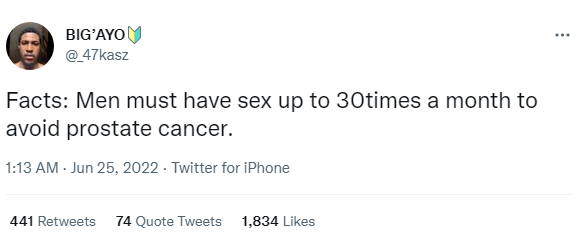
What is prostate cancer?
Prostate cancer is the development of cancer cells in the prostate gland. The prostate gland produces fluid for semen (a thick fluid that comes from men’s penis when they ejaculate during sexual activity). It is the most common cancer in men; some cases of prostate cancers grow very slowly, while others are very aggressive and spread quickly to other organs.
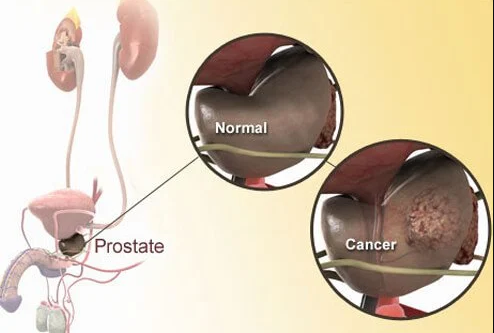
What is prostate?
The prostate is a small, soft organ. On average, it is roughly the size of a walnut or a ping-pong ball. It weighs around 1 ounce (30 grams) and is usually soft and smooth to the touch.
The prostate sits deep in the pelvis, between the penis and the bladder. It is possible to feel the prostate gland by placing a finger into the rectum and pressing it toward the front of the body.
The urethra, a tube that carries urine and semen out of the body, passes through the prostate. Because the prostate surrounds this tube, prostate problems can affect urine flow.
This organ is one part of male sexual or reproductive anatomy. The other parts include the penis, scrotum, and testes.
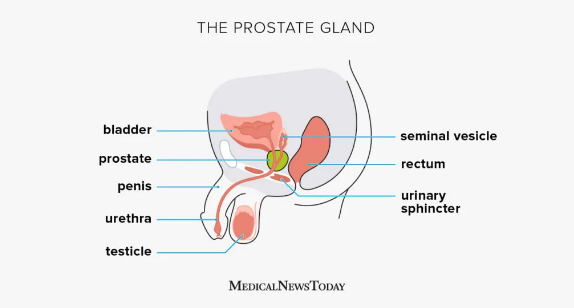
What does the prostate do?
A person does not require a functioning prostate to live, but it is important for fertility. The following sections discuss the functions of the prostate.
1) Helping to produce semen
The primary function of the prostate is to contribute prostatic fluid to semen. The prostate contributes 20–30% of fluid to the total semen volume. The remainder comes from the seminal vesicles (50–65%) and the testicles (5%).
The prostatic fluid contains components that make semen an ideal substance for sperm cells to live in, including enzymes, zinc, and citric acid. One important enzyme is prostate-specific antigen (PSA), which helps make the semen thinner and more fluid.
The fluid in semen helps the sperm travel down the urethra and survive the journey towards an egg, which is essential for reproduction.
Prostatic fluid is slightly acidic, but other components of semen make it alkaline overall. This is to counteract the acidity of the vagina and protect the sperm from damage.
2) Closing the urethra during ejaculation
During ejaculation, the prostate contracts and squirts prostatic fluid into the urethra. Here, it mixes with sperm cells and fluid from the seminal vesicles to create semen, which the body then expels.
When the prostate contracts during ejaculation, it closes off the opening between the bladder and urethra, pushing semen through at speed. This is why, in typical anatomic situations, it is impossible to urinate and ejaculate simultaneously.
3) Hormone metabolism
The prostate needs androgens, which are male sex hormones, such as testosterone, to function correctly.
The prostate contains an enzyme called 5-alpha reductase, which converts testosterone into a biologically active form called dihydrotestosterone (DHT).
This hormone is important for normal prostate development and function. In the developing male, it is crucial for the development of secondary sex characteristics, such as facial hair.
Structure of the prostate
A capsule of connective tissue that contains muscle fibers surrounds the prostate. This capsule makes the prostate feel elastic to the touch.
Scientists often categorize the prostate into four zones that surround the urethra like layers of an onion.
The following layers make up the prostate, beginning with the outer capsule and ending inside the prostate:
– Anterior zone: Made of muscle and fibrous tissues, medical professionals call this zone the anterior fibromuscular zone.
– Peripheral zone: Mostly situated toward the back of the gland, this is where most of the glandular tissue sits.
– Central zone: This surrounds the ejaculatory ducts and makes up around 25% of the prostate’s total mass.
– Transition zone: This is the part of the prostate that surrounds the urethra. It is the only portion of the prostate that continues to grow throughout life.
ROUNDCHECK findings
ROUNDCHECK, in a bid to ascertain if the claim is true and to get more insight, spoke to World Cancer Research Fund International (WCRF International), a not-for-profit organization that leads and unifies a global network of cancer charities dedicated to the prevention and control of cancer. The World Cancer Research Fund is the world’s leading authority on the links between diet, weight, physical activity, and cancer prevention and survival.
WCRF who responded to the claim said currently, there is no conclusive evidence that regularly having sex reduces the risk of prostate cancer.
“At present, there is no conclusive evidence that regularly having sex reduces the risk of prostate cancer. Some studies have suggested that men with a higher frequency of ejaculations may have a slightly lower risk of prostate cancer, whilst other studies have not supported this conclusion.” WCRF said
The Journal of Sexual Medicine (an official journal of the International Society of Sexual Medicine) titled Sexual Activity and Risk of Prostate Cancer: A Dose-Response Meta-Analysis, aimed at determining the associations among several female sexual partners, age at first intercourse, ejaculation frequency (EF), and the risk of prostate cancer (PCa), indicated that men with fewer sexual partner numbers, older age at first intercourse, and moderate frequent ejaculation were associated with a significantly decreased risk of PCa.
ROUNDCHECK spoke to a Urologist (A surgeon who treats diseases of the urinary system and male reproductive system including the prostate) who noted that there are a lot of conflicting studies on the matter, however, the issue of having sexual intercourse 30 times in a month to prevent prostate cancer is unfounded and not true.

In a bid to get more information about the claim from experts, ROUNDCHECK made an open request at Healthtap (a medical group and technology company), and several health experts responded.
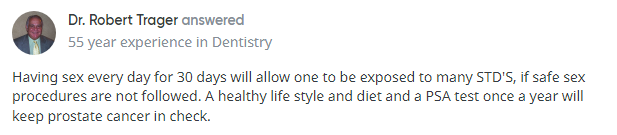
Vice-President of the Nassau County Dental Society in Garden City New York., Dr. Robert Trager said “Having sex every day for 30 days will allow one to be exposed to many STDs if safe sex procedures are not followed. A healthy lifestyle and diet and a PSA test once a year will keep prostate cancer in check.”
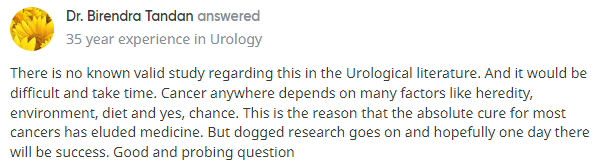
Also, a Urologist, Dr. Birendra Tandan, noted that Cancer anywhere depends on many factors and there is no known valid study regarding the claim in the Urological literature.
“There is no known valid study regarding this in the Urological literature. And it would be difficult and take time. Cancer anywhere depends on many factors like heredity, environment, diet, and yes, chance. This is the reason that the absolute cure for most cancers has eluded medicine. But dogged research goes on and hopefully one day there will be a success.” she said
A Primary Care, Internal Medicine, and Pediatrics expert, Dr. Tinuola Adeyanju, who also responded termed the claim a myth
“Absolutely not, that is a myth. I doubt that you would find a scientific study on such hypothesis” she said.

In a document made available to ROUNDCHECK titled “Ejaculation Frequency and Risk of Prostate Cancer: Updated Results with an Additional Decade of Follow-up“, evidence suggests that ejaculation frequency may be inversely related to the risk of prostate cancer (PCa), a disease for which few modifiable risk factors have been identified
Also, the authors evaluated whether ejaculation frequency throughout adulthood is related to prostate cancer risk in a large US-based study and found that “men reporting higher compared to the lower ejaculatory frequency in adulthood were less likely to be subsequently diagnosed with prostate cancer.”
They also noted that men in the higher ejaculation frequency categories had some “exposure patterns that might put them at higher risk of morbidity and mortality due to other causes—higher BMI (Body Mass Index) greater alcohol consumption, and more frequent history of smoking and sexually transmitted infections.”
A part of the research reads: “We were concerned that the reduction in PCa risk we observed in this group might be attributable to premature death from other causes among men who may have had undiagnosed PCa. Reduction in PCa risk may be partly explained by premature death due to other causes, but the reduction among men reporting high ejaculation frequency seemingly cannot be explained by this effect alone.”
ROUNDCHECK discovered that the strongest known risk factors for prostate cancer are a family history of the disease, African ancestry, and certain inherited genetic conditions (e.g., Lynch syndrome and BRCA1 and BRCA2). Smoking and excess body weight may also increase the risk of the disease.
Prostate cancer usually has no symptoms until the disease is advanced, rather, early detection can be done through medical screening because it is usually slow-growing.
Prostate cancer, second most prevalent in Nigeria
According to the International Agency For Research On Cancer, records in Nigeria show that prostate cancer is the second most prevalent cancer type (second to breast cancer), accounting for about 12.3% of new cancer cases, which also accounted for 10.8% of cancer deaths.
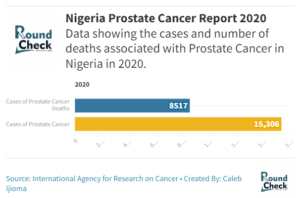
In 2020, about 15,306 cases of prostate cancer were reported, while it recorded 8,517 deaths from it.
Prostate cancer is the most fatal of all cancer cases in 2020, with an 8.85% probability or risk of individuals developing or dying from prostate cancer within the space of a year with an Age-Standardized Rate of age 0-35 years (ASR) (the calculated incidence or mortality rate is then called the ASR).
Between 2015 and 2020, the disease has been on a high rise, in which 22,225 cases have been recorded.
What are the major causes of prostate cancer?
WCRF noted that although it is not known exactly what causes prostate cancer, but non-modifiable risk factors which can increase the risk of prostate cancer include:
– Age – the risk rises as men get older, and most cases are diagnosed in men over 50 years of age.
– Family history – having a brother or father who developed prostate cancer before age 60 seems to increase your risk of developing it; research also shows that having a close female relative who developed breast cancer may also increase your risk of developing prostate cancer.
– Ethnic group – prostate cancer is more common in Black men than in White men, and least common in Asian men.
Although it is still currently not fully understood why some men, including Black men, are at higher risk of prostate cancer. The Prostate Cancer Foundation reports that men of African descent are 75% more likely to develop – and over twice as likely to die from -prostate cancer than White men.
It is thought that the disparities in prostate cancer by race and ethnicity may be explained by unequal access to screening and high-quality treatment, variation in exposure to prostate cancer risk factors, and genetic factors, such that there may be differences in tumor biology that cause prostate cancer in Black men to progress faster or be harder to treat.
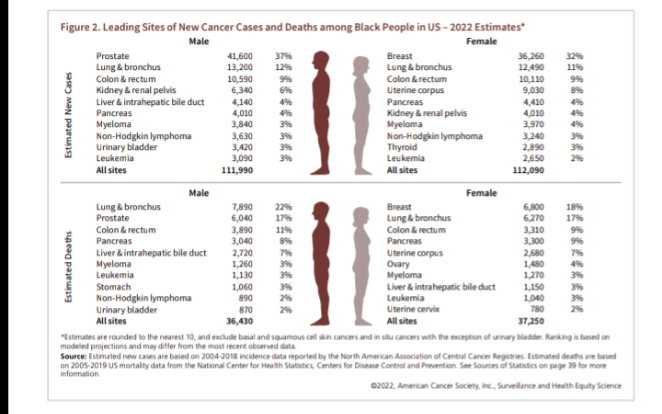
In a latest report, the American Cancer Society noted that Prostate cancer is the second-leading cause of cancer death in Black men, with an estimated 6,040 deaths expected in 2022. Black men have the highest death rate for prostate cancer of any racial or ethnic group in the US, 2 times higher than White men. Although there is some evidence that aggressive prostate cancer is more common in Black men, the larger disparity for mortality than incidence largely reflects less access to high-quality treatment.
WCRF also highlighted that there is also some evidence that:
– Higher consumption of dairy products might increase the risk of prostate cancer.
– Diets high in calcium might increase the risk of prostate cancer.
– Low plasma alpha-tocopherol concentration (vitamin E) might increase the risk of prostate cancer.
– Low plasma (blood) selenium concentrations might increase the risk of prostate cancer.
Verdict
Findings have revealed that there is no conclusive evidence to show that regular sex prevents prostate cancer, hence the claim is UNCONFIRMED
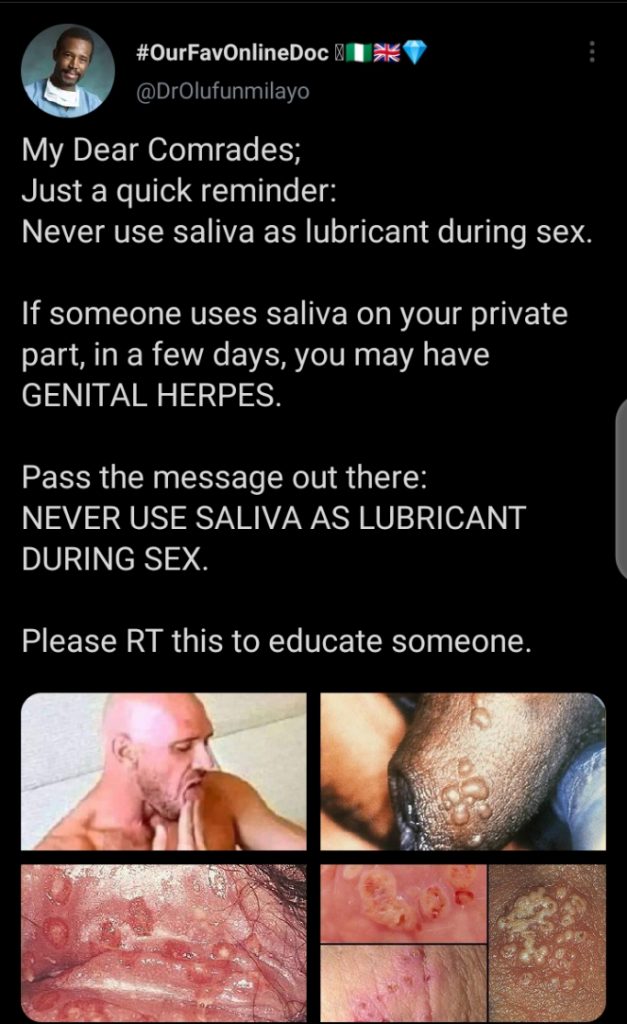
“If someone uses saliva on your private part, in a few days, you may have Genital Herpes. Apart from the risk of infections- saliva is ineffective as a lubricant- It is not as slippery, It dries up easily, It causes irritation, It can make you get a tear, You may get a bad smell if the person has mouth odor, Saliva is not a lubricant. Please don’t put your life at risk.”
“ So what about oral sex? It carries a worrying risk, to be honest. However because the focus in oral sex is primarily not to introduce the saliva into the vagina, technically that may mean it’s less risky than actually taking saliva and introducing it inside the vagina as a lubricant.”
“This happens more commonly than you think, and it is in fact the commonest way that you can get Genital Herpes. Never use saliva as a sex lubricant. And please, Anyone with an open mouth sore should not be using their saliva on you. This is no joke. You can get Genital Herpes.”
“ This happens more commonly than you think, and it is in fact the commonest way that you can get Genital Herpes. Never use saliva as a sex lubricant. And please, Anyone with an open mouth sore should not be using their saliva on you. This is no joke. You can get Genital Herpes.”
He also said that infected saliva rubbed all over the private part and resulted in Gonorrhea, Chlamydia, Syphilis, Trichomoniasis, Herpes, HPV (Human Papillomavirus) causing penis cancer, anus cancer, vagina cancer, vulva cancer, throat cancer, tonsil cancer.
What Is Genital Herpes?
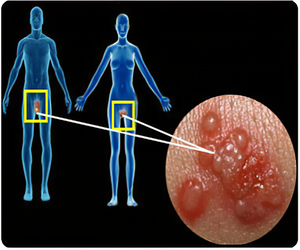
Herpes is a viral infection that comes in two types. Oral herpes is caused by a harmless virus called the herpes simplex virus 1 (HSV-1). It is easily passed from one person to another through skin contact, and, as a result, almost all people are exposed to it as children or young adults.
If you’ve ever had an outbreak of cold sores or fever blisters around your mouth or elsewhere on your face, then the likely culprit is HSV-1. These cold sores may recur as the infection is lifelong, but outbreaks are usually self-limited.
A different virus called the herpes simplex virus 2 (HSV-2) causes genital herpes. This form of herpes can result in both internal and external sores, and blisters in the genital area, which can arise several days, weeks, or months after exposure.
Some people may never experience visible symptoms. According to the CDC, having the genital herpes virus puts people at an increased risk of getting an HIV infection, if exposed.
You can get genital herpes by having vaginal, anal, or oral sex with someone who has the infection. You can get herpes if you have contact with:
- A herpes sore;
- Saliva from a partner with an oral herpes infection;
- Genital fluids from a partner with a genital herpes infection;
- Skin in the oral area of a partner with oral herpes; or
- Skin in the genital area of a partner with genital herpes.
You also can get genital herpes from a sex partner who does not have a visible sore or is unaware of their infection. It is also possible to get genital herpes if you receive oral sex from a partner with oral herpes.
You will not get herpes from toilet seats, bedding, or swimming pools. You also will not get it from touching objects, such as silverware, soap, or towels.
How To Identify Herpes Virus And How It Is transmitted?
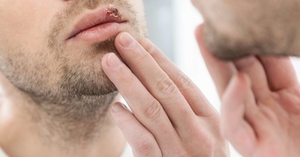
Oral herpes (HSV-1) can be spread through saliva, kissing, and skin-to-skin contact. HSV-1 can also cause genital herpes if the genital areas are exposed to fever blisters or sores on the mouth or face, or through oral sex.
Even though HSV-1 also never completely goes away, that strain of the virus causes fewer outbreaks over time in the genital areas than HSV-2.
Genital herpes (HSV-2) can be transmitted through skin-to-skin contact and/or sexual intercourse of all types (oral, vaginal, and anal). Most people don’t realize that sores from genital herpes can appear on the face as well as the genital area. Because the virus can spread any time contact occurs with a blister or sore
Most people with genital herpes have no symptoms or have very mild symptoms. Mild symptoms may go unnoticed or be mistaken for other skin conditions like a pimple or ingrown hair. Because of this, most people do not know they have a herpes infection.
Herpes sores usually appear as one or more blisters on or around the genitals, rectum, or mouth. This is known as having an “outbreak”. The blisters break and leave painful sores that may take a week or more to heal. Flu-like symptoms (e.g fever, body aches, or swollen glands) also may occur during the first outbreak.
While genital herpes rarely causes serious health problems in healthy men and women, HSV-2 can be dangerous for pregnant women and the neonate (an infant less than four weeks old), particularly during the last trimester of pregnancy.
The virus may cause premature labor and babies can contract the virus in the womb or when passing through the birth canal.
Preventing Genital Herpes
Dr. Olufunmilayo said to prevent genital herpes, people must stay off using saliva as a lubricant for sex and make use of a mouth condom if there’s a sore on the mouth.
“ Stay off using saliva as a lubricant for sex. That’s the ideal situation. If you have a sore in your mouth or a throat/mouth infection, keep your mouth away from anyone’s genitals. Or if you have to, please go to a pharmacy and get a mouth condom ”
“ Stick to one partner. Focus on foreplay. Ideal foreplay time 10-15minutes. That’s a safer, healthier way to get someone naturally wet. And the natural wet juice lasts longer, does a better lubricant job, doesn’t dry up easily, won’t cause wounds, and is best for both parties.”
“ Or if you find that you still struggle to be wet regardless of foreplay- get a lubricant. It is NOT expensive. Don’t buy in traffic, don’t buy inside a bus. Go to a pharmacy- Have a chat and look at options- Then buy a good reliable one ”
]]>