




|
Getting your Trinity Audio player ready...
|
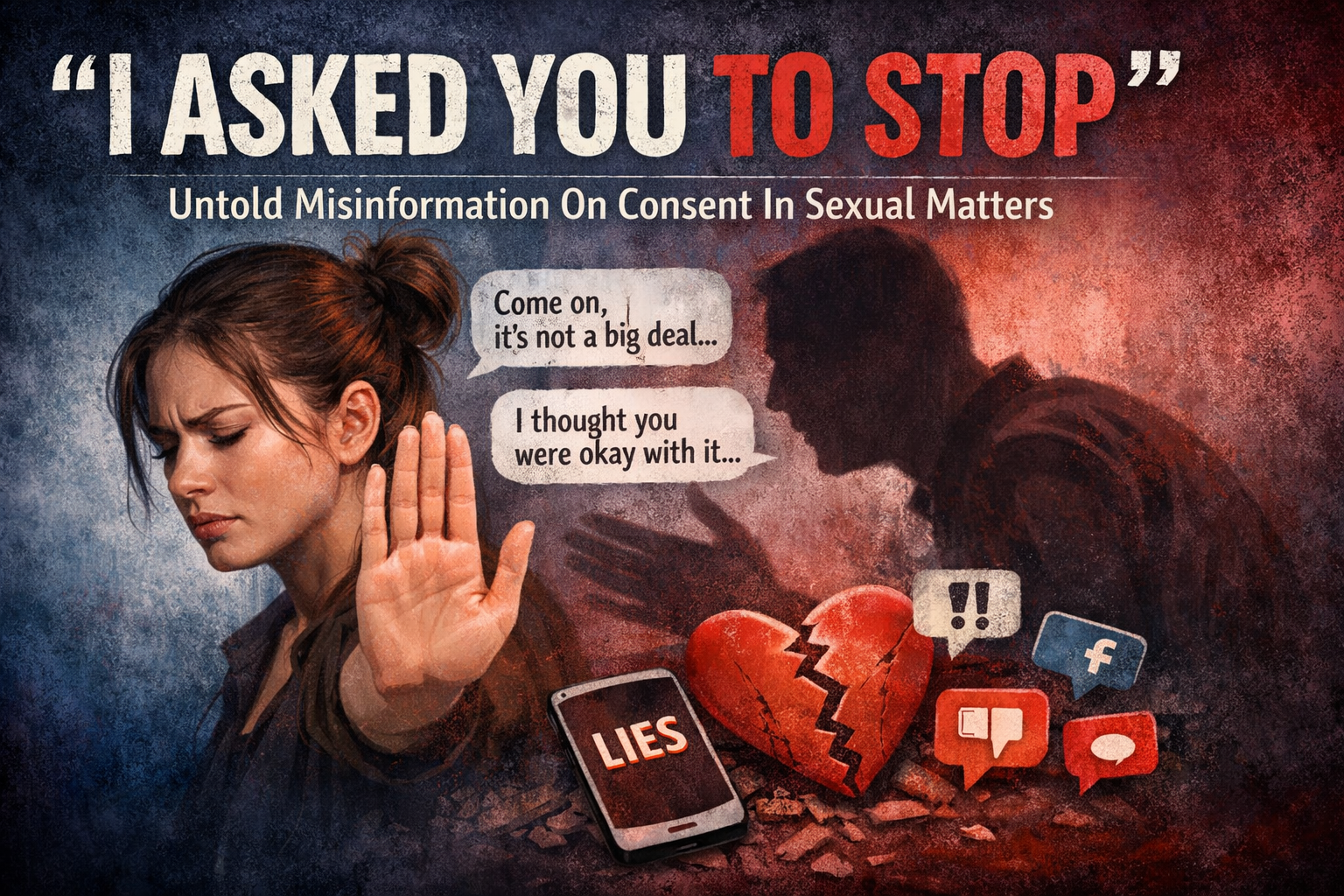
“Lummy touched me in my sleep, took my gown off, and I woke up to his mouth on my breast.” This was what Divine said as she narrated the Incident that transpired between her and Pelumi (Lummy), who had asked her out as he wanted them to try out a new restaurant.
While they should have been at a new restaurant, the first two options weren’t open, so they had to settle for the one he suggested the first time he brought it up.
They arrived at the restaurant around 11 pm and left by 12:30. They arrived at his place at 1 am.
“I got pissed and got off the bed, and this guy begged that he would leave the bed and let me sleep, only for me to wake up to him whispering in my ears and using my hands to jerk himself,” Divine continued her narration.
Accused of telling a lie, Divine posted videos of a conversation with Pelumi.
More Read

“Pelumi, you touched me inappropriately. Do you know how many times I asked you to stop, and you did not stop? I told you no, I don’t want to do it. Why were you still doing it?” [sic] Divine said.
Pelumi replied, “ I didn’t know you were sleeping, common now”.
This is where the line of consent needs to be drawn.
Consent means approval or permission by someone in authority to carry out a particular action. Many times, when it comes to sexual relationships—especially in heterosexual relationships and socialisation—it is often ignored, particularly on the female’s part, just like what transpired between Pelumi and Divine.
When issues regarding consent to sexual relations are revealed, some popular phrases which are used by the perpetrators and supporters of such actions are as follows; “Why did you go to his house; haven’t we had sex before; it’s not like you are a virgin; I’ve been giving you money and gifts; when women say no it really means yes; why did you wear that short skirt; but you know I can’t help myself around you” and many others.
These are some of the words always used as defences when the consent of the other party is not respected.
Consent saying YES or NO in any situation without being mandated to, without any form of coercion or duress, retaliation, punishment, or fear.
Consent must be free, informed, and voluntary. This means that a person must not be coerced to give consent, but instead must give it willingly, with sufficient information to guide them in making that decision.
According to Gladys Emmanuel, a human rights lawyer, “going to another person’s house, which is a social behaviour, accepting gifts, going on a date, spending time together, does not imply consent.” She further said that prior consensual sex does not automatically mean that there was consent on a later occasion.
According to Section 357 of the Criminal Code Act (applicable in Southern states), The Penal Code (applicable in Northern States), Under the VAPP Act (in the FCT Jursidiction) defined Rape as intentional penetration without consent, or where consent was incorrectly obtained (force, threats, intimidation, fraud, use of substances to impair will, impersonation, etc.
The legal interpretation of these laws suggests that consent must be for the moment. That is, consent obtained two weeks ago or yesterday cannot be applied to the incident of today. Each sexual encounter requires either free voluntary consent or the absence of coercion and the absence of fraud. Consent must be for the moment.
Busola Ojo-Oba, a social worker and SGBV prevention specialist, told ROUNDCHECK that consent can be described as F- freely given, R- reversible, I- informed, E- Enthusiastic, and S- Specific.
“We grew up in a society that told us that when women say no, it might mean yes, or the man should add more pressure, however that’s the patriarchy talking,” she noted.
According to her, a relationship where one party fears negative consequences for saying “no” is built on a power imbalance, making genuine consent impossible.
When a boss, lecturer, or anyone in a position of authority pursues someone dependent on them, the other person’s choices are influenced by fear of punishment, retaliation, or loss. Such relationships shouldn’t exist because consent must follow the principles of FRIES, and fear or duress automatically violates that standard.
What Does The Law Say?
Violence Against Persons Prohibition Act of 2015 treat non-consent or no consent as any sexual intercourse or behaviour obtained by force, by threats, by intimidation, by fraud or deception. Therefore, situations like visiting a person, accepting gifts, and being friendly do not automatically equate consent to sex.
The law recognises that not physically resisting is not the same as consenting. Many individuals or survivors would freeze from fear or stay quiet during an assault, while some would struggle; they are all trauma responses.
Silence or the lack of struggle is not and should not be deemed as a voluntary agreement.
Under the Nigerian constitution, the age of adulthood is 18 years and above. Looking extensively at the Child’s Rights Act of 2003, sexual intercourse with a child, which is a person under the age of 18 years, is a criminal offence.
The Violence Against Persons Prohibition Act of 2015, the criminal code, and the penal codes that operate in different parts of the country, also deem this a criminal offence.
According to Gladys, an adult who is involved in this scenario can be charged with statutory or unlawful sexual intercourse based on the way it is viewed by the state.
Do People Understand Consent?
A lot of people ignore consent and make excuses when issues concerning sexual harassment are raised.
An X user with username @SoulSageSay said, “A woman dressing sexy, flirting, walking into your house, or kissing you is broadcasting desire whether she admits it or not.”
Another X user with the username @GeoffreyNwakpa said, “I am not saying he’s right, but let’s go to the beginning. Wetin you go find for him house?” [sic].
@Trhymesz is another user in X who ignores consent through his tweet “This story is never clear, how did y’all end up in the same room in the first place? Start from that part. We listen, we won’t judge……yet”. [sic]
Statements like “what were you wearing, what time were you outside, why did you go to his house, you were giving him signals, how did you end up on the same bed, he was giving you gifts and money,” and many others are rhetoric that enable victim blaming, and this does not equal consent.
Consent has to be freely given and can be withdrawn at any time.
EDITOR’s NOTE: This is a curated piece emerging from social conversations monitored and expanded by the author for a broader perspective with the sole intent to enlighten readers.



