




|
Getting your Trinity Audio player ready...
|
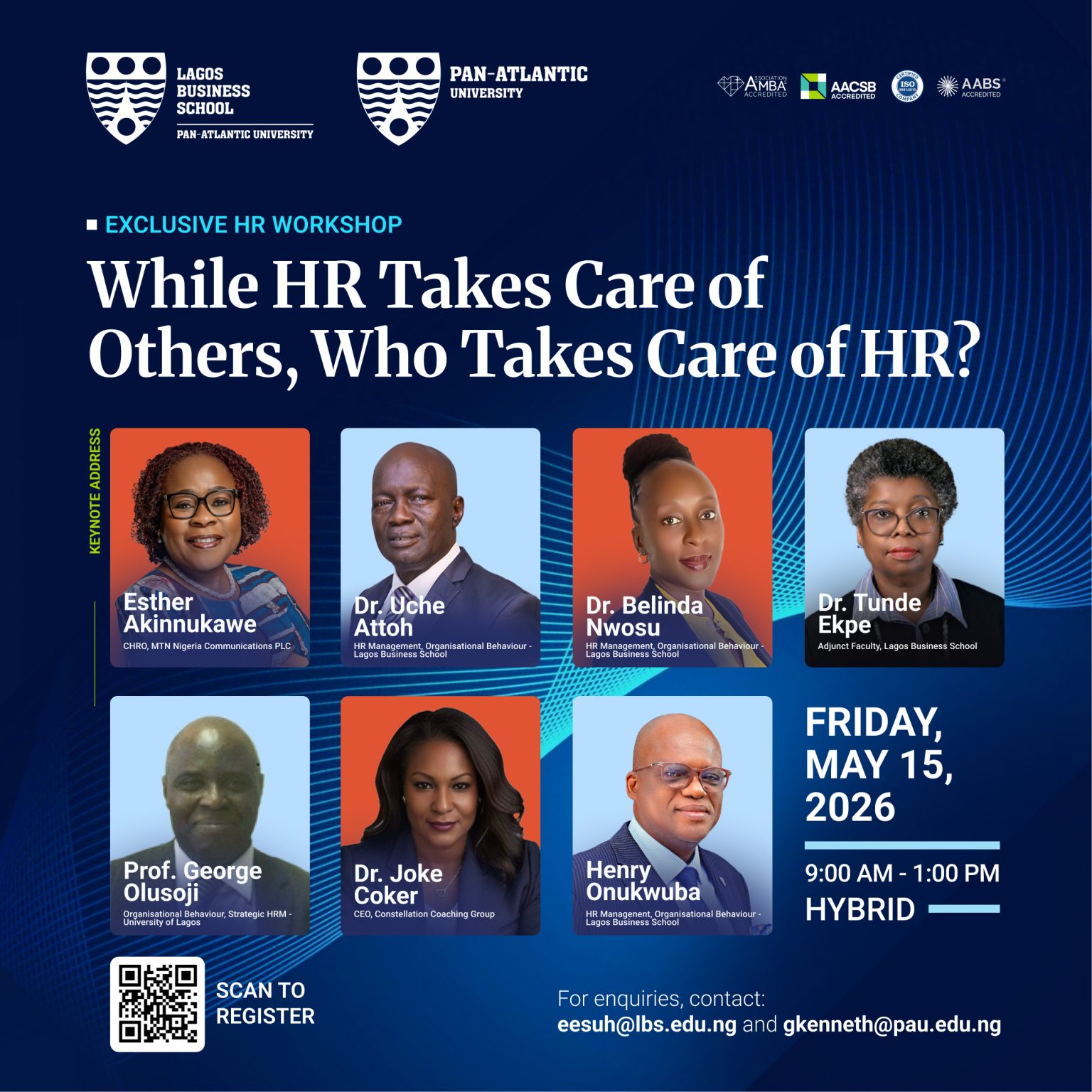
The Lagos Business School (LBS), Pan-Atlantic University, hosted a hybrid HR workshop on Friday, May 15, 2026, themed “While HR Takes Care of Others, Who Takes Care of HR?” The event brought together human resource professionals, scholars and business leaders to discuss burnout, workplace mental health and the evolving demands of the HR profession.
Ilerioluwa Phillips of ROUNDCHECK’s Communications Department attended the workshop virtually and shared key insights from the sessions, which focused on emotional labour, organisational wellbeing and the future of Human Resources in modern workplaces.
The workshop featured a keynote address by Esther Akinnukawe, Chief Human Resources Officer (CHRO) of MTN Nigeria Communications Plc, alongside panel discussions facilitated by HR and organisational behaviour experts, including Dr. Uche Attoh, Dr. Belinda Nwosu, Dr. Tunde Ekpe, Prof. George Olusoji, Dr. Joke Coker and Henry Onukwuba.
In his opening remarks, Dr. Uche Attoh stressed the critical role of HR professionals in organisational growth and leadership development. He noted that no individual rises to the peak of their career without passing through the structures and systems managed by Human Resources professionals.
Delivering the keynote address, Esther Akinnukawe highlighted the increasing emotional burden placed on HR practitioners, describing them as professionals constantly expected to maintain composure, neutrality and empathy even under intense pressure.
More Read

“HR professionals spend their careers managing other people’s emotions while suppressing their own,” one of the keynote presentation slides stated.
She explained that HR practitioners often absorb frustrations, leadership tensions, restructuring anxieties, burnout and workplace grief while receiving limited emotional support themselves.
The workshop also explored the concept of “moral injury,” referring to the emotional distress people experience when workplace actions conflict with their personal values. Statistics presented during the session revealed that 46 percent of HR professionals have witnessed workplace situations that contradict their values, compared to 29 percent of non-HR employees.
The keynote speaker also addressed the “unspoken pressure” within the HR profession, noting that many practitioners are concerned about maintaining relevance in a rapidly changing workplace shaped by artificial intelligence and evolving organisational structures.
Questions such as “Will AI replace parts of my role?” and “Have I evolved beyond administration?” were identified as recurring concerns among HR professionals.
The workshop further revealed alarming global statistics on mental health and burnout in the workplace. According to figures cited during the session, 12 billion working days are lost annually to depression and anxiety worldwide, resulting in an estimated one trillion dollars in lost productivity.
Additional statistics shared during the workshop showed that 75 percent of HR professionals find their roles emotionally exhausting, while 84 percent experience frequent stress and 81 percent report symptoms of burnout.
Speakers at the event advocated stronger mental health support systems for HR professionals, including employer-funded therapy, coaching and psychological support structures independent of regular employee assistance programmes.
Participants were also encouraged to prioritise self-care, build safe professional support spaces and actively engage in personal development opportunities beyond conventional HR responsibilities.
The workshop concluded with a call for organisations to recognise the emotional labour carried by HR professionals and create healthier support systems for those responsible for managing workplace wellbeing.



